
What are Online Events?

Posted Posted in Athlete, Coach, Organization Executive, Parents


I am really excited that we will be hosting our 3rd online event thru our digital arm, For The Love of the Game where we have another group of amazing guest speakers sharing insight in their areas of expertise.

Our goal is to have 15 new guest contributors to build on our prior two events to exceed over 50 guest speakers we have talked to from across the globe, Canada, US, UK, and Australia to date.

As Online events (AKA Virtual Events, Digital Summits) are still a new platform with the evolution of the digital era and we have had people ask us questions the last two events I felt best this week to share insight in terms of the 5 W’s  + H for more insight in terms of our online event so you or your colleagues can consider signing up.

 

The online event consists of a series of interviews with guest speakers that are similar to podcasts, but in lieu of audio only, are recorded in both audio and video so that you can see both the host and guest speakers, majority of which will do so in their offices, homes but some in hotel rooms, on decks, at their cabins, wherever they have access to the internet.

Why do we prefer to share video and audio?

When I talked to John Kessel and Gordon Bloom, they provided me with a virtual tour of their offices by turning or walking with their laptops, both of which highlighted momentos they had from Coach John Wooden that you would not “see” on a podcast.

HOW COOL is that?

The analogy I have shared with speakers who ask for clarification is to think of it as a video podcast where 20+ speakers are released at once vs. audio-only podcasts one per week.

In the case of our online events we hosted last year, we have had various sports and free play leaders from across the globe who are asked a series of general questions then provide insight in terms of their specific work or fields of interest.

All of our mutual goals is to stop talking about the issues revolving around youth sports and focus on those that activate and provide opportunities for kids to have a quality sport experience and opportunities to PLAY For the Love of The Game.

All are asked for top book recommendations for coaches, parents as well as resources, podcasts, social media references and so forth.

The Best Part?

The week we host the online events they are FREE

This summer you will have access to 30 speakers, over 30 hours of digital content for FREE.

If you traveled to a conference where many of our guest speakers speak at, to see perhaps 3-5 keynote speakers your out of pocket expenses would be over $2000.

Even if you sign up to watch ONE speaker to gain more insight, I can tell you first hand it will be well worth it, as each one has shared nuggets that I have added to my tool basket and have now coached for over 25 years.

As coaches are in essence teachers and vice versa, the very reason why we host the online events is to provide grassroots coaches, many of which are volunteers, the simplest and most cost-effective way to add to their tool baskets as coaches.

When I have interacted with coaches across Canada, many have shared with me that they either don’t have the time or they can’t budget to attend live conferences or summits that are hosted by their national, provincial sports organizations.

Two of the largest conferences that are held in Canada hosted by Sport for Life and the Coaches Association of Canada are held in various cities across the country that not only have registration fees of several hundred dollars, but if the conference is not being hosted in your home town, airfare, hotels, meals, rental cars can lead to out of pocket expenses in excess of $2000.

I can relate all too well to how those costs can add up and be too much to bear.

The other excuse that I hear from coaches, as recently as this week when I attended the Cost of Winning screening hosted by my alma mater, UBC Kinesiology, is coaching in itself is a huge time investment to not only plan practices, coach at games but all the planning and other activities needed to be a coach.

This is where I argue all the time with that excuse, in order for you to become the best coach you can be, you have to invest in your own learning by continuing to learn.  Teachers are required to do ongoing professional development each month every year they teach and coaches should be no different, your purpose is to develop youth into adults.

How will do so to the best of your ability if you don’t continue to hone your craft as youth sports leaders?

Per the late Clare Drake, Canada’s GOAT

If you’re done learning, you’re done.

Clare was infamous for being invited to speak at numerous conferences well after he retired and after he spoke would go down in the seats with fellow coaches and start writing pages of notes.

When prompted why he did so as he was no longer coaching or teaching at the U of A

He would reply, like John Wooden who did the same, “Because I may learn something”

 

The event is virtual, they are accessible from any digital device that you are able to stream from the internet so you can do so when it is convenient for you to do so.  We then share out the audio only portion via podcast after the fact.

Per one of our upcoming Summer event contributors, John Kessel, when I asked him how coaches can shave 5 years off their learning curves, he said listen to podcasts and I was humbled when he said that ours was one that was “Rock Solid”

Online events traditionally run over the course of one week, starting with a few speakers on the first day then others are added each day thereafter and the links to access arrive in your inbox daily until the event is over.

As we now have people following us from various parts of the globe (truly humbled and appreciate you doing so), we will have the speakers go live at 12 AM PST each day so should be in your inbox when you log on in the AM so can watch at your leisure.

Our Summer Online Event this year will be running the week of July 15th, 2019 until Sunday July 21st, 2019.

We plan to release 3 speakers per day over the course of the week across a range of topics and then another 15 will be made available from past events over the weekend

30 Speakers – 4 Countries – 3 Continents – Multiple Topics and Sports 



This is the best part, many of the speakers that we have reached out to are highly sought after keynote speakers who have spoken at conferences and events all over the WORLD and share their insight for youth sports leaders to become the best they can be.

The list thus far for our upcoming summer event includes;

John Kessel (Director of Development for USA Volleyball)

Brian Barlow (Founder of Offside Facebook Page and StopRefAbuse.com)

Topher Scott (Founder of The Hockey Think Tank)

Dr. Peter Gray (Professor at Boston U, Ted Speaker on the decline of free play)

Dr. Mariana Brussoni (Professor at UBC, Investigator at Children’s Hospital Research Institute)

Dr. Nick Holt (Associate Dean and Professor, School of Kinesiology, University of Alberta)

John Engh – (COO & Executive Director, National Alliance for Youth Sports)

Luke Earl and fellow co-founders of Top Sports

More to follow plus bonus replays from our winter and summer 2018 events for a total of 30 guest speakers from Canada, USA, UK and Australia

Each one of our speakers shares insight to help youth sports leaders learn how to shave years off their learning curves, learn the characteristics of great coaches, what they can do so kids love the game more at the end of the season than the beginning of a season and other valuable insight.

Click on our online event image below to go to our event page for more info and to sign up FOR FREE

It’s that easy.

As we get closer to the online event latter you will receive more information and on Monday July 15th we will release a link to access 3 speakers right into your inbox, 3 more each day for the remainder of the week then 15 more speakers Saturday morning (Total 30 Speakers).

If you are a grassroots coach just getting started in the recreation stream, coaching in the competitive stream or even high-performance levels, a youth sports parent, board member, official or an athlete I can say with absolute confidence you will learn tips, tricks, and golden nuggets to add to your tool baskets so you can become the best you can be and help others do the same.

Let’s all work together to bring the game back to the kids ….where it belongs.
Don`t be a kids last coach


BONUS – Download a Free Copy of this Blog in PDF Format HERE
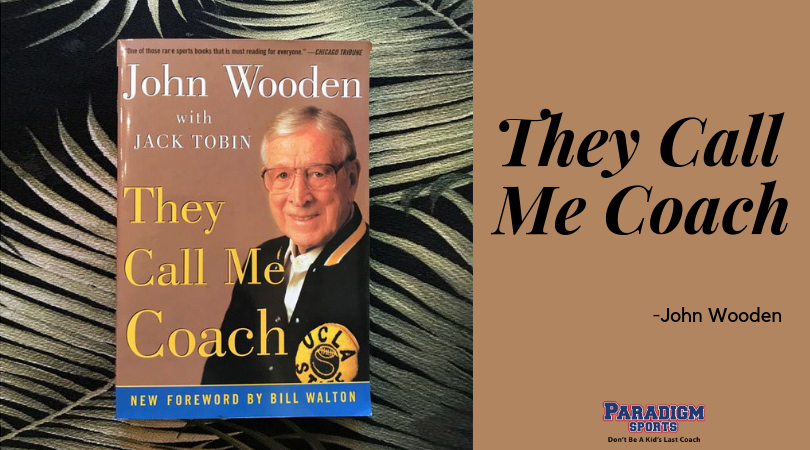
 

They Call Me Coach

Posted Posted in Athlete, Coach, Organization Executive, Parents

We plan to share out our updated recommended book list again after our upcoming “Love What You Play 3rd Online Event” this summer, but one of the books that many of our past guest speakers have recommended has been “They Call Me Coach” one of John Wooden’s must-reads for coaches, teachers and anyone in a leadership role.

I just reread the book again while I was on holidays and thought would be a great reference for our next blog post.

Regardless if you are a grassroots coach parent, competitive non-parent coach, in the high-performance stream or teaching if you know anything about Coach, you have probably heard from many that many argue he is the GOAT (Greatest One of all time).

Why was he?

Many feel because of what he accomplished as the head coach of the UCLA Bruins Men’s Div I Basketball Team for 29 seasons, where he lead the team to 10 NCAA National Championships, seven of which were consecutive, 88 consecutive wins over 3 seasons.

Did you know that it took him 16 years before he lead UCLA to their first national championship in 1965?

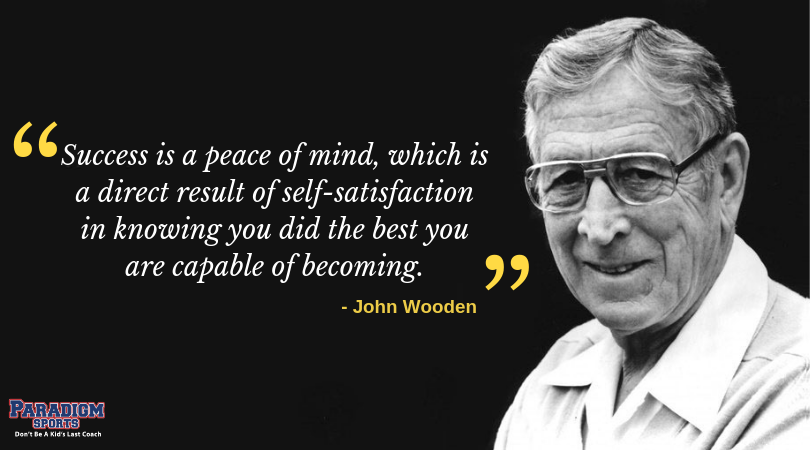
He shares in his book that it was due to the fact that he was still learning HOW to coach even though he had been an accomplished player himself, had coached high school and at Indiana U before he accepted the position at UCLA.  He also shares that in order to accomplish what he did, you have to have talent, and Coach had just “a few” good players during his tenure, including NBA Hall of fame players Kareem Abdul-Jabbar and Bill Walton.


Did you know that his first preference to coach was not UCLA, but Minnesota?

Due to a snowstorm, Minnesota was unable to call Coach at the assigned time to discuss so he assumed that they were not going to offer him the head coach position so when UCLA called an hour later, he accepted and then turned down Minnesota when there were able to call after the fact.


I Wonder …. would John have been the GOAT if he had accepted the position at Minnesota in lieu?  Perhaps yes, perhaps not, but it is yet another example how the decisions that you make in life can impact the path your life takes.


Did you know that Coach potentially may not have even reached that point of accepting either offer?

He had to have an emergency appendectomy to remove his inflamed appendix that required 30 days rest from the Navy.  As a result, his orders were changed and one of his Purdue Teammates who also enrolled in the Navy took his place and sadly was hit and killed by a kamikaze while at the gun position for the Franklin Battleship.


Coach shares further nuggets how his journey evolved while coaching at UCLA and the path to the first of 10 NCAA National Championships and those that followed but what amazed me the most is how many players he remembered, their contributions to all of those teams and his constant refusal after he retired to share whom he felt were the “best” or what he felt would have been his overall all-star team.

One of which was the script that his father shared with him that he carried in his wallet that was his guiding words of wisdom;


  1. Be true to yourself.
  2. Make each day your masterpiece.
  3. Help others.
  4. Drink deeply from good books, especially the Bible.
  5. Make friendship a fine art.
  6. Build a shelter against a rainy day.
  7. Pray for guidance, count and give thanks for your blessings every day.


As my father passed away when I was really young, anytime I come across advice relayed from a father to son it strikes a special note with me, I can only hope I can do the same for my son.

Some other things he shared regarding two the ones that went on to NBA Hall of Fame Careers;


Back Cover of “Coach Wooden and Me”

Kareem Abdul-Jabbar

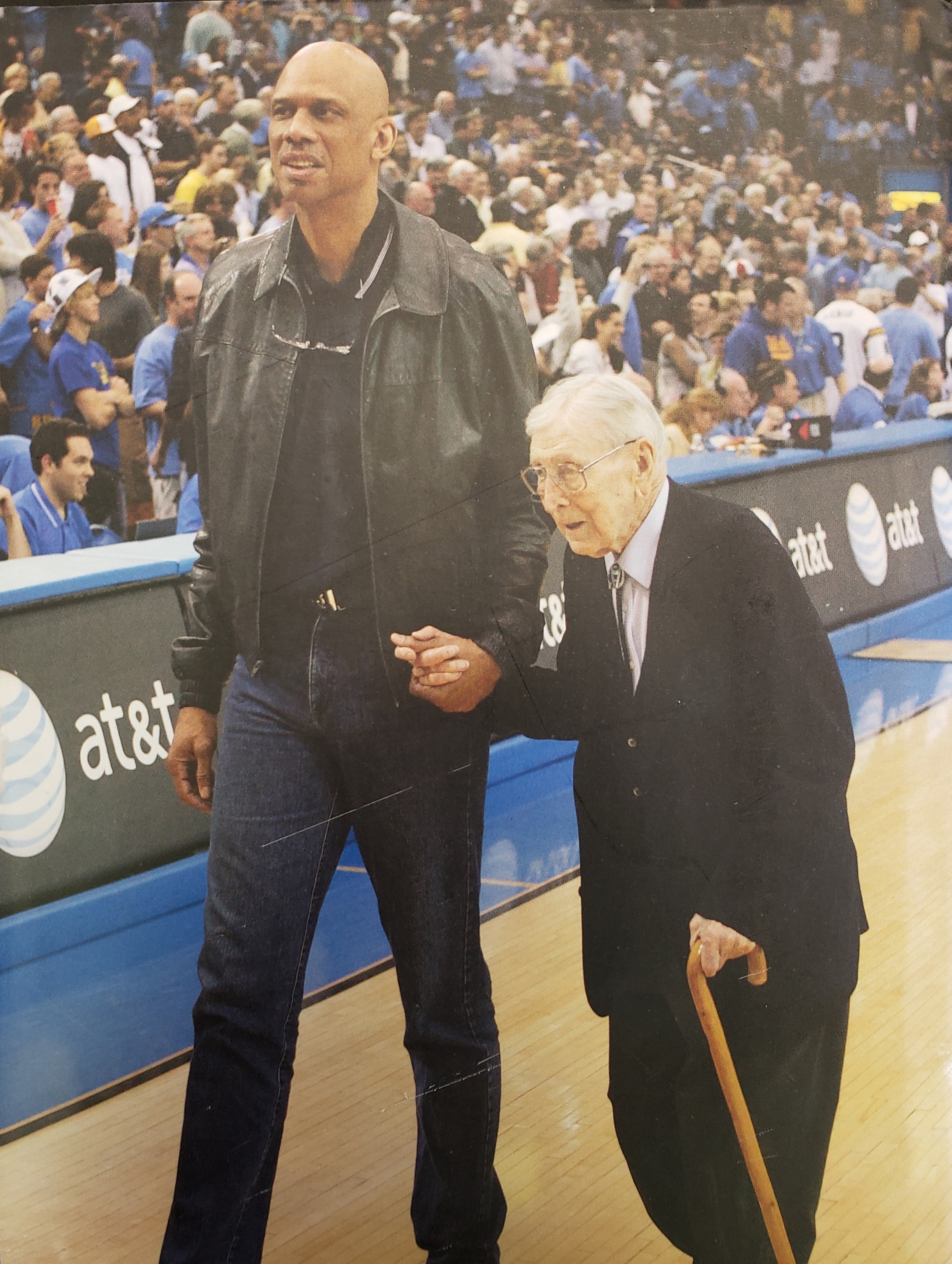
Probably one of my favorite pictures of Coach is the one that was taken at an event where Kareem helped him walk across the court when Coach was in his 90’s decades after he retired and had coached Kareem.  Just one example of the impact that Coach had on so many of his players’ lives, many continued to stay in touch with Coach and attended his service when he passed away in 2010 at the age of 99.

Imagine if the hundreds of players you coached still reached out to you decades after you were their coach?

Did you know that Kareem Abdul-Jabbar’s birth name was Lewis Alcindor? (as shared in the book, but his full birth name was Ferdinand Lewis Alcindor Jr.)


Like Muhammed Ali who changed his name from Cassius Clay when he opted to convert to the Islam faith, so did Kareem when he did so.


As Coach went on one of the very few recruiting trips (he did not believe in visiting players at their homes and relied heavily on his assistant coaches or referrals to recruit players) to spend time with Lewis’s parents at 1AM in New York (his father worked afternoons) to confirm his acceptance to play at UCLA for the better part of the remaining chapters when he references Kareem, he still called him Lewis.

When pressured by media in the years after coach retired, he shared that Kareem was the best overall player that he ever coached and was one of the main contributors to 3 of their NCAA National Championships.

Another “pretty good player” that Coach had who followed Kareem was Bill Walton, also went on to the NBA to have a hall of fame career, who potentially may not have been on the team after his first season.

Why?

Because Bill grew his hair, beard, sideburns and showed up at the beginning of the season and Coach told him that he had to get it cut. Bill tried to retort to say he had been MVP of last years NCAA championship but as always Coach won the argument as he had a few demand rules, one was that his players be clean shaven, hair and sideburns at a certain length that ONLY HE determined was appropriate.


What were Coaches other demand rules?

  1. Don’t be Late:

He did not want players to arrive late for practices, games nor did he believe in running practices longer than planned as he understood that they had to focus on their studies as much as athletics

  1. No Profanity:

I too don’t believe that swearing is appropriate at any age group when you play for a team regardless if it is recreational, competitive or high performance you represent your community with CLASS.

  1. Never Criticize a Teammate:

Coach, as do I, believed in the importance of teammates have each other’s backs and the importance of selfless play (vs. selfish), you win as a team, you lose as a team.

My version is the value of respect, in addition to players respecting their fellow teammates, I expect them to respect their coaches, parents, opposition, officials, the game itself, as well as others in their community, their elders, classmates, teachers and so on.

Coach also shares insight on his pyramid of success, still a go to for many coaches and leaders, and what I loved most about the book is each chapter he shares one of his infamous “Woodenisms / Quotes” or a poem/verse that he was fond of to be the theme of the chapter.

Many of those we have shared over the years on our social media pages, but for this weeks Newsletter Quote of the Week is one of my all-time favorite quotes by anyone;


The reason why Coach was the GOAT, is not only what he accomplished in terms of success his teams had over his career, but it was the legacy that he left behind in terms of developing all of his players into the best people they could be.

Our role as coaches is not to make a living, our calling/purposes like Johns and other amazing great coaches others in past, present and in future is to make a difference by developing youth into adults.

That is our role, our reason for being.

Please ensure that the legacy that you leave behind is a positive one and you are not a kids last coach.


How Moresports provides more sport opportunities for Kids

Posted Posted in Athlete, Coach, Organization Executive, Parents

This past weekend I had the opportunity to visit with Cynthia Lee, Coordinator, and Yosephine Yao, Hub Leader, and see the amazing program that they do with Moresports, a community-based multi-sport program that has been under the radar screen mainly in East Vancouver since 1998.  Previously I shared insight on their program in “Youth Sports Organization that are Bucking the trends” after I initially connected with Yosephine at UBC’s career fair we were exhibiting at.

The program was started because a father took his kid to a local soccer field and was refused access as was not part of the local soccer association and was advised would need to sign up his son to play on the field as they were allocated by the city.  The registration fees for their family were too much (and that was well before the era of early sport specialization and the professionalism of youth sports and he decided to do something about it so could offer cost affecting community programming to kids in the area.

Since then, Moresports has blossomed into a program with 11 hubs that permit kids to participate in multi-sport programming weekly in fall, winter and spring (unable to run programs in Summer due largely to schools they run many of their programs close for the summer) but in the course of the few hours I was with Cynthia and Josephine I learned just how an organization could, in fact, provide programs for kids, especially those that are economically challenged, to be involved in various sports.

Below is a compare/contrast table that I put together after my visit that I will expand on below;

Moresports Other Sports Groups average
 

Coach Ratio Male:Female


20-25% Female, 75-80% Male  

75-80% Male, 20-25% Female

Format Community Not-For-Profit Not-For-Profit or Private
Facilities Parks Boards and schools Parks Boards, Schools plus private facilities
Equipment Moresports pays for and provides focus on ball sports (limited equipment) Orgs plus individuals pay for (i.e. 300.00 bats, sticks)
Score/Timekeepers None – non-competitive Yes – starting at 8 yrs old
Age Groups K – Grade 8 (5-12 yrs. Old) K – Grade 12 (5 – 18 yrs. Old)
Location(s) 11 Hubs – Vancouver ONLY Various across the country
Registrants Yearly 400 per hub, 4-5,000 annual registrations (no one turned away)

** Annual Soccer Jamboree

Varies, from 200- 1000+ but many sports suffering attrition rates
Fees 40.00/8 sessions (5.00 session)

Waived if can’t afford

Varies (seasonal fees + equip)

Camps 20.00 Session Average

Funding Provincial/Municipal/Charity Provincial/Municipal/BC Lottery/Bingo
Coaching Certification High Five + NCCP (new) Subsidized RIS / CRC / NCCP / Private
Officials None (non-competitive) Starting Age 8 (house or competitive levels)
Staffing Coordinator, Hub Leaders, leaders, and coaches Board members, coaches, officials, rec centre staff
Economic Status 80% Economically Challenged 20% Economically Challenged
Programs Run Fall/Winter/Spring – No Summer Year Round (with early sport specialization)
Sports Offered Soccer/Basketball/Dodgeball/Spikeball

Looking at Floor Hockey and others

Various – Single Sport orgs or multi-Sport Camps
Schools require custodians No – Leaders have keys to access Yes – Required
Parent Participation Yes – First 15 minutes Free Play No except Coach Parents
Community Leader training Yes – Junior and Youth No – only coach training
Established 1998 Various
Player attrition an issue No – continue to grow yearly Yes – 70% quit by 13
Coach Attrition No – ongoing leadership ID and training starting at 12 yrs old Yes – Volunteer Pool getting smaller and harder to recruit
Official Attrition Not applicable (no officials needed) Yes – 30% per year quit
Parent Behavior an issue No – they get to participate then watch quietly Yes – Vocal Minority (5-10%) spoil experience for others
Uniforms Jamboree only – t-shirts sponsored Yes (in fees)
Coaches Paid Lead Coaches honorariums, leaders volunteer to gain experience Head Coaches in many sports, plus TD’s + $50K per year

This is the epitome of social inclusion and social innovation IN ACTION, if more sports organizations recognized the importance of collaborating with all the stakeholders the issues, as Moresports is doing, they would be able to improve their programs to provide a quality sports experience.

The first thing that jumped out to me is the vast majority of coaches and leaders involved in the program are female, approximately 80%, most of which were former “campers” that participated in the various programs when they themselves were kids going back to as early as Kindergarten.  A TOTAL polar opposite from the various team sports that I have worked with across the country where even with all the initiatives in recent years and government funding to promote gender equality we still have so much work to do to get more female coaches, officials and board members.

Like many other sports organizations, Moresports buys the necessary equipment needed for their programs and then the hub leaders store on site for use during the weekly or weekend sessions.  As sports equipment has escalated in many sports, they focus on those that require minimal equipment, Soccer, Basketball, Dodgeball are core, with some hubs running baseball, spikeball and aspirations for floor hockey.

Unlike all team sports, Moresports does not have tiering for recreational or competitive levels, every kid that aspires to play, get an opportunity to do just that PLAY.

Uniforms are limited to t-shirts that are funded by the local Kidsports chapter in Vancouver, mainly for their one large event they host years, the soccer jamboree, where all hubs come to one facility to play games for a weekend.  Compare that to hockey where they have 85.00 home and away jerseys, even alternate travel, and practice jerseys, pant shells and so forth.

Another area where they differ from traditional team sports is the coaching certification that they do is high five, required for recreational leaders and incremental leadership training that is fully subsidized for the leaders, coaches as many of which could not afford if required to pay for out of pocket.

Hmmmm .. what a concept, provide FREE coach and leadership training so leaders are not out of pocket.  Many of the team sports do reimburse coaches for their NCCP and other training they are required to do, but not until well into or end of the season once they have completed their coaching certification requirements.  This has been one of the deal breakers for coaches that I have talked to who can be on the hook for hundreds of dollars until they recoup later in the season.

The best part that Cynthia and Josephine shared with me, is they have approximately 4000 kids participating in their programs annually and if they could scale up could accommodate more (scaling is contingent on funding and development of leaders/coaches).

Because their programs are non-competitive (no scorekeeping, scoresheets, rankings, banners) vs. organized sports, they don’t require officials but as fees are so nominal, even if they did have organized games based on the parents sitting quietly on a stage watching their kids play for an hour with HUGE smiles on their faces I suspect that official attrition would be WAY below what the average 30% is annually for organized team sports.

Many organizations that I have talked to have shared their pain points of recruiting coaches, due in part to out of pocket costs, due in part to time commitment, but also due in part to many don’t step up to coach as they don’t want to “deal with parents”

The other difference to Moresports vs. organized sports is they identify, recruit potential leaders who are participants in their programs starting as early as grade 7, then provide those that are selected free leadership training starting with the junior youth (ages 10-12) then youth leadership training (12-17).  Many of which become coaches themselves both for Moresports but then for other summer recreation programs to give back in their respective communities.

Hmmmm … what a concept, provide a fun environment to play various sports in then ID potential future leaders for the same program and beyond so in lieu of relying on the “help, we need coaches and taking any that put their hands up approach organized sports do” to identification, recruitment and training approach.

All of the hours that the volunteer leaders contribute is also tracked for their community volunteer requirements and other leadership opportunities.

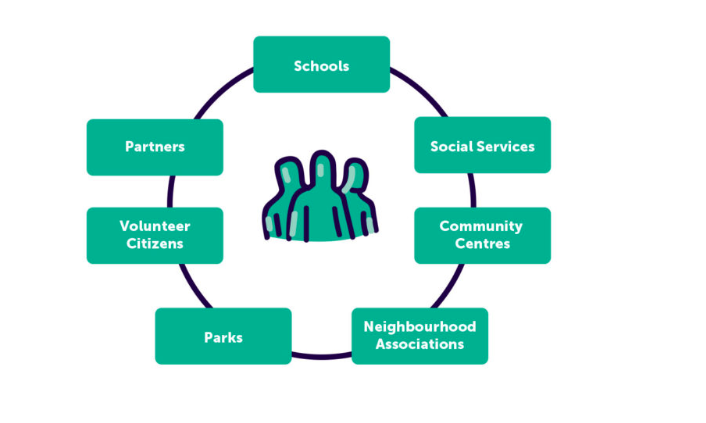
All of the great programming that Moresports is providing would not be without their core and community partners


My overall observation was one that remembered all too well growing up as kid myself, all the kids that came to the K1 or 2-5 groups I had the opportunity to observe showed up with big smiles on their faces, smiled throughout and as they were leaving.

Why?

Because they had FUN.

All the volunteer leaders, head coach and Cynthia/Josephine did the same.

When I asked how they ID potential leaders or coaches they shared with me that they did not need to have the high level skill or playing experience in sports, the only requirement is that they had a true passion and cared for kids.

Hmmm … another refreshing epiphany moment when I heard that.

The #1 characteristic of the greatest coaches of all time is they truly cared about their players as people first.

I think all organized sports programs that are experiencing the challenges of high rates of attrition of players, officials and even coaches could learn from the great work and model of Moresports.

Make it Fun – Make it Safe – Teach Skills – Care passionately

And by doing so are not a kid’s last coach

Almost all of the kids that become participants come back for each session and for years.

Many of which as they have developed a passion for being active then move on to organized sports when they enter high school, the coach of the Saturday Session was one of those. She started in Grade 2 as a grassroots “camper”, then became a leader, coach and has lead many of the boys to provincials in high school.

For more information, visit their website www.moresports.org

I was invited to come out to their big event in June and looking forward to seeing many more kids smiles playing for the sake of playing, like our generation did and somehow we must find that happy medium and work together to bring the game back to the kids.

Don`t be a kids last coach

BONUS – Download your free printable flipbook/ebook copy of this blog HERE

What US Lacrosse is doing to promote Multi-Sport Participation

Posted Posted in Athlete, Coach, Early Sport Specialization, Organization Executive, Parents

I recently sat in on the first webinar hosted by Project Play which highlighted three different US National Sports Bodies (NGB’s) that were promoting multi-sport participation, one of which is one of the few youth sports in the US that is growing year after year, US Lacrosse.

The insight was shared on the webinar by Erin Smith, currently the Managing Director of Education and Training for US Lacrosse and has worn many other hats over with US LAX the last 15 years.

Why is US Lacrosse one of the organizations that are bucking the trends?

Unlike many of the youth sports organization in Canada, US and globally, they continue to see increases in their membership year after year, now have over 430,000 members and continue to grow.

As a national sports organization in the US, they are still in their infancy, 9 former regional orgs merged together in 1998 to become the national sports body for the US.

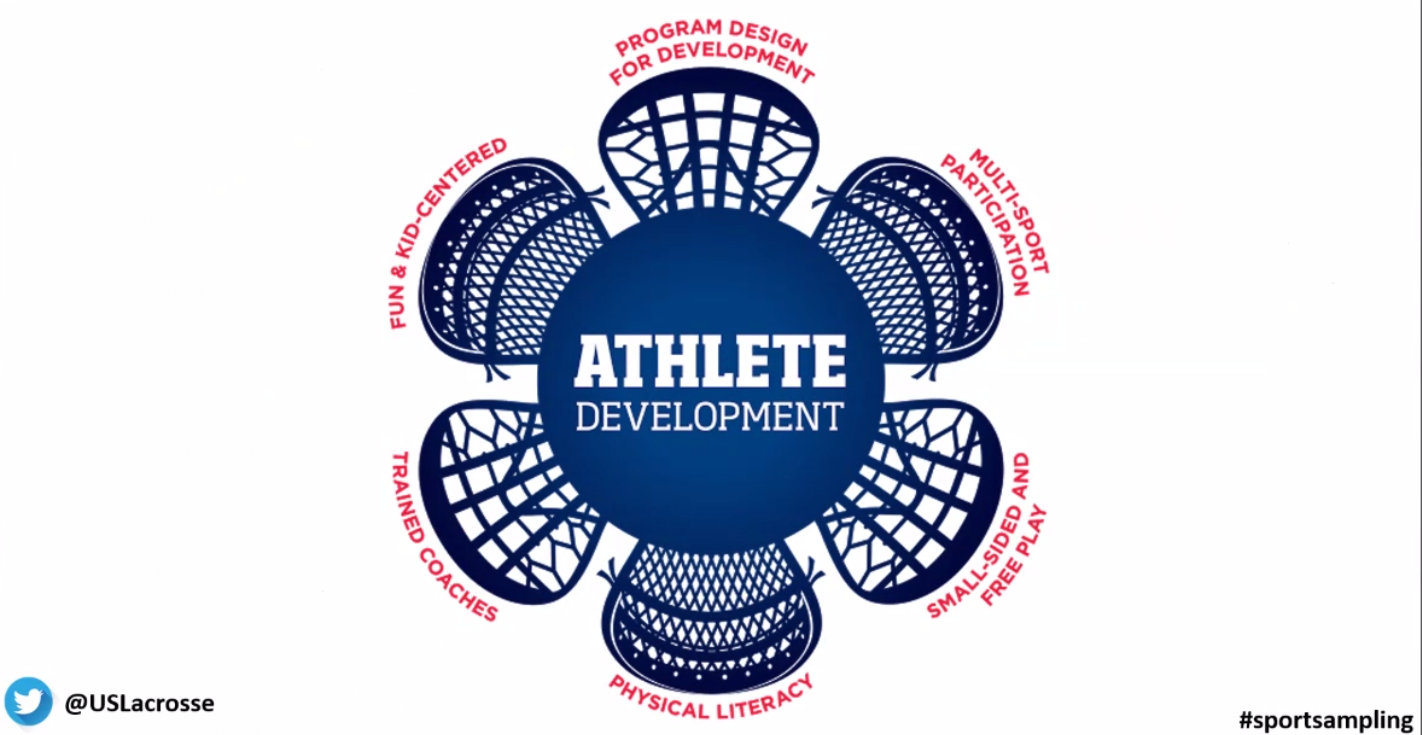
In 2015-16, largely due to the great work that USA Hockey has done in terms of developing the American Development Model, US Lacrosse created their first version of their Athlete Development Model with 6 core values.

#1 – Fun and Kid Centred

HMMMM … perhaps the sports organizations that continue to experience negative comps year after year could learn something by focusing on similar core values?

As I have shared for years, kids play sports because they are fun and quit when they are not, it’s NOT rocket science and I was so happy to see that a NGB has Fun and focusing on the kids (the end users/consumers) and believe many other orgs that are suffering high rates of attrition should do the same.

#2 – Program Design for Development

Development as in skills vs. winning at all costs?

It is great to see a NGB understand that the purpose of Youth sports organizations is developing youth into adults.

#3 – Multi-Sport Participation

Promoting Multisport participation, as the President of Greater Edmonton Lacrosse shared with me last year, Lacrosse is a great complementary sport and requires so many technical skills that will transfer to other sports.  Perhaps that is one of the reasons why Wayne Gretzky, John Tavares, Steve Stamkos and other NHL’ers were or are pretty good?

#4 – Small Sided and Free Play

Many national sports organizations in Canada and the USA who have incorporated LTAD models have incorporated small sided games that are age appropriate, examples being USA and Hockey Canada’s cross-ice hockey for ages 5-8 years old, soccer small area games with 3, 7 players, tennis, volleyball, basketball lowering the nets etc.

What really excited me about US Lacrosse was they also are focusing on the importance of Free Play that many researchers have identified in recent years is a critical to ensure optimal skill development, decision making, handling adversity and overall fundamental skill development.

#5 – Physical Literacy

Still one of the biggest challenges that many face in the grassroots segments is having coaches understand the importance of developing all fundamental movement skills so kids are not only proficient in their respective sports (thanks largely to the pitfalls of early sport specialization) so kids are confident, competent and ultimately active for life.

#6 – Trained Coaches

In terms of trained coaches, although the course content has been revamped to educate coaches on areas like multi-sport participation it was only done last year and only 5+ Years will you see the cause and effect of updated coaching modules.  I suspect in a few years you will see the changes that US LAX is aspiring for and will receive a higher grade accordingly down the road.

How do I know this?

After running Hockey Canada Clinics as one of my hats for over a decade, each time that Hockey Canada revamps the clinic materials, it takes a few years for the materials in new modules to get to the coaches that have already taken a clinic IF it gets to them.

This is why I am a big advocate for the NCCP program requiring ongoing Professional Development Credits to ensure that coaches learn the latest and greatest to be the best they can be.

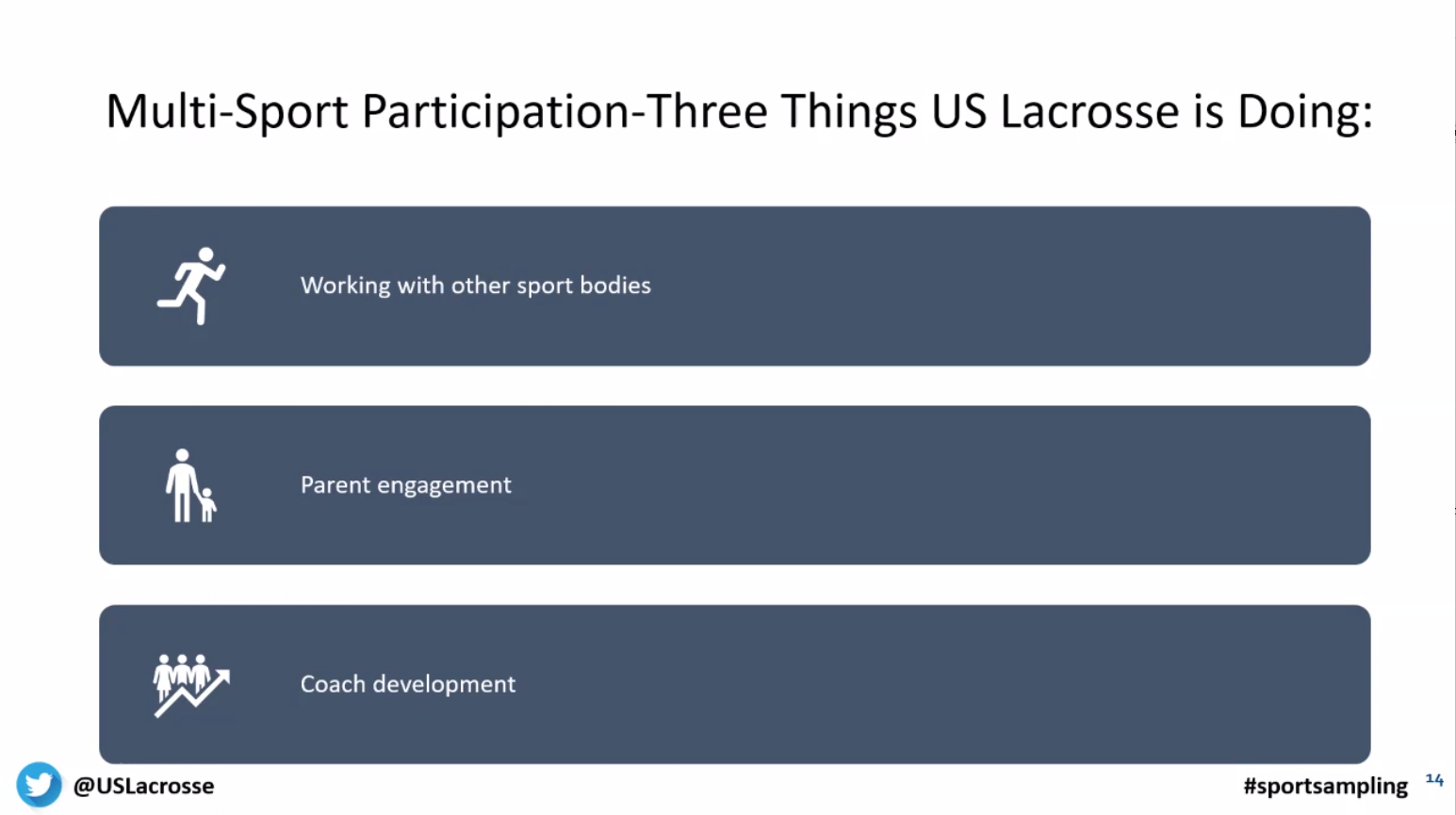
The three core areas of the Project Play checklist that US Lacrosse is focusing on to promote multi-sport participation in particular are;


#1 – Working with Other Sports Organizations

Collaborating in lieu of competing for the same player so they can play multiple sports?

KUDOS to US Lacrosse for doing so.

Here is insight from Dave Newson, the executive director at Semiahmoo Minor hockey organization who spoke with us for our winter 2018 virtual event how they were collaborated with their fellow soccer association to permit scheduling so kids could play both soccer and hockey

After they did so, many other local sports organizations started to do the same, the dominoes they are falling as kids want to PLAY more than one sport.

#2 Focused on Engaging parents

In addition to providing resources to coaches to share with parents in their parent meetings, they are promoting multi-sport participation on social media and video below using the analogy of eating pizza every day would be like playing one sport every day, not good for the kid’s development overall.

INSERT QUOTE OF THE WEEK HERE

Play More (sports) to play better (as an overall athlete)

#3 – Focused on improving their coaching development

Like US Hockey, US Lacrosse now has 4 coaching levels that ties in their athlete development model, starting at the grassroots level up to the high-performance level.

Last year they redid all of their coaching courses and the Level one course now highlights the benefits of multi-sport participation so the grassroots coaches (many of which are moms or dads that get recruited to coach because their kids are playing) get educated on the benefits right from the get-go.

The added benefit, as many are parents themselves, they can share with the parents on their teams as well as others they know so the word of mouth will spread.

Probably one of the biggest issues that I have come across when I have interacted with coaches in Canada that are just getting started regardless of the sport is there lack of knowledge or even awareness of their respective sports long term athletic development models or fundamental movement skills required to be proficient at ANY sport, let alone the ones they are now coaching.

Things like balance, agility, running, falling, getting up, throwing, catching, one handed and two handed hitting, running which are all fundamental movement skills that every kid should have but thanks to PE programs being cut so much at the school levels, too much structure taking away free play, too many kids can’t perform the basic skills as our past generation did.

KUDOS to US Lacrosse for recognizing the importance of not only talking the talk (via core values, public service messages (PSA’s), Whitepapers (PDF’s) and education but WALKING THE WALK.

Let’s all work together to bring the game back to the kids … where it belongs

PS Tagline - Dont be a kids last coach

The Transformation of John Tortorella

Posted Posted in Athlete, Coach, Organization Executive, Parents

I am writing this as the Columbus Blue Jackets are going to start the second round of the NHL playoffs against the Boston Bruins but won’t be posting for another week so won’t reflect the first 4+ games played in the second round.

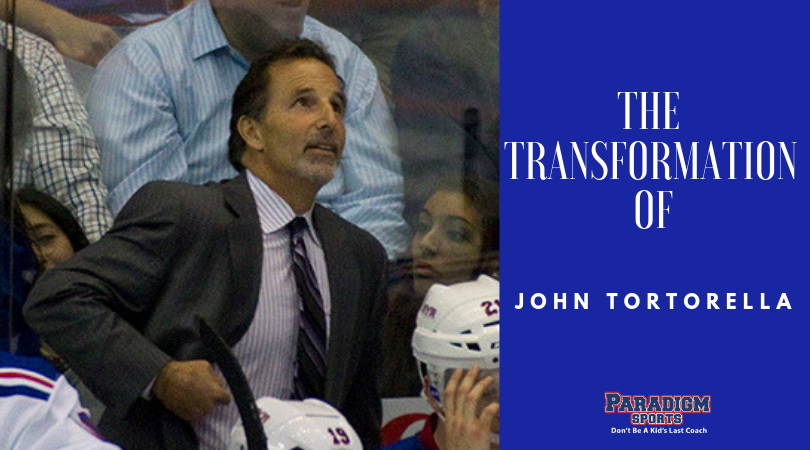
I would be remiss not doing a post during the Stanley Cup Playoffs not referencing the amazing accomplishment of the Columbus Blue Jackets led by the “new” John Tortorella.

Everyone knows John for his antics in past exploding towards players, coaches, and officials when he lost his temper.

But what people don’t know is he is no longer the John Tortorella of old, people say you can’t teach an old dog new tricks but John is the epitome of how this is not this case.

In 2004 John led the Tampa Bay Lighting to their first (and only to date) Stanley Cup captained by Dave Andreychuk with fellow Canadian counterparts Vinny Lecavalier, Martin St. Louis, Brad Richards and 13 others who won against the Calgary Flames in 7 games. The following season the Carolina Hurricanes won the Stanley Cup against the last Canadian Team to reach the finals, the Edmonton Oilers and another Stanley Cup Final will be US teams as all three Canadian teams that made the playoffs this season were knocked out in the first round.

Fast Forward to this season, Columbus Manager rolled the dice before the trade deadline to acquire several rental players to reach their goal to win their first playoff round EVER acquiring Adam McQuaid, Keith Kinkaid, Ryan Dzingel, Matt Duchene and Julius Bergmen.

Although it took several weeks for the new players to buy-in to John’s systems the results paid off, and John led the Blue Jackets to their first ever playoff win against his former Tampa Bay Lighting team he led to the Stanley Cup 15 years prior.

I remember watching game 4 and was blown away how Columbus outplayed this season’s President Cup Winners as the top team, tying the NHL record for points and wins (62) in one season only to be swept by Columbus in the first round. Others followed Calgary (top team in the west) and recently the Washington Capitals who were defeated by Carolina who advanced to the second round for the first time since 2010.

The buzz amongst all those in the Hockey world is WOW, Tampa, Washington, Pittsburgh, Leafs, Jets, and Calgary who were all picked as favorites at the beginning of the season to potentially go deep in the playoffs have been eliminated in the first round.

This has Boston licking their chops now as the top seed remaining of the 8 teams

GO BLUE JACKETS!!! (never been a fan of Boston as long-time Habs fan)

Often when teams load up on rental players with the aspirations of going deep into the playoffs don’t make the playoffs or sputter out early so how did John Tortorella lead the Columbus Blue Jackets to take out the best team in the league in the first round?

Because he transformed.

John Tortorella is no longer the John of old that was infamous for his rants, systems, and strategies that many know him for.

Think back when he was hired by the Vancouver Canucks, in the only season he coached the team as they did not make the playoffs for the first time in 7 years, which included multiple 100+ point seasons and advancing to the Stanley Cup Final in 2010-11.

I will never forget when John lost it when Calgary started their 4th line in January game in 2014 where he did the same and ensuing line brawl that occurred and then Torts chased down Calgary Coach at the time Bob Hartley in the dressing room hallway.

Suspect not his proudest moment, nor was it a great moment for the NHL with a full 5 on 5 brawl to start a game reminiscent of what the Hansens in Slapshot.

That season he coached the Canucks he overplayed many of his top players, opted to play his top two lines for the majority of the ice time where the third and 4th lines saw limited ice time.

The Sedins had their WORST seasons ever in terms of points, suffered injuries, as did Edler who was -37 that season and many of the other players also had poor seasons.

At the end of the season, John was fired by Mike Gillis and in his end of the season media conference, John shared that the Canucks needed to get younger to return back to the playoffs.

Ironically the Canucks hired Willie Desjardins the following season and he opted to roll 4 lines, connected with all of his players and lead them to the playoffs although they lost in the first round. As the Canucks were getting older and needed to go thru a “rebuild” Willy only lasted 2 seasons behind the bench and was let go but has returned to coach Team Canada in 2018 Olympics and interim head coach for the LA Kings this season.

John was the head coach of the USA World Championship Team in 2016 that received a lot of criticism as they did not medal and finished 7th overall and many in the hockey space felt that John would not behind the bench again as a result.

This after Columbus had hired John to be their head coach in 2015 and one of the conditions that they made when they did so is that he would have to change his coaching style to be less confrontational (Old School) and more transformational (New School)

The season that was prefaced by the World Cup of Hockey in 2016, John continued to change his coaching style so that he could be more of a player’s coach and less abrasive when dealing with media, he committed to developing all of his players in lieu of “playing his favorites” and rolled 4 lines and VOILA at the end of the 2016-17 season he was voted Coach of the Year.

In that season he led Columbus to a 16 game winning streak, one game short of NHL record held by the 1992-93 Pittsburgh Penguins (Mario Lemieux and Jaromir Jagr were “pretty good” that year)

Columbus finished 3rd overall that season with 50 wins, 108 points, with the Capitals and Penguins (who won the cup that year) finishing 1st and second in the East.

Unlike this season, however, when they knocked Tampa out in the first round, they faced the Pittsburgh Penguins who knocked Columbus out in the first round and went on to win the Stanley Cup in back to back seasons.

A few other things that commentators shared during one of the Columbus playoff games;

John and his wife founded the John and Christine Tortorella Family Foundations for Giving Back.

The foundation focusing on providing funding to those that protect children, animals, and environment from harm. Prior he provided funding to charities in Tampa and New York where he previously coached.

When John moved to Columbus he opted to buy a horse farm as he LOVES animals, particularly dogs.

“If it isn’t Hockey, its Dogs”

People want to keep their dogs but can’t afford to do it, have a program in the foundation, try to facilitate helping people keep their dogs that require expensive vet care.

Although John and Christine have never had experience raising horses, they recently adopted two Bella Run Fosters who were going to be slaughtered.

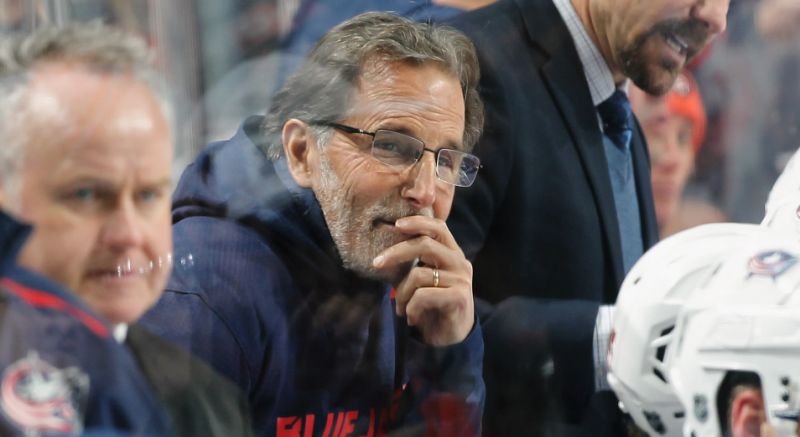
John has always been one of the most knowledgeable coaches in the NHL, but now that he has modified his coaching style to focus on the players, has a softer demeanor where he even wears hoodies on the bench, it is another example of how winning just becomes a byproduct if you are transformational coach focusing more on the person than the outcomes of games.

If John can transform his leadership style if you are not drinking the kool-aid yet in terms of transformational leadership, shouldn’t you?

The Greatest Coaches EVER were/are transformational leaders including John Wooden, Clare Drake, Phil Jackson, Pete Carroll, Sean McVay amongst others.

Will you be next?

Let’s all work together to bring the game back to the kids …. Where it belongs.

Don`t be a kids last coach