
How to Coach Generation Z

Posted 1 CommentPosted in Uncategorized

BONUS – Download a Free Copy of this Blog in PDF Format HERE  

Youth sport coaches needs to be aware we have now evolved from the Millenials, known for their sense of entitlement, to Generation Z, known for their screen addictions (7.5 hours a day) who are also known as The Digital Natives, iGen, Homelanders, Selfie Generation.

These are kids that were born after 1996, 100% in the digital era per below timeline;

Est. 1997

    Est. 1998

Est. 2004

Est. 2005

Est. 2006

 *Est. 2007

*although blackberry was the first smartphone with email capability, iPhone introduced web browsing, photo, video, music and other applications and it still is the leader in the space today (albeit Samsung and several other android based smartphones have eaten into iPhones market share).

Est. 2010

Est. 2010

 

Est. 2011


Not including various Video Game Consoles (Playstation, Xbox, Nitentendo) and other social media, and as the cliché goes, “There is an ap for that”..

I can speak with the perspective of coaching Gen Z kids as they entered organized sports at the age of 5 but also as parent of two that were part of the youth sports system since 2000.

As each year evolved and technology became more of our day to day lives, I also had to adapt my parenting and coaching styles to relate to this generation. I saw the digital era evolve pre internet, then IBM clones with 5 ¼” floppies with approx. 0.5Mb storage capability (when a micro SD card now hold 128 GB), amber screens taking up ½ a desk, dial-up evolving to cable and DSL high speed, Computer monitors and TV’s changing from tubes to LCD, then LED, now OLED and the list goes on. There was no digital era when my generation played sport, now it is commonplace with parents on the sidelines filming with smartphones, tablets and checking latest aps for schedules, scores, streaming of siblings games etc.

Gen Zedders are exposed to more information in ONE day, than two generations back would see in an entire lifetime.

Below is a summary of Gen Z characteristics;
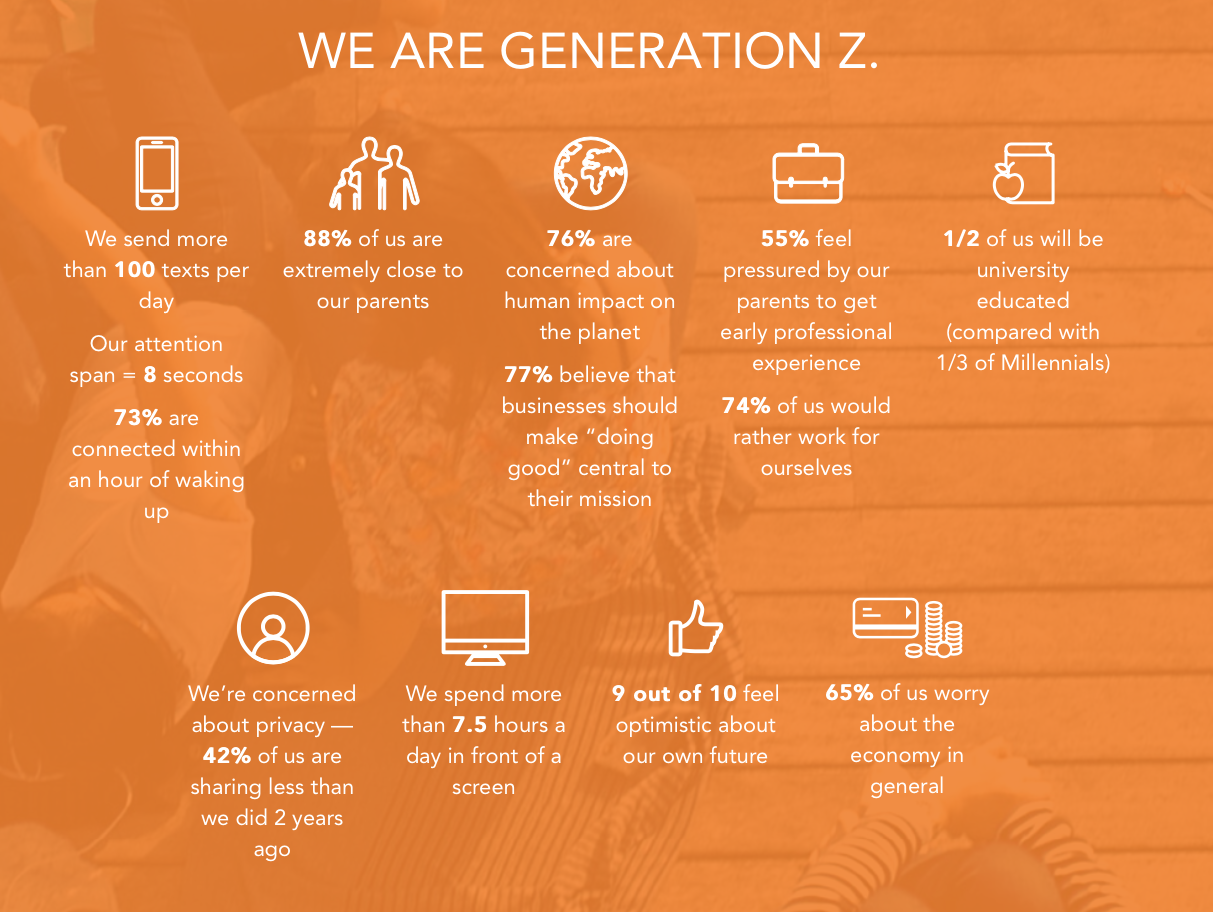
Source: Ologie.com


Top ones that jumped out at me …

Coaches – you have 8 seconds to get your message across when explaining a drill so best to involve technology Gen Zedders use daily (video, youtube, facebook live etc) so cut to the chase so to speak to overcome their 8 second attention span.

Texting – on average 100/day = +3000/mth (hopefully you have unlimited texting plans). Use platforms that work like texting to relay reminders, scheduling and so forth like Facebook Messenger group room I created for my High School Senior Rugby Team

88% of Gen Z are VERY close to their parents, so engage, don’t deal with, parents. There has been a lot of media coverage on parental behavior on the sidelines or the ride home in recent years, but the reality is the vocal majority only represents a small % of all parents, most are great and unfortunately a few bad apples are spoiling the broth. Treat parents on your teams as your allies, not your enemies and remember the enemy of your enemy is your friend. The more education we do, more the silent majority start speaking, the sooner we wean the vocal minority out of the game to bring it back to the kids.

One of the most important things you will do all season is running your initial parent meeting, here is link to prior article I contributed to One Million Skates with summary of agenda items that coaches should cover in their parent meetings.

Screen time that is replacing their former active play time now is 7.5 hours PER DAY. We never will get back to the good old days where kids will play organized and free play sports and activities for hours on end, but we must find a happy medium where they get their minimum 60 minutes of required physical activity daily.

In my role as Hockey Canada NCCP instructor, I was one of first to introduce the new Hockey Canada Network Ap this past hockey season. I was thrilled that we now had access to HC’s full database with an ap to create practice plans in minutes vs. hour or more used to take me when I first started coaching minor hocky. The fact that I no longer have to haul binders to every clinic alone is HUGE and I look forward to how coaches start incorporating for their practice planning.

The biggest benefit is that coaches can now pull up demo videos and show to players in advance (email PDF with video links) or bring a tablet to the rink to show before they run a drill.

Gen Z are highly visual, and having only an 8 second attention span is important that coaches tap into their grey matter as quickly as possible.

Krisha Parker the University of Georgia surveyed female and male gen Z soccer players and asked them what characteristics they would like to see from their coaches today and below is a table that summarizes the top 4 characteristics;
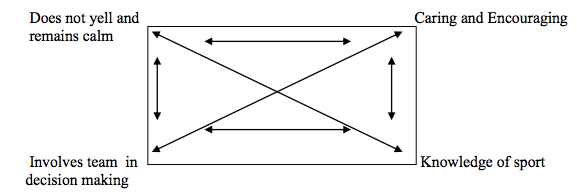
Source: Journal of Coaching Education: The Preferred coaching styles of Generation Z Athletes July 2012


In order, players desired;

  1. That coaches does not yell (at them, officials, other teams) and remain calm.

Hmmm .. how often have you been in the stands or sidelines and saw a coach screaming at the top of their lungs at a player because they made a mistake? Screaming at a young official as they missed a call or made one coach did not agree with? These are top reasons why 70% of Gen Z athletes are quitting all youth sports before they enter high school (by age 13).

  1. Caring and Encouraging

In literally every talk I do with youth sport coaches I ask them the question “What is the top characteristic of the greatest coach or teacher you ever had?”

The number 1 characteristic EVERY time pertains to how much the coach cared, demonstrated empathy and provided positive encouragement.

As the great Teddy Roosevelt stated “No one cares how much you know, until the know how much you care”

  1. Knowledge of the sport

Coaches must develop their knowledge of the respective sport and for EVERY drill they run in practice, have the answer to WHY. If you try to use the answer “because I said it, or this is the way we have always done it” you have lost them. Coaches must know the reason behind every drill, why it will help the players improve their skills and how it will help them in game play. If not, the will lose players trust and they will google it at the earliest opportunity to find out the answer if don’t believe coaches reply.

Don’t run a drill to fill up time in a practice plan, plan your drills and progressions to ensure optimal development with key teaching points to share with players and assistant coaches.

  1. Involve team in decision making

John Tortorella recently received the Jack Adams award as coach of the year for how he transformed the Columbus Blue Jackets and took them to the playoffs, had a record winning streak in league play.

I will be the first to admit that I did not see this EVER happening after the USA World Cup team under Tort’s guidance did not even medal in Sept 2016, nor seeing highlights of many of his tirades from the bench over the years.

Torts was asked by Columbus management to calm down and refrain from those types of outbursts Torts was infamous for, as well have a lot more patience to allow the younger players to make mistakes. Like Ken Hitchcock before him who also was awarded the Jack Adams trophy who did the same and changed his coaching style to accommodate the young players he had with St. Louis Blues

Both acknowledged instead of using former coach to player only feedback, they incorporated democratic 360 degree coaching styles and asked players for input when came to decision making for practice planning, systems, strategies that would work best for their core group of players.

For John Tortorella, this was a complete role reversal from the time where he coached the Canucks, missing the playoffs and many of the players having their worst years EVER (Edler was -37, Sedins suffered many injuries and lowest points totals in years).

As Gen Z has grown up only knowing the digital era and many of their coaches have not to same extent, the last tip I want to share is you incorporate technology on your teams.

  1. Communicate with Social Media – For my High School Rugby Team this past spring, I setup a group chat room on Facebook Messenger and sent all team postings, even schedules and attachments to communicate with the Gen Zedders. I laughed every time I hit Send and within seconds after I posted would see images of each players face pop up as they read the messages.

Note: Ensure that all applicable team members are included in groups and have codes of conduct for appropriate posts, language, images posted and ZERO tolerance for any form of cyberbullying.

  1. Use Video to demonstrate drills, review strategies in games. Pre Hockey Canada Network Ap I would use Hockey Canada skills of gold on DVD’s and showed players videos of drills we would be doing on an old laptop (AKA boat anchor), then tablets. When I attended a coaches conference a couple of years ago and Corey McNabb (manager of player development for Hockey Canada) talked about the new Ap, he envisioned it would evolve to the a point where coaches would have access to big screens in dressing rooms as TV pricing had eroded so much.



When he did so, Don Hay (Major Junior Coach) who was standing beside me, “Cory I still write my practice plans on paper towel/napkins”. Translation – old school coaches write drills down on whatever they have on hand at the moment so must adapt to new school technologies.

  1. Connect with each of your players face to face (old school not Skype), and get to know each of your players to develop trust. The hardest thing for you as a coach will be to trust your players FIRST before they extend trust of you and your coaching practices but it was the greatest tip I ever received from one of my mentors.

This is exactly what John Tortorella did this past season with Columbus, he let his players play vs. over coaching them in games, much like Ken Hitchcock did before him in 2011 when coaching the St. Louis Blues. That is probably the hardest thing that we all have to do as coaches is extending trust to our players before they have earned it.

Follow these key tips and you will not only connect better with your players, but should see improvement in your overall team play as a result.

Let’s work together to bring the game back to the kids.

PS Tagline - Dont be a kids last coach


The Ultimate “Multi” Sport

Posted Leave a commentPosted in Uncategorized

BONUS – Download a Free Copy of this Blog in PDF Format HERE  

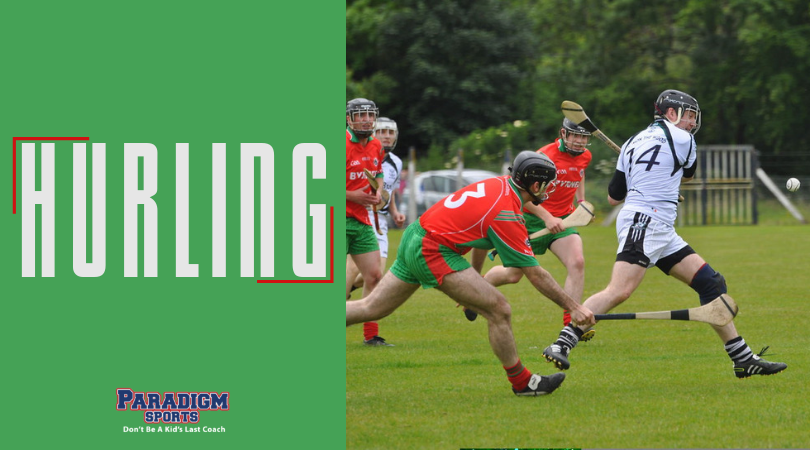
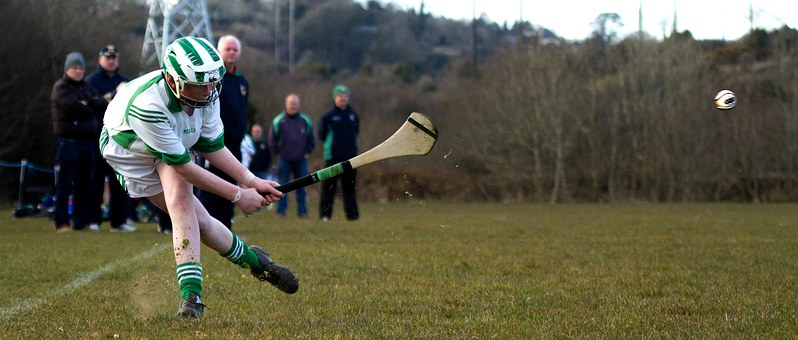
Hurling is a Gaelic sport originating in Ireland that has been played for over 2000 years. I didn’t recognize the sport which was surprising to me as I am second generation Irish Canadian (my grandfather was born in Ireland).

Hurling goes back to origin of Julian’s Calendar before the current Gregorian Calendar we use globally. Sports history of Hockey, Baseball, Basketball, and American Football origins only go back to the  late 1800’s.

Here is a short video to help you better understand Hurling, which is referred to as “The Fastest game on Grass”


The most intriguing part of Hurling is that is combines various sports skill sets. Skills required for baseball, football, rugby, soccer, lacrosse and even field hockey are all part of the game. Early specialization is becoming more and more popular in our modern society. The kids involved with Hurling in Ireland can develop a broad range of skills due to the requirements of the game. Kids in North America are only able to learn the various skill sets if they are enrolled in multiple sports. The kids that specialize in a sport too early in their life wouldn’t be able to play Hurling because of the wide variety of skills it requires.

Hurling is the ultimate example of the benefits of a versatile skill set. These athletes have all the motor skills for almost every sport that evolved from Hurling.
To be an elite Hurler, one has to be proficient in many motor skills;

  1. Hand-Eye Coordination: The ability to hit a ball with a baseball swing. The hurler uses a cricket shaped stick as a “bat”, which they called the Hurley,


  1. Cardio: It is comparable to soccer on a larger playing field with 15 players on each team. Hurling players run countless miles across a huge field for 60-70 minutes with only a short intermission for water at the half,


  1. Strength and Endurance: To be able to “hit” the “ball” over 150 kilometers a hour (93 MPH) and over 110m (100 yards) in distance,


  1. Balance and agility: Ability to “carry” the “ball” (called a sliotar) while running at full speed, meanwhile trying to avoid being tackled. Unlike our rules in North America they can use arm tackles that have been banned in American and Canadian Football. These tackles are subject only to a yellow card (if called) due to the potential for serious neck injuries. Imagine that you were doing the egg carry on a spoon during your school sports day with all your students rushing at you. They would be coming at you in all directions to knock the egg off the spoon. Using methods such as slashing, pushing and wrapping their arms around you in many ways is how a hurler feels when they have the ball. I suspect that egg would have dropped before you came anywhere near the finish line.


  1. Ability to shoot: Ability to hit the ball from longer distances to score (3 points in the goal like Soccer, Hockey, 1 point in the uprights like Rugby)***


Compare this to other sports:

  • Hockey – the Hardest Slapshot is just over 100 Mph


  • Baseball – the hardest pitch is just under 100 Mph


  • Soccer – the hardest kick is also just over 100 Mph


The players do all this wearing no plastic protective gear, a jersey, shorts, socks and cleats like those I used in Rugby. The only protective gear was an optional helmet similar to what is used in field lacrosse. In 2010 helmets became mandatory for all players. However, like hockey there were some players who were grandfathered into the sport who continued to play without them to the end of their career. Many of the goalies I saw in various video segments wore no helmet, just a small hat that resembled that of a baseball cap. Jaques Plante introduced the first goalie helmet four decades ago as a result of injury he sustained from a puck to his face. Before that, like the players, goalies wore no helmets for protection. Imagine you were in goal 15 feet from a Hurler shooting a ball similar in speed to a baseball, which can be up to 93 MPH with NO PROTECTIVE GEAR.


Look at Football and Ice Hockey and the level of protective equipment they now wear vs. decades back. The reason I loved rugby so much is I could run faster without all the protective equipment, nor did I suffer injuries due to equipment used in Football. Rugby is a Hooligans game but it is played by Gentlemen.

The helmet is being used as a lethal weapon, kids are entering tackles head first and are sustaining more head injuries. When I played rugby I never had a player target my head or back with a helmet. This unsafe practice is leading to more concussions and brain injuries in young athletes today.
Kids start learning hurling as early as four years old. Through small stations and games, they can develop their skills. In their teens, they transition into full field games learning to play on a field approximately 20-35% larger than all other grass team sports.

Compare that to other field sports:

  • Canadian Football 110 yards long by 55 yards wide


  • US football fields 100 yards x 50 yards


  • Soccer fields optimal by FIFA are 110-120 yards (100-110 m) long by 70-80 yards (64 – 73 m) wide


  • Field lacrosse 100m (110 yards) long by 55 m (60 yards wide).

CNN listed hurling as second of 10 sports events you need to see live, second only to the olympics but ahead of the FIFA World Cup and UEFA Euro Cup. Hurling is played in various countries, but in Ireland it is a fixture of life. Some players even carry their Hurley around with them, except for church on Sundays.

Men’s teams have sponsors, media coverage, gate and concession receipts from stadiums seating more than 80,000 people. The merchandising and various revenue streams is in the Millions of dollars each year.

What intrigued me the most was the fact that all the players are amateur. Meaning that they do not get paid, although sponsorship and media coverage would permit them to play professionally.
They all have jobs in various industries, but practice and play like they did in their youth for the love of the game.
Instead of paying the players, the profits from the various revenue streams goes back to the sport. In Ireland, they take pride in building and maintaining the training fields. Young athletes can practice with the best training facilities for a chance to represent their respective counties and battle for a National Championship

Opposite to the free agent culture that we have in professional sports, hurlers represent their own countries. We are seeing it everywhere, even BC minor hockey is considering allowing rep players to play for other associations. This would hurt the smaller associations who don’t attract the elite players. Any association, big or small, can have an excellent program, but they must have the culture of excellence to do so.


The New Zealand All Blacks are the most successful sports team ever. They come from a country of only 4 Million but play against countries that are much larger. The most successful county in the National Championship is Kilkenny, winning 11 of the last 15 national Hurling Championships. Like the All Blacks, their top player Henry Shefflin has been on 10 of those teams and states he would not have changed playing as an amateur for the world. When you are getting paid it changes the mentality of why you play. He also stated the reason for his Kilkenny team’s success was the tradition and culture of expecting to win. They have dominated hurling for the past two decades and continue to do so.
It is refreshing to see a sport that promotes all the aspects of sport. It allows young athletes to focus on the community and giving back to the youth for the tradition of the game. The mighty dollar, which drives sport as we know it is taken out of the equation and the athletes can focus on what matters.

It also is refreshing for me with Irish Heritage to have bragging rights that our culture is not just about Kilkenny Beer. Kilkenny’s National Champion Hurling Team and the supporting infrastructure creates an opportunity for youth to develop their skills in a true amateur sport. It makes me wish I had found out about Hurling when I was experimenting with all my youth sports. To have the chance to play a sport that incorporated all the various motor skills I learned would have been awesome.

Hurling is the Ultimate “Multi” Sport, I suspect it will continue to be part of Ireland’s culture for centuries to come.

Don`t be a kids last coach

Why Sports Participation in Canada is Declining

Posted 2 CommentsPosted in Uncategorized

Why Sports Participation in Canada is Declining


By Glen Mulcahy


BONUS – Download a Free Copy of this Blog in PDF Format HERE  

I recently came across some stats published by True Sport that reinforce the challenges we are having with youth sport participation in Canada today.

“In Canada, sport participation rates peak at age 10 to 13 and then decline steadily with age.”


According to a Government of Canada youth survey conducted in 2003, the leading reasons for kids not participating in sport were “lack of time” (34 percent) and “lack of interest” (30 percent).


Due to the increasing time commitments coaches are imposing on their players and their families, many parents are unable to make those commitments and their kids are having to pull out as a result. The lack of interest is in part due to too much structure and not allowing free play in practices, but also in games which develops the joy or passion for the sport that I referenced in prior article “No Participation Trophies.”


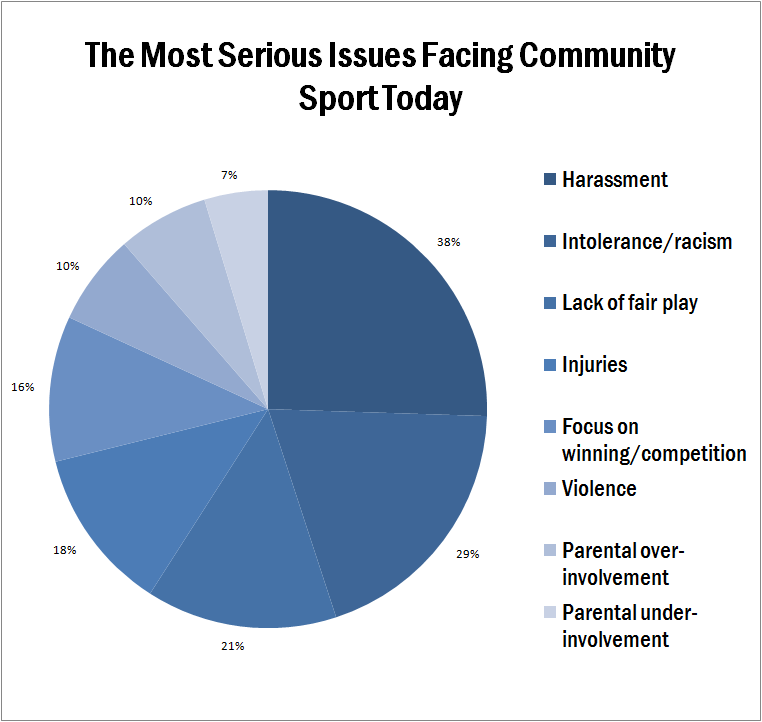
A Decima survey of Canadians highlighted a range of issues that may be partly to blame. Respondents identified the following as the most serious issues facing community sport today:


Source: 2002 Decima Study of Canadians / True Sport Report 2008


Why is it that harassment is identified by Canadians as the most serious issue facing community sports, yet when I have done research into association’s policies most merely provide links to their respective provincial or federal safety policies?


More often than not there tends to be very brief statements like “Hazing or harassment of any kind is not permitted.” They rarely define the varying degrees of harassment to include hazing, bullying, cyber bullying, and other forms of mental and physical abuse. If we are going to ensure that harassment is not a serious issue, we need to work on educating all those involved.


Although every year I make clear to all of my teams that I have a code of conduct which includes a zero tolerance policy to any forms of harassment, I haven’t ever elaborated with a follow-up meeting or any documentation that will further educate both parents and players where the line is drawn. Unfortunately, it appears we still have a lot of work to do to ensure it’s no longer a serious issue.


Of those parents who felt their expectations for their child’s sport experience had not been met, the following were the most cited reasons:
  • Lack of interest/participation (25 %)
  • Poor coaching/supervision (14 %)
  • Too much emphasis on winning (12%)
  • Parental influence/pressure (8 %)


Parents wish for their kids to contribute. This is one of many reasons why we see the sometimes disorderly parental behavior we do in the stands. They want to see their kids play instead of watching the coaches running short benches to win games. 90% of kids would rather play on losing teams than sit on the bench for winning teams. I know I played on many teams that had sub 500 records, but we had fun, learned many life lessons and had great coaches that focused on developing our skills so in later years we did win more.  It takes years to develop and the sooner that the adults realize it is a marathon, not a sprint to the finish, the better.


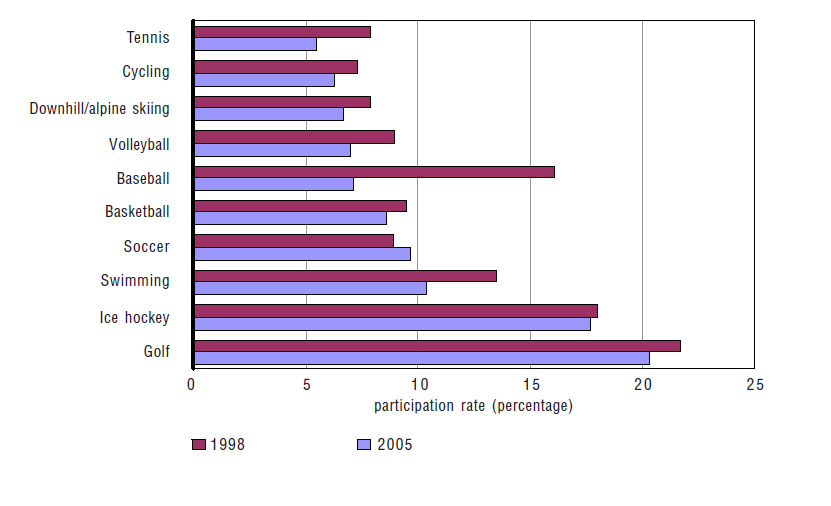
Another study I found was done by Statistics Canada, where they compared total sport participation (youth and adult) in 1998 vs. 2005 with the % of participation for the top 10 sports in Canada below:


Source: Statistics Canada – Total Sport Participation 2005


The #1 sport played by all Canadians was golf followed by ice hockey, both with slight decreases over a 7 year period. All but one of the other 8 sports also had decreased participation, the highest drop being baseball with an almost 50% decrease!
The same trend that is happening in Canada for little league baseball is happening in the US. See the short video below posted by the Wall Street Journal Digital Edition.


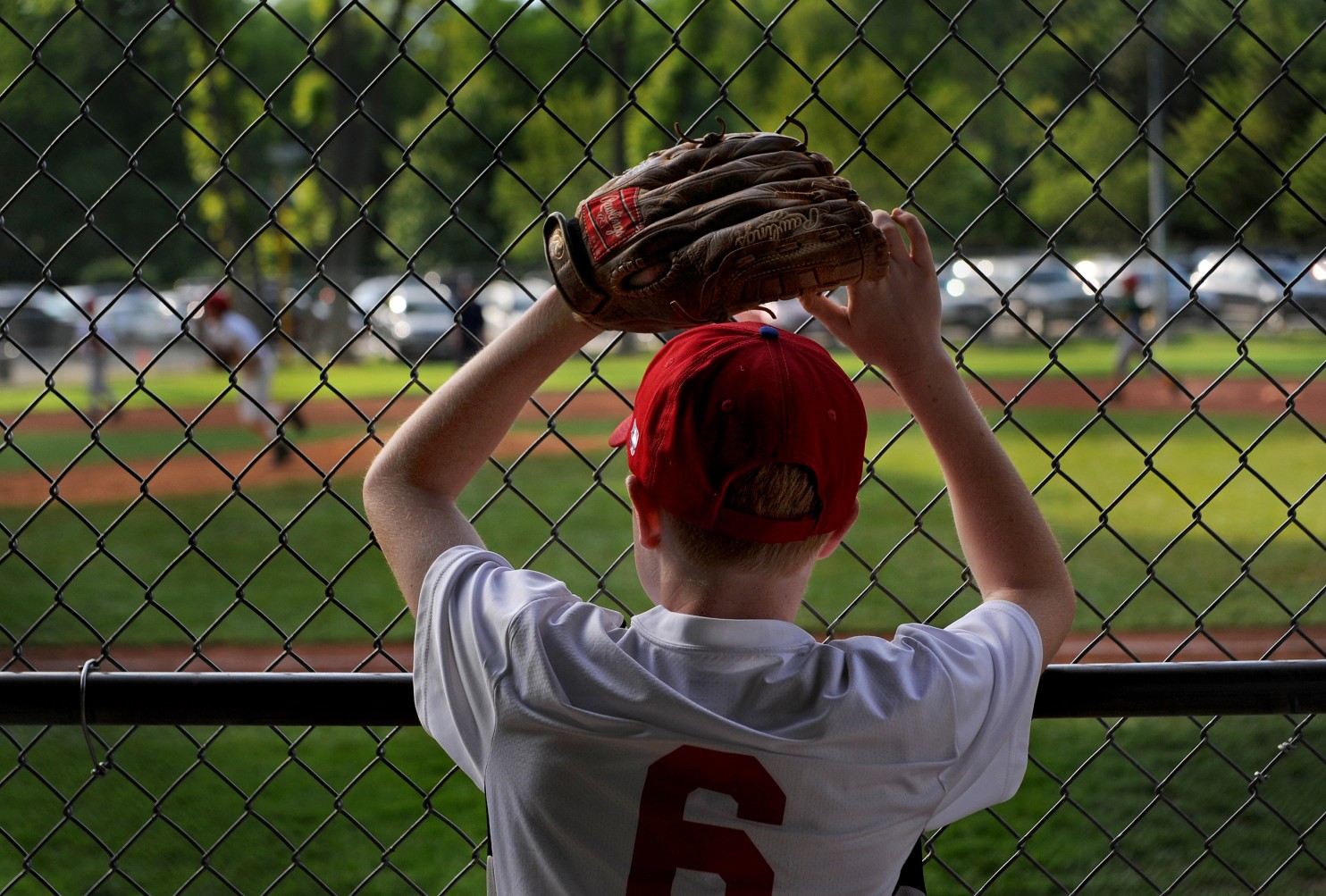
Although baseball has long been known as the national pastime in the USA, having both played and coached baseball, softball and slow pitch for the better part of my life I know that all of those kids and adults are losing out on a truly great game. There was no better feeling on a tournament weekend in the spring than when I walked out on the field with dew on the grass, slid into home base after a rainfall, or felt the ball connect with the sweet-spot of the bat.


There has been a shift away from hockey, with soccer becoming the #1 team sport in Canada.

In fact, the only sport in the top 10 that saw an increase in participation rates was soccer.  Soccer has over 775,000 youth sport participants compared to our winter national sport of ice hockey which currently has approx. 625,000 registered players.


In the very young age divisions, youth participation in hockey continues to grow for females and for boys ages 5-8 years old thanks to programs like First Shift sponsored by Bauer. Unfortunately once rep hockey is introduced at 9 years old that is when the attrition rates grow and players begin quitting; by first year bantam 70% are hanging up their skates.


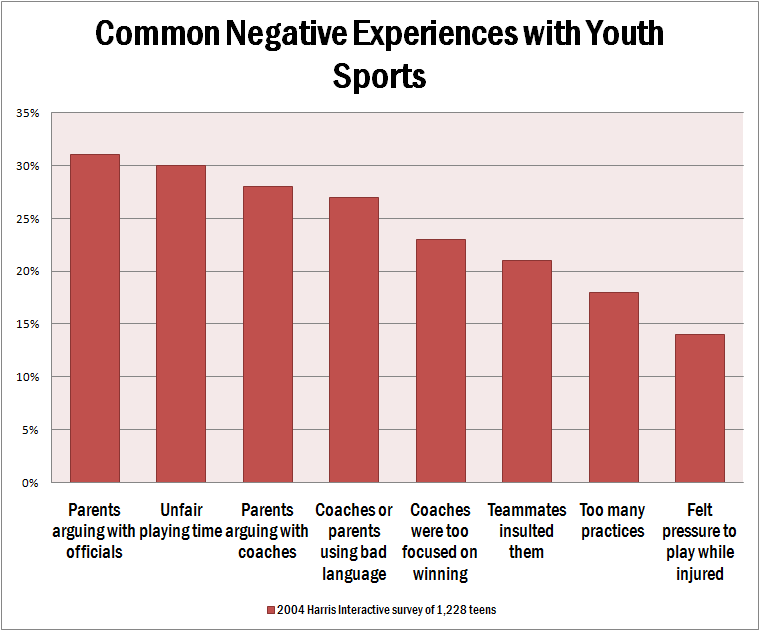
Compare these statistics with a survey done by Harris Interactive in 2004 who surveyed over 1,200 8 to 18 year olds about their participation in organized sports in the USA. Below is a summary of the negative experiences they had in sport:


Source: Harris Interactive Survey – 2008


The top 3 reasons from this survey are still evident, if not worse, over a decade later:
  1. Kids saw parents yelling at or arguing with officials – this is what is leading to 33% of officials quitting each year as I outlined in “Why officials Quit
  1. Kids did not to play as much as they wanted – AKA coaches ran short benches to win games as I outlined in “Lack of Fair Play – The Other Reasons why Kids Quit Sports
  2. Kids saw parents yelling at or arguing with coaches. The main role of parents is to unconditionally love their kids and just “Love watching them play.” Cheer them on, be positive and let the coaches coach.


In addition to the hundreds of hours youth coaches volunteer to plan and run practices, coach games, and conduct individual player and team meetings, they first have to get qualified to coach. This includes police record checks, concussion awareness, respect in sport, online and face to face clinics, making ethical decisions and some even have to be evaluated running practices.
Many sports require that coaches obtain NCCP (National Coaching Certification Program) credits each year to maintain their qualifications to coach.  It is a vicious circle in any sense: parents are challenging coaches who have stepped up to coach which results in the fact that many others don’t put their arm up as a result.  Hence the reason why every parent I have interacted with knows I have in my agenda “Let the Coaches Coach.”  I had one coach in a clinic say “coaches coach, players play, and parents pay.”  This I do appreciate, with rising costs of sports, is one of reasons why parents have high expectations of the coaches. But remember, like the players, it takes years for coaches to develop their skill sets.
Last season in a hockey clinic I was running I had a coach go up one side of me and then down the other arguing that the commitment to coach now was just too much. This is another challenge in itself just like the issue of recruiting and training officials; all sports organizations today are having challenges recruiting and training coaches.


I appreciate there is a lot required of coaches today, and it is a big time commitment, but like that particular coach in that clinic I remind all others who complain that we are in it for one reason.

It’s all about the kids and helping them become they can be, both as a player but also as a person.


I suspect if we did the same survey of 8-18 year olds in Canada now the top three responses would be the same.

Fast forward 13 years since the Harris Survey and other stats I outline above, and it is even worse… now 70% of kids are quitting sports before they enter high school in Canada, US and other countries globally.


We need to stop the insanity and recognize that youth sports should be just that, a game that kids play for the love of the game, not one that has evolved to adults competing with each other through kids to win at all costs.
Here is a short video about Mark Sertich, who loves the game so much he still plays hockey 3 days a week at 95 Years of Age !!


Let’s work together to bring the game back to the kids … where it belongs.


Don`t be a kids last coach


Why Kids Quit Lacrosse

Posted 3 CommentsPosted in Uncategorized

Why Kids Quit Lacrosse

The Shockingly Dwindling Numbers of Youth Lacrosse

Glen Mulcahy

April 27, 2017

Pixabay images accessed April 2017

BONUS – Download a Free Copy of this Blog in PDF Format HERE  

Regardless of which hat I am wearing, running clinics, doing talks or workshops, the same issue comes up over and over again from coaches, parents and sports administrators … the challenges of retaining their players year after year.

It is not surprising as the current trend is that 70% of kids quit all organized sports by the age of 13, unlike my generation where we sampled many until we specialized in our late teens.

I recently was provided a three year retention report by the Alberta Lacrosse Association who surveyed approximately 1,100 families as they were concerned about retention numbers; over the course of 3 years they had lost 11,343 players!

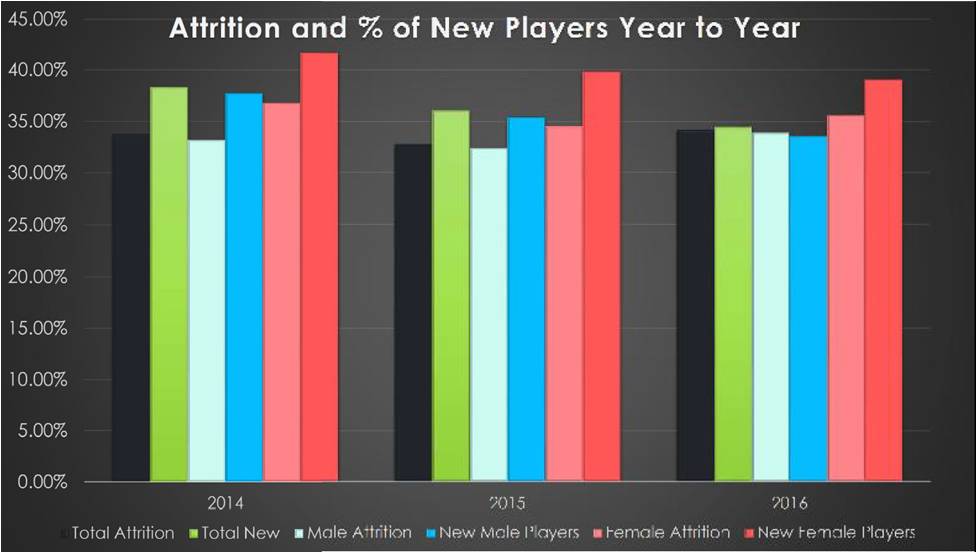
Below is a summary table showing the total new male and female players as well as attrition for both genders over the course of 3 years.  Although sports like lacrosse and minor hockey have seen exponential growth in female registrations in recent years, as a result of attrition each year the ALA’s (like many other sporting bodies year after year) overall growth is flat or only single digit increases. This could potentially be much higher if we able to retain more players.


player attrition

(Alberta Lacrosse Association)
Summary of both box and field lacrosse retention data over 3 years

Each of these three years the ALA attracted new players to the great game of lacrosse starting at 5-6 yrs old (Mini Tyke) but also lost close to the same amount of boys each year. Approximately 5% more girls sign up than those that quit, so like minor hockey, where girls enrollment has seen exponential triple digit growth in the last 10 years, girls signing up for ALA lacrosse is what is leading to the game growing in Alberta much like I suspect is occurring in other provinces in Canada.

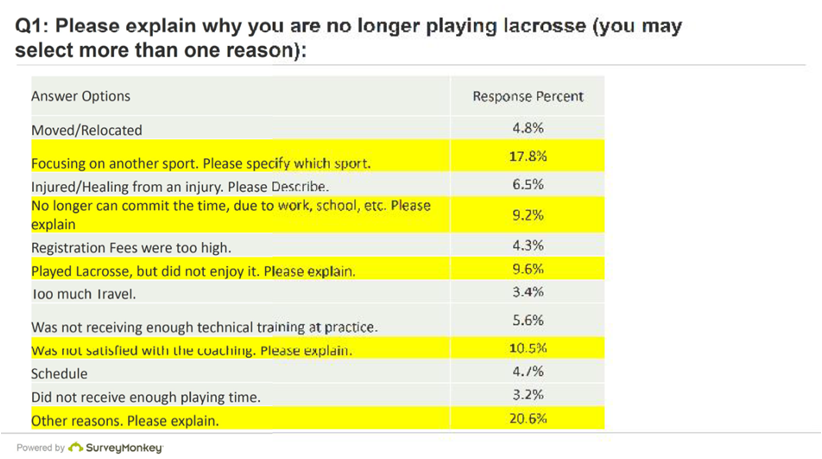
Why then are they no longer playing lacrosse?

Below is a summary table outlining their reasons for not returning the following season;

not playing lax


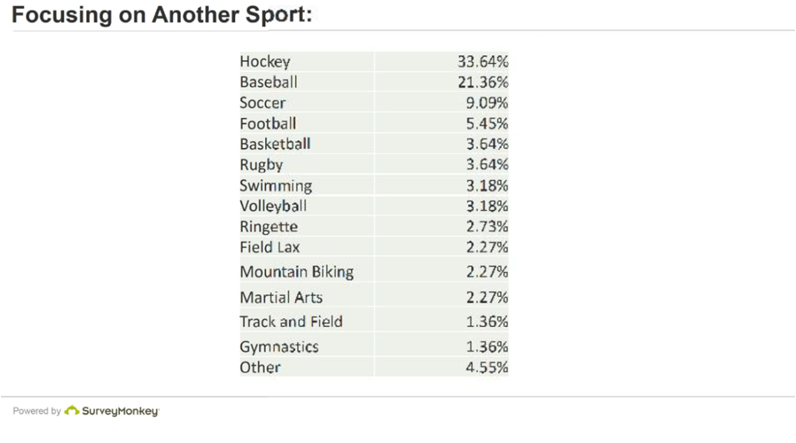
The second most common reason players were no longer playing lacrosse was due to focusing on another sport (17.8%). These are the sports they were focusing on (potentially specializing in) in lieu of lacrosse;

focus on other sport


Hockey was the top sport that players were shifting to as opposed to returning to play box or field lacrosse (33.64%), closely followed by baseball (21.36%). This is due largely to the explosion of popularity of spring and summer “elite” showcase teams and tournaments. Baseball is a great spring sport, and a viable option once hanging up the skates after winter hockey season as well; but talking to many parents of kids that play baseball, it too has evolved to have summer ball, fall ball, and winter conditioning camps as baseball is another sport that player salaries have escalated totally out of control (it is the only professional sport of the top 5 that has no salary cap), plus chasing NCAA Div 1 full ride scholarships.

The results don’t surprise me.  Although there are parents aspiring for their son or daughter to get an NCAA scholarship for lacrosse (unlike other professional sports, pro lacrosse players only get small salaries), this only represents a small % of those that believe that the more lucrative path is to focus on hockey. More and more players are being drafted from college to the NHL which, if then signed and played in the NHL, can equate to MILLIONS of dollars in salary. (Although only 0.03% of those that play minor hockey will play in the NHL,and the average playing career is only 6 years).

So rather than playing for the love of the game, like the great Bobby Jones who is the only golfer in history to win all 4 majors as an amateur, or Michael Jordan who had a love of the game clause in his contract to play pickup basketball anywhere/anytime, youth sports for kids has changed from play to work as a year round commitment.

Do kids ask you when interested in a sport “Mom, can I work lacrosse or hockey?”

No.

They ask “Dad … can I PLAY lacrosse or hockey?”

The sad thing is that the science, thanks largely to Sport for Life and their research promoting long term athletic development, says concentrated specialization is the wrong path. The research shows that kids should sample as many sports and free play activities as they can to develop physical literacy and as many fundamental movement skills as possible during their key development years (6-12 years of age) then narrow down to 2-3 sports per year (not playing concurrently but seasonally so they don’t have conflicts or suffer burnout), and then finally specialize in the sport they are most passionate about in their late teens.


stat

Summary table for the retention report,  other reasons why kids stop playing lacrosse


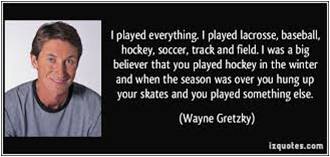
The age level with the highest percentage of players opting to focus on another sport (33% Hockey) is TYKE (7-8 yr old) with double digit attrition through to Peewee (11-12 yr old). Kids should be playing multiple sports, not focusing on one sport. Many famous and successful hockey players have cited the benefits of hanging up their skates at the end of the winter season and instead playing lacrosse in the spring. The cross training is proven to help build hand-eye coordination, contact confidence, balance, agility etc.

I think you may have heard of one of them … Wayne Gretzky .. AKA the great one.


gret


I think you would all agree that Wayne was a “pretty good” hockey player, but it was due largely in part to the fact that he was an athlete first that he was able to play in the NHL from age 18 until 39 years old, though the average playing career is only 6 years. This is due to the fact that he had the necessary recovery and rest off season and developed other motor skills that helped him in hockey and vice versa.

Below is a video from current NHL player, John Tavares, Captain of the New York Islanders, talking about the benefits of multi-sport who was also an elite lacrosse player and who’s uncle John is the highest scoring player in the history of indoor lacrosse over the course of 22 seasons in the National Lacrosse League.


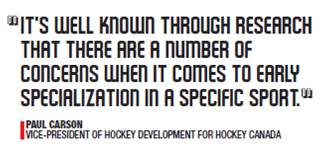
Paul Carson, VP of Hockey Development for Hockey Canada says there can be troubling consequences for athletes that live a hockey only lifestyle. “We know that there are over-use injuries…. mental burnout is also a big problem because it results in youth athlete getting tired of a sport, which leads to a decrease in participation because they have lost interest in the only activity they have been involved with..” (Source – Hockey Now March 26, 2016 – Mike Toth)


paul


Here’s a couple of other University Lacrosse Coaches promoting the benefits of multi-sport:

Janine Tucker – John Hopkin’s Women’s Lacrosse Coach

” We prefer multi-sport players for the diversity of their skill sets they have developed … Basketball angles, soccer for aerobic capacity and can run all day


 Scott Marr – Albany Men’s Lacrosse Coach

” We like the diversity these kids experience … different rules, skill sets, coaching styles and they ARE MORE RESISTANT TO INJURIES”


The path that kids should follow is not early sport specialization, and as mentioned previously the ALA retention report founds kids as early as Tyke 7-8 years old were leaving lacrosse to focus on hockey. Instead, to follow the LTAD (long term athletic development) model, kids should play as many sports and extracurricular activities as possible during their key development years. Play hockey in winter, hang up the skates after the season and play lacrosse or baseball in the spring and summer and most importantly be a kid … go to the beach, free play soccer, ride your bike, swim, camp and so on. Summer should be the time for free play. Too much structure in organized sports is one of reasons why we are seeing kids quit by age 13.

Ask yourself .. do you know what you want to do in life?  Many don’t know until their 30’s – 40’s IF they ever do.

How then can we recommend to a young athlete as early as 7 years old they should specialize in one sport only as they show early promise? Most high level coaches and scouts I talk to look for mult-sport ATHLETES, not hockey or lacrosse players when recruiting.

Let’s work together to bring the game back to the kids … where it belongs.


Don`t be a kids last coach

What Else Discourages Amateur Officials?

Posted Leave a commentPosted in Uncategorized

What Else Discourages Amateur Officials?

The life of an amateur umpire explained by long-time official

Michael Yamaguchi

April 04, 2017

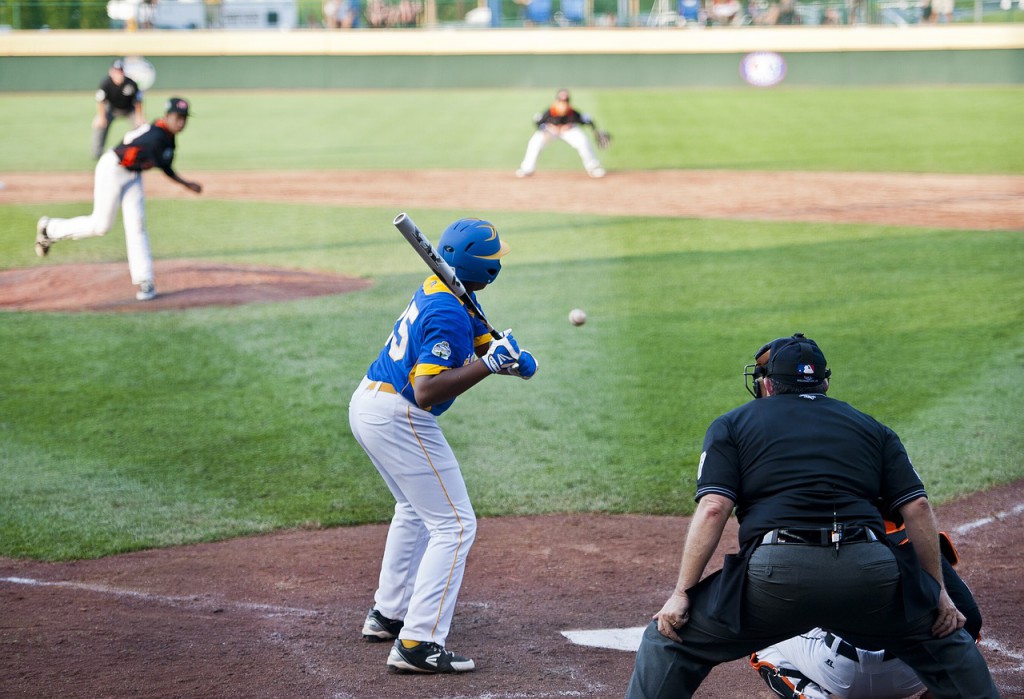
umpire at baseball game

BONUS – Download a Free Copy of this Blog in PDF Format HERE  

Over many years as a sports official for various leagues and in numerous provincial and national championships, I have been the recipient, have witnessed, or have heard of numerous cases of physical or verbal abuse towards youth sports officials. As mentioned in a previous blog post, the need for parent and coach education in regards to treatment of officials cannot be overemphasized.

However, it’s not just abuse from coaches or parents that’s driving officials out of officiating. While it is arguably the main cause, there are numerous other reasons that contribute to the high attrition rates. Specifically, I have noticed a few other causes:

  • Lack of recognition
  • Lack of a development system
  • An official’s own fear of failure

Lack of Recognition

How often are officials noticed during games? Normally never, until a questionable call is made by an official. I rarely hear fans or coaches compliment an official on getting a call right. Yet, when a questionable call occurs against their team, they’re often the first ones to criticize them.

Even today, I appreciate positive feedback from coaches or parents. Although it may not seem like a lot, positive feedback is a big difference to many young officials, similar to athletes. A finding from the study “Understanding Factors Contributing to the Retention of Canadian Sport Officials” suggests that praise and recognition from respected individuals has a positive effect on recruiting and retaining officials.

Some may say that coaches or spectators may not be able to recognize quality officiating in terms of distance, angles, timing, etc.  But there are a couple things that most people can recognize from officials without really paying attention to them – hustle and effort. On that note, senior officials will likely recognize traits of a good official. That leads me to my next point.

(Study – Livingston, L. A., and S. L. Forbes. “Factors Contributing to the Retention of Canadian Amateur Sport Officials: Motivations, Perceived Organizational Support, and Resilience.” International Journal of Sports Science & Coaching 11.3 (2016): 342-55. Web.)


Lack of a Development System

I began umpiring baseball in the fourth grade, and at the time, I wasn’t sure if I wanted to do it. My parents had encouraged me to try it, as they felt it would help me develop vital skills for the future. The only interest I had in umpiring was due to the fact I liked baseball at the time, and that I could maybe save up for a new bat.

At the start of my first game, I was nervous and absolutely terrified of everything: making mistakes, looking bad… you name it. Fortunately, I was paired with a more experienced umpire that supported me throughout the game. As the game went along, I received positive feedback and advice from my partner in-between innings and after the game.  Afterwards, I sort of looked forward to umpiring my next game.

In my current role as head umpire for a minor baseball association, I reflect back on this experience many years ago when considering how I can help aid the development of our younger officials. Apart from the occasional “disagreement” every now and then, my first year officiating was a great experience, and I wish the same upon the novice officials. Globe and Mail Reporter Hayley Mick suggested that more associations do the same back in a 2009 article on young sports officials.

Mentoring is crucial to an official’s development. Why? Unlike athletes, many officials do not practice their craft during the season. Typically, clinics are held at the beginning of the season, and after that, officials are all on their own. Many will show up to a game and perform their duties, often without thought to their signals, footwork, or coverage responsibilities. Without due care, officials can develop bad habits, and performance will deteriorate over time. A mentoring system will help officials improve, and eventually, will open up more opportunities for higher level officials in the sport.

More importantly, however, it’s inevitable that conflicts will happen between coaches or players and officials. An experienced official on the field can help an overwhelmed younger official deal with these situations. In my younger years, this has happened on numerous occasions, and my more experienced partners were able to “take the heat” for me. Had it not been for these senior officials taking charge, I would have packed in officiating years ago.


Fear of failure

For Major League Umpires, 95% accuracy is the accepted standard for balls and strikes. In an average ballgame at that level, there’s roughly 300 pitches. An umpire at MLB level can be wrong on 15 pitches, and still perform at an acceptable level by Major League standards.

If an umpire that makes their living calling balls and strikes can make around 15 mistakes every game, it seems that the “acceptable standard” should be much lower for amateur umpires. We don’t have high tech “K-Zones” like they do on ESPN, but I’d imagine that somewhere between 85-90% accuracy would be reasonable for a top notch amateur umpire working a high school game… two to three times as many mistakes as the professional standard! Mistakes, and lots of them, are inevitable when officiating any sport… especially when officiating is a hobby or part-time job, not a living!

The pressure of being right 100% of the time tends to get the best of many officials, surprisingly even the more experienced officials. I can’t tell you how many former officials I have worked with over the years that have either dropped officiating or get frustrated due to the stress of being perfect.  Also, I have met many who have expressed interest in officiating, but do not want the added stress of being “perfect.” The intrinsic pressure is enough, and the extrinsic pressure from coaches and parents doesn’t help at all. In fact, a study conducted by researchers at Middle Tennessee State University suggests that making a wrong call causes higher stress than receiving verbal abuse from coaches or spectators.


So, what can we do?

I encourage coaches and parents to personally compliment officials that hustle and put in effort during their team’s game. A simple “Thanks for working hard today, ref!” may not seem like a lot, but does mean something to a young official.

Associations should look to invest into some sort of development or mentoring system for their officials. Kudos to minor sports associations who currently offer some sort of system to their developing officials, but more can be done throughout.

There are many things that an association can do, including:

  • Having senior officials attend games to give feedback, emphasizing positive feedback.
  • Offering brief mid-season meetings or on-field clinics.
  • Convincing and offering remuneration top-ups to senior officials to officiate some games at levels they don’t normally work to help guide younger officials.

Sure, paying extra for an official to work a lower level game or to observe officials from the bleachers may seem like an added expense for the association. However, over time, these initiatives will improve officiating, leading to more enjoyable experiences for officials and indirectly for players and coaches as well.

My last point on the fear of making mistakes is more of a message towards fellow officials –chances are we’re going to make many, many more mistakes than a professional official who makes many mistakes! Always remember to put things in perspective, and like athletes, learn from the mistakes. After all, officiating for most of us is just a fun hobby!