
Early sport specialization is just wrong blog thumbnail

Early Sport Specialization is just wrong.

Posted Leave a commentPosted in Athlete, Coach, Organization Executive, Parents

This past week my son was at his annual west coast prep camp that he started participating in several years back as a player where many top level players in hockey go for 10 ice sessions, games, dryland with some of the top coaches in the game.

Marc Crawford, Phil Johnson, Ryan Walter, Barry Smith and many other NHL coaches, NCAA Div I, II and II as well as Junior A/B coaches participate in the camps that run for a week at a time to get instruction to take their games to the next level.

I never will forget the first camp he attended as a player, at 12 years old in his second year of peewee and how much he packed, a full hockey bag, a duffel bag almost the same size, a backpack, sweatshirt, pants only to find that the particular week in Port Alberni was 38 degrees and even though worked hard on ice, was much cooler than outside.

As it was his first year at the camp, like many hockey coaches, I wanted to see first hand how a top-notch camp was run so I went over for a day and watched many of the ice sessions lead by the professional coaches so I could then share with the volunteer coaches in my clinics tips and tricks to run efficient practices.

I connected with my son later that day and he said the experience had been AWESOME, although was starting to experience skate bite from his laces and was not a big fan of scrambled eggs and avoiding the table with peanut butter (due to allergies to peanuts)

I offered to take him for dinner before I was going to head to catch the late ferry to return home and he said he would rather hang out with his new “buds”

Each year he would return to the camp, even after he decided not to play winter hockey, and this was the first year after he aged out of minor hockey and was asked to come as an on-ice instructor/captain for one of the younger age groups.

This particular week, one of the guest coaches was Brendan Morrison, former NHL player who started his career with the NJ Devils and was traded and played the majority of his career for the Vancouver Canucks, played on the top line with Marcus Naslund and Todd Bertuzzi in their respective career years in points individually and as a line. They were called the west coast express as a result and qualified for playoffs (unlike last 3 years where the Canucks have not made the playoffs and recently lost their president Trevor Linden due to power struggle with owners).

One evening Brendan participated in a panel session interview and offered up a couple of tidbits that my son shared when we had dinner the night he came back;

  1. Brendan shared that he absolutely did not believe in early sports specialization and
  2. He believed in free-range parenting as a father of 3 girls and a boy and encouraged to play, get outside without supervision

My son could relate to both as we have numerous conversations on the subjects over the years both in my role with PARADIGM sports but also as a parent and coach as many know from contributions I have done for various news articles and affiliate blogs.

Needless to say, it was refreshing to hear that a former NHL player, Hobey Baker Award winner as top NCAA player who had a long career was against specialization and advocating for kids to play as many sports as possible until they found the one they loved.

Early Sports Specialization continues to be a hot topic, so much so that I was asked to contribute to another follow-up article on the subject for a national Canadian Magazine that is supposed to be in an upcoming edition which I will share out once it goes to print.

I was also surprised they got on the subject of free-range parenting, whom Lenore Skenazy made famous when she launched her site www.freerangekids.com to combat helicopter/snowblower and lawnmower parents where kids have been taken to police offices due to “reports of abuse” when parents encouraged them to take the bus, subway, play in the park on their own without their immediate supervision.

This I also am 100% in support of, I remember one of the reasons that kids don’t get their 2000 steps in today walking to/from school is due to the white van as parents fear their kids will be abducted.  Kids need to have play time unsupervised, need to learn how to fall and get up on their own, even if it means there will be some bruises, scratches along the way.  If parents don’t encourage kids to do so, how will they fair when they face real adversity later in life?

Our backyard since both my kids were very young was a myriad of sports balls, bats, sticks, hoops and we live a couple of blocks from a ball field and park that my wife and I would tell our kids to go to get their daily dose of activity in addition to the various sports they played.

We even encouraged them to walk to/from schools, 30-45 minute walks each way, but would drive them to school if the weather was really, really nasty (the same our parents did)

Whenever I have done talks on the subject, I have shared the video that is part of this weeks newsletter from Bill Meiers show when he interviewed Dave Barry and talked about free range parenting and how his mother would share …..

“Don’t Drown”

Like Dave’s mother, my mother would say to me or my brother before we left for the day to scour for garter snakes, go to ball fields, lacrosse boxes, fish in streams, jump our bikes over ramps, climb and fall from trees and so on … BE HOME FOR DINNER.  Other than that it was fair game, kids need more of that now more than ever, thanks to sports being adultified which has to lead to the specialization epidemic, they need their free play time.

Although free-range laws have not been passed in Canada to the best of my knowledge, both Utah and Arkansas have now incorporated legislation to protect parents who aspire their kids to be just that, KIDS and encourage them to walk to/from school, play in the park or backyard unsupervised (within reason).

At what point we find the happy medium where kids play again without fear of criticism from adults or adults are permitted to let their kids walk home from school without having police and social services knocking on their doors remains to be seen.

Hopefully, it happens sooner than later, we need to let kids BE kids again.

Let’s all work together to bring the game back to the kids … where it belongs.

Don`t be a kids last coach


The Reality vs. the Dream of NCAA Scholarships and Going to the Show

Posted 21 CommentsPosted in Athlete, Coach, Organization Executive, Parents

Every day I come across another study, article, or blog post about the dangers of early sport specialization and the driver for same is parents aspiring for their son or daughter to receive a NCAA scholarship for their chosen team sport to ultimately be drafted to play professionally.

Translation – Get a full ride to get an education and save Mom and Dad over $200K USD, get drafted and then you can take care of us with your Multi-Million Dollar Salary playing professional sports (ROI = Return on investment)

As I have shared with every coach, parent over the years, if that truly is your goal for your son or daughter, start a RESP (registered education savings plan in Canada) or the whatever the equivalent is in your nation when your son or daughter are born.

By the time they are ready to apply for post-secondary education, you will have their scholarship.

IF, you roll the dice and encourage them to specialize as early as 7 years old, these are the real statistics that you need to be aware of before you do so;

  1. Specialization will lead to burnout, even though they may love the sport you encouraged them to specialize in early, the trend where 70% of kids quitting that sport and all sports in general before they enter high school still continues in many developed nations across the globe.

Translation – the 10’s of thousands of dollars, thousands of hours you and your child invested chasing the scholarship or ultimately playing professionally will be for not

  1. They will potentially suffer one or more major injuries that could end their season, worst case, career ending due to overuse

Translation – Again the 10’s of thousands of dollars, thousands of hours you and your child invested chasing the scholarship and ultimately playing professionally will be for not

  1. Full Ride scholarships also are few and far between, most are partials, approx 8.7K – 10.6K USD. Majority of those are for Div 1 schools only (the most expensive tuition and hardest to get into), some in Div II and none in Div III schools.

Translation – Even IF your child gets thru 1 and 2 and is offered a scholarship, it will only partially offset the  actual out of pocket costs.  Compound that with tuition fees alone for international students to the very same schools that offer scholarships can exceed $40K per year it will still leave the family with huge financial outlays each year.

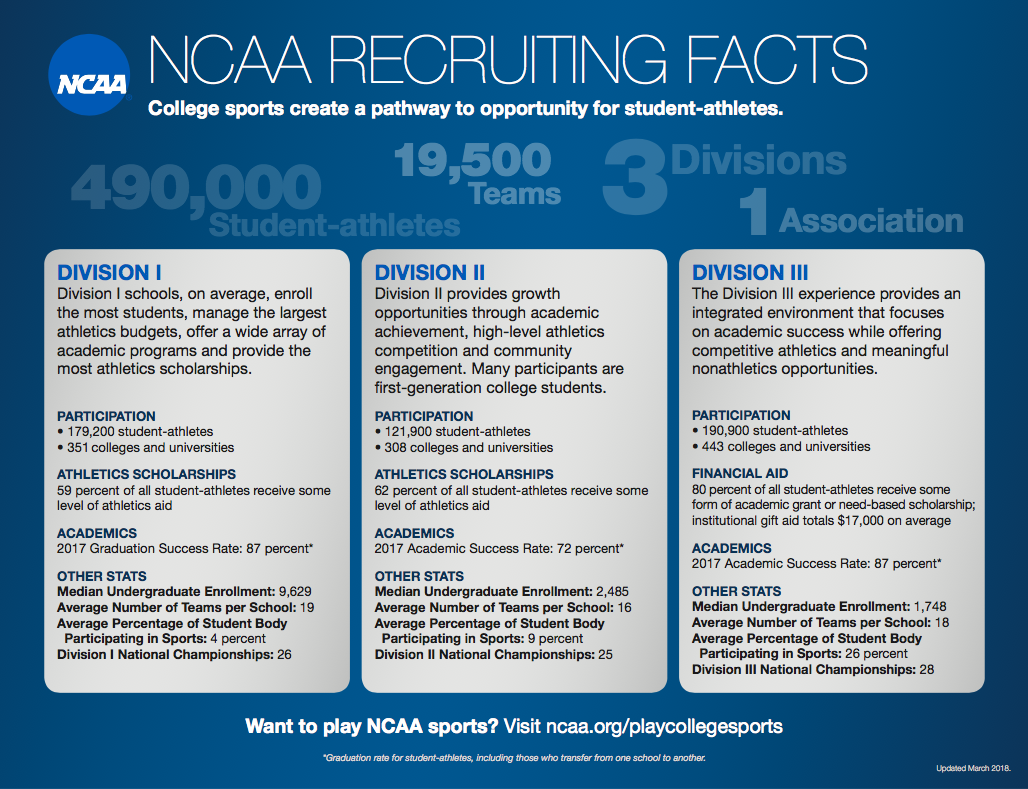
See below for the NCAA facts from March 2018


FACT – Only 2% of the NCAA athletes will be drafted to their major professional team sports but there is no guarantee they will actually PLAY even one game.

The two main NCAA team sports that are driving specialization are Baseball and Men’s Ice Hockey that have much higher % of players being drafted to their major professional levels (9.1%) and (5.6%) respectively vs. other team sports.  Being drafted is one thing, but being drafted, signing a contract, playing a game or a having a long career is another thing altogether.  One of the downsides of specialization is even those that do get to play if specialized starting in high school they will have shorter playing careers than those that continued to play multiple sports until or even in college/university as we shared in our January post

Early Sport Specialization does more harm than good

In the early 90’s, the OHL did a study based on the 1975 birth year of players, approx. 30,000 registered at the time in Ontario,  when they were eligible for the NHL draft and this is what they found;

  • 262 were drafted to the OHL (0.87%)
  • 113 drafted to the NHL (0.37%)
  • 38 Signed an actual contract (0.13%)
  • 22 Played only one game (0.07%)
  • Only 11 were active at 24 years old (0.04%)

I have yet to come across a similar study for MLB players drafted vs. those that will play for the major-league clubs they signed with, but like NHL, the majority come from the first round and after that will potentially have long careers for their minor-league affiliates.

Here is the math based on current trends of kids specializing at 7 years old and entering clubs/academies for 10 years before they even reach the collegiate level.

Most Current Data Set Available from 2013 for team sport participation

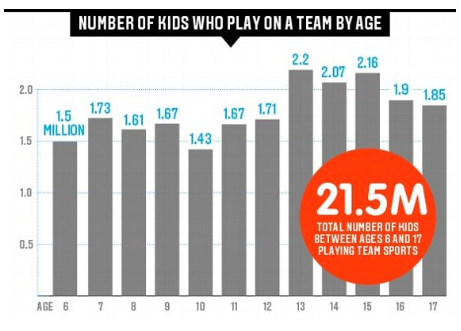
21.5M kids playing youth team sports in the USA;

  • Of those 7.3M will play team sports in high school (football being number one with over 1M) = 34%

Per March 2018 NCAA Facts (of those that played team sports in high school that went on to play in the NCAA)

  • 492K went on to play at the NCAA level = Only 2.3%
  • 59% of athletes at Div I schools offer a handful of full ride scholarships, majority are partials
  • 62% of athletes at Div II schools receive some level of financial aid/smaller scholarships
  • 80% of athletes of Div III school athletes receive some form of financial aid only, no scholarships

Student-athletes in Div II and III schools aid is more in student loans than actual bursaries or scholarships, subject to being repaid back (which puts further stress on the family to do so) vs. scholarships for Div I schools do not require repayment.

  • According to Mark Emmet, President of the NCAA, when players on NCAA men’s basketball teams were surveyed, 75% of Div I, 50% of Div II and 25% of Div III athletes believed they would play professionally when just over 1% were drafted to the NBA in 2017
  • Assuming 2% of NCAA Athletes go on to major professional levels, that is 9840 of the 492K student-athletes
  • Going back to the total 21.5M that played team sports from 6-17 years of age as the feeder group to those that went on to play at the NCAA level, those that were drafted to major professional sports (9840) only equates to  0.04% 

This is the same % that I have shared from numbers shared at the Hockey World Cup Summit in Toronto in 2016;

  • Approximately 2M kids playing hockey globally, Canada and USA accounting for 1.2M, the rest for other nations in Europe and did not even include the sleeping monster China
  • 700’sh roster spots in the NHL = 0.04%
  • The number of NCAA scholarships offered to Ontario born players has dropped 63% the last 10 years. Why? Because the USA has developed their ADM (American Development Model) over the same time period and is developing their own vs. those born elsewhere

Similar Stats in terms of soccer (MLS) based on registration numbers in the US in 2014;

  • Approx 5.7% of the 414K boys played soccer in high school
  • 7% (23,602) will go on to play soccer in college
  • About ½ of those (2.8% or 11.6K) will play Div 1 level (where athletic scholarships are available)
  • Average scholarship = $8.7 – 10.6K USD (gone are the days of full rides, now the average is approx 8.7K for all sports other than football and basketball that the average is 10.6K USD falling well short of that the actual annual costs will be)
  • Only 72 of those playing in college will go on to PLAY professionally = 0.02%
  • BUT 26% of parents think their kids will play professional soccer

I suspect the same % would hold true for English Premier League (European Football), NFL or other professional sports programs where players salaries have increased to the millions of dollars (not including the lucrative endorsement deals)

TD Ameritrade did a study with their clients in 2015 as they were concerned they were not investing enough for their retirement.

  • Many of those that replied stated a large portion of their disposable* income was being spent on youth sports.


  • 43% of those stated that youth sports were too expensive.


  • 67% aspired for their child to get an NCAA scholarship (only 2% potentially will)


  • 47% think their kids will play professionally ( reality = less than 0.5%)


  • 34% think their kids will become an Olympian (reality = less than 0.1% will)

* How many of us actually have disposable income anymore, with rising costs of housing, gas alone, more and more families are living paycheque to paycheque

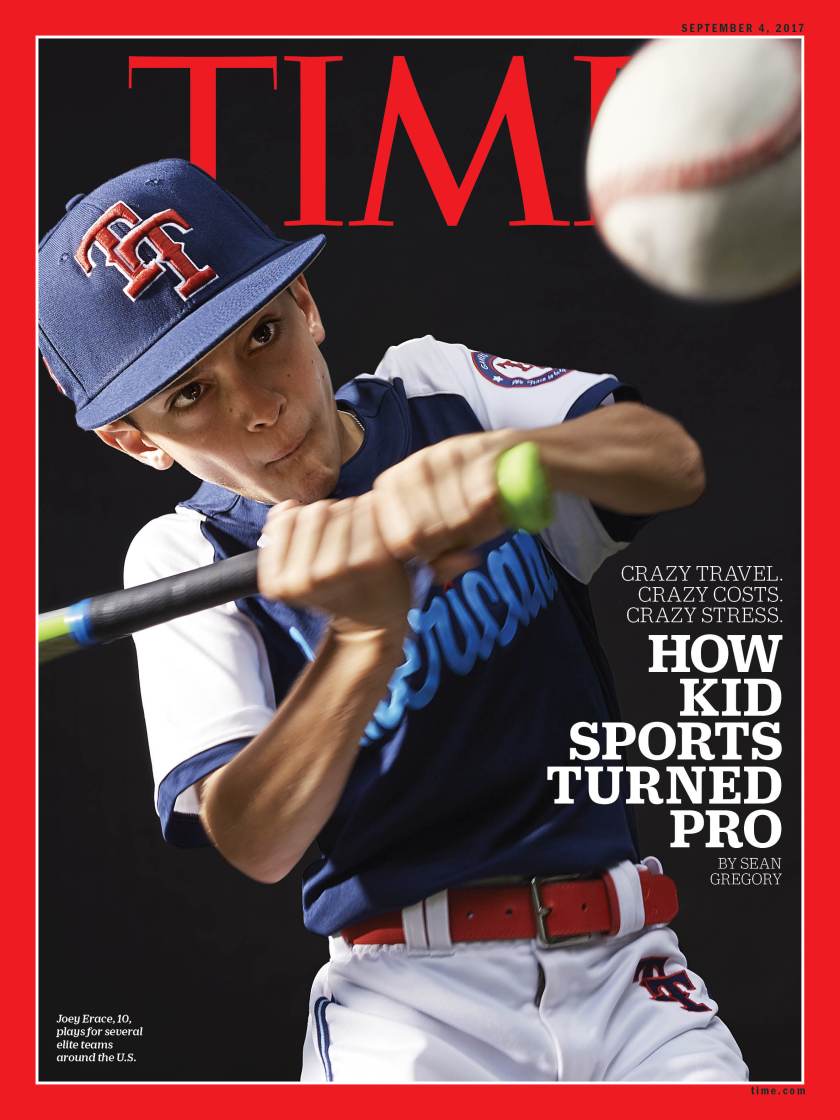
Two Years Later – Time Magazine shared that youth sports in the USA had evolved to a $15 Billion Industry due largely to specialization and the growth of private for-profit clubs and academies.  The industry has literally doubled in revenue in less than a decade!


These private programs are now costing anywhere from $15 to 50K per year (some include travel costs, some do not) so using an average of $25K per year (for travel, programs, gear, specialty trainers etc), and you signed up your “talented” child to year-round program starting at 7 will exceed $250K even before they get to college (AKA – NCAA PREP)

This does not include the opportunity loss of taking personal days, weeks off from your job to chauffeur or fly your child to all the prospect tournaments, games so a scout may “potentially” see them play (if they are good enough, they will be seen TRUST ME, you don’t need to spend all that extra money and time and if you truly aspire for that level, majority of college and professional coaches are recruiting multi-sport ATHLETES)

This is roughly the equivalent what it would work out to for a Div I school tuition for an international student which “may” only be offset by partial scholarships (literally covering meals) of 8K per year (full rides are about as rare as the Giant Panda).

This also does not include the equipment, apparel or other costs that I call “the fluff”

Drum roll …….

NET out of pocket for NCAA PREP (academies) and NCAA education WITH partial scholarship support can still cost …

ALMOST HALF A MILLION DOLLARS invested chasing the dream of playing professionally when the average is only 2% of NCAA athletes will get drafted and even if they do the majority will never play other than for their minor club affiliates and the actual number that may play in the Show works out to 0.02-0.04% in all the data referenced above).

Sadly, many parents are chasing THEIR dream, not their child’s dream, and when I have talked to parent’s almost all share they have not kept track of the math as either too scared to do so or they merely were trying to provide their child the same opportunity as others (AKA keeping up with the Jones).  Thanks to the traditional less costly community and high school sports programs competing with private clubs and academies they all get caught up in the same race only to find out at the end, the costs far outweigh the rewards.

One of the hardest things that I had to tell my son in his last year of minor hockey (when he was 17 years old) was I could not justify paying for AAA hockey thanks in part to mandatory travel tournaments that would push our out of pocket costs over $10,000 for the winter season.  This was MINOR HOCKEY, not an academy where the costs can push 20-50K.

Ironically it was the same conversation I had with my mother she shared that she could no longer support me playing hockey as my father’s life insurance ran out (well before specialization, spring, summer camps, $300 sticks, $1000 skates, Mandatory Travel tournaments)

What did I say to her?

It’s Ok Mom, I love hockey, but I would like to keep trying other sports, so I signed up for football in the fall ($125 reg fees that included all the equipment but cleats), rugby in the Spring (No reg fees, just $200 for jersey and cleats) and taught myself to play golf in the summer (junior fees were free or very low and I bought a used golf set for $100.00).  I had already won provincials (equivalent to a state title) in Hockey, and then went on to play for teams that won provincials in Football and Rugby.

What did my son say?

He understood and said he would rather play High School Volleyball ($125 athletic fees plus a pair court shoes) and Rugby  ($125 athletic fees plus a pair of cleats) and golf in the summertime so he could just go out there, work up a sweat, have fun and be with his friends.

At the end of the day, that truly is the reason why kids PLAY sports.

Sometimes we have to hear from the mouth of babes to bring us back to reality.

Let’s all work together to bring the game back to the kids … where it belongs


PS Tagline - Dont be a kids last coach


Tommy John Surgeries on the Rise While Baseball Registration Continues to Decline

Posted Leave a commentPosted in Athlete, Coach, Early Sport Specialization, Organization Executive, Parents

With all the talk about overuse injuries due to early specialization of late, my wife picked up a book at the Library that is one I am reading now called “That’s Gotta Hurt”, written by Dr. David Geier regarding the various sports injuries and their remedies that have impacted sports.

One chapter is dedicated to Tommy John Surgery and I thought would be a great to share some of the nuggets.

I believe everyone knows the reason the repair of the Ulnar Collateral Ligament (UCL) in the pitcher’s arm is called Tommy John as the first ever one done was on MLB pitcher Tommy John after he suffered the tear to his UCL pitching for the LA Dodgers against my former favorite team, the Montreal Expos (who were on track to win the World Series in the lock-out year then only to be moved to Washington a decade later but that is another story in itself).

The date of that game was July 17, 1974 and it revolutionized how the UCL tear was repaired, when Dr. Jobe conducted the first ever “Tommy John” surgery by taking a tendon from the forearm of the non-throwing side to replace the torn UCL.

It is a major reconstruction, takes over a year of rehab to get back to the mound, but the upside is statistically the % is quite high that pitchers will be able to return back to competitive level they were prior but the big unknown is for how long and if they have one as early as Roberto Osuna did @ 18 years old (pitcher for the Toronto Blue Jays), if they will require a subsequent Tommy John Surgery down the road.

Thus far, the only pitcher to enter the MLB Hall of Fame ever to have had Tommy John Surgery is John Smoltz, and this was his classic “rant” when he was being inducted in the hall of fame in 2015 as the number of Tommy John Surgeries being done on teenage boys was continue to escalate when it previously was only MLB pitchers to prolong their careers in their 30’s (Tommy John was 31 when he had the surgery, John Smoltz was 32).


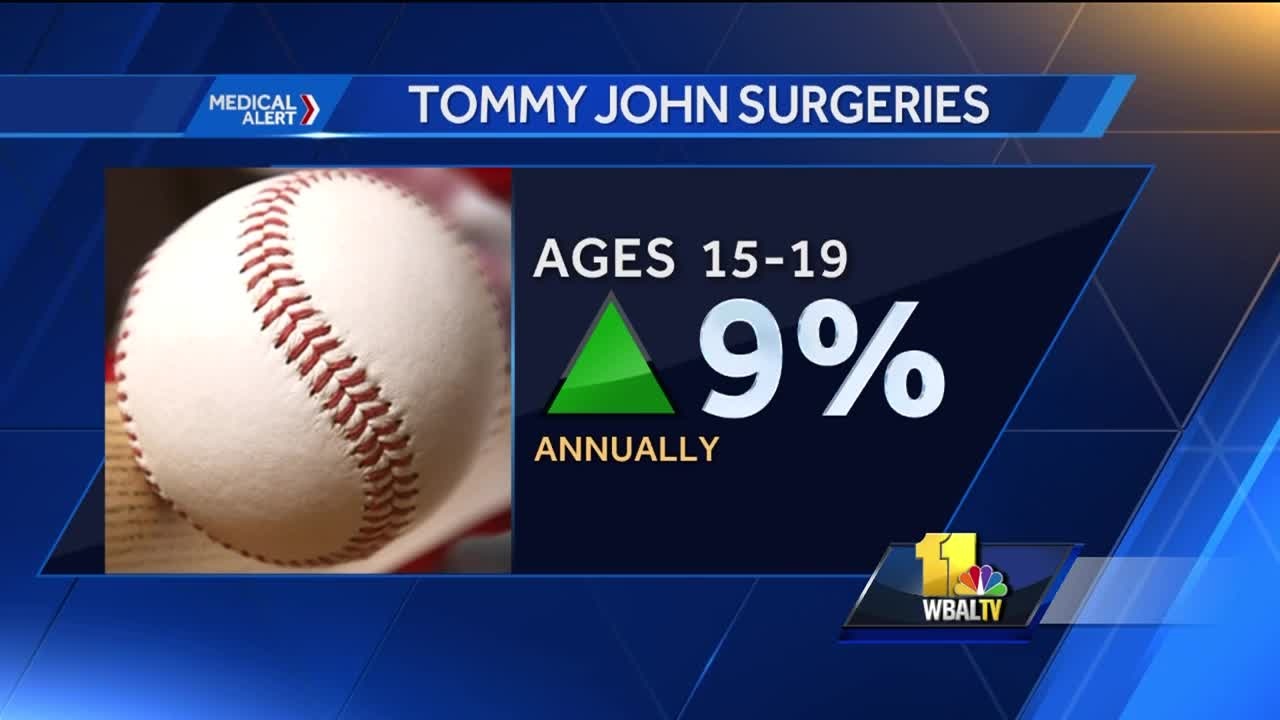
Fast forward to current times, now over 60% of the Tommy John Surgeries being done are on 15-18 year old boys.  Over 60%!!!

Compare that to the last 2 decades

In 2010 – 33%, In 2000 – 18% so the number has increased over 300% !!

Part of the reason is due to overuse, but the other reason is due to poor mechanics that should be corrected by minor baseball coaches.  As the current winning at all costs environment makes them focus more on the outcome of winning games vs. prolonging the pitching careers of their young pitchers, providing technical expertise for the correct mechanics and discouraging specialty pitches until their teen years (curve ball, sliders, knuckle ball) it is leading to the ever escalating increase of Tommy John Surgeries with no signs of it reversing any time in the immediate future.

One of the experts that contributed to the chapter,  Dr. Glenn Fleisig, research director at the American Sports Medicine Institute (ASMI) as well as others shared the insight that the UCL injury is PREVENTABLE if pitchers focused on the right mechanics as well as limited their number of pitches in youth baseball year over year.

Why then has the number of surgeries tripled on teenage boys the last 2 decades?

  1. Specialization – overuse where pitchers are throwing in Spring, summer, fall and even winter ball.

and

2. Lack of proper instruction in terms of the proper mechanics for various pitches

There was even a head coach of a team that has a very successful record who had pitchers throw over 200 in games (when the MLB pulls pitchers when they get over 100) and used the analogy that kids from the Dominican Republic do so all the time so did not think it was big deal.

The other sad statistic that has evolved is a study done by Christopher Ahmed found that …..

  • 30% of coaches
  • 37% of parents
  • 51% of high school athletes
  • 26% of college athletes

…..believed that Tommy John Surgery should be performed on players with NO INJURY to improve pitching performance.

Say again?  Performing a major reconstructive surgery on someone that is NOT INJURED?

Would be different if we used medical advances to repair serious injuries but another altogther aspiring for that robotic arm no?

Surely everyone knows that the TV series Six Million Dollar Man in the 70’s and the upcoming movie 6 Billion Dollar Man based on the same series is fictional?

Talking to some parents as I have travelled the country, they have heard that the surgery will increase their son’s pitching velocity by up to 5 MPH and with multi-million contracts for pitchers they “claim” their son is willing to undergo the surgery  to chase the dream.

Reality Check – there is no anecdotal evidence that the surgery done on an uninjured UCL will increase pitching speed, nor is there any longitudinal studies showing how long their professional careers may be if they have the surgery in their teen years as is the majority now.

When the son of a mother reached out to me regarding her sad story that her 15 year old son was quitting competitive baseball and the reasons he was doing so was so he could also play other sports (basketball) so would play (recreational baseball in Spring only).

In a subsequent follow-up email she shared with me her 15 year old son made the decision to quite due to the intense pressure playing competitively, sports evolving to year-round work, more and more kids are quitting the game than ever.

He also told his Mom “he doesn’t want to injure his arm (pitching) too young so, he can play longer etc…I think sometimes our children are OUR biggest teachers and sometimes we need to sit back and be taught!”

If a 15 year old GETS it, why don’t the adults?

The youth baseball coaches when kids start to pitch at 9 years old should have best interests of the child in mind, not the outcomes of games to ensure that they teach them the proper mechanics, avoid competitive pitches until later (breaking balls, curve balls, sliders) as John Smoltz touched on in his Hall of Fame Induction Speech.0


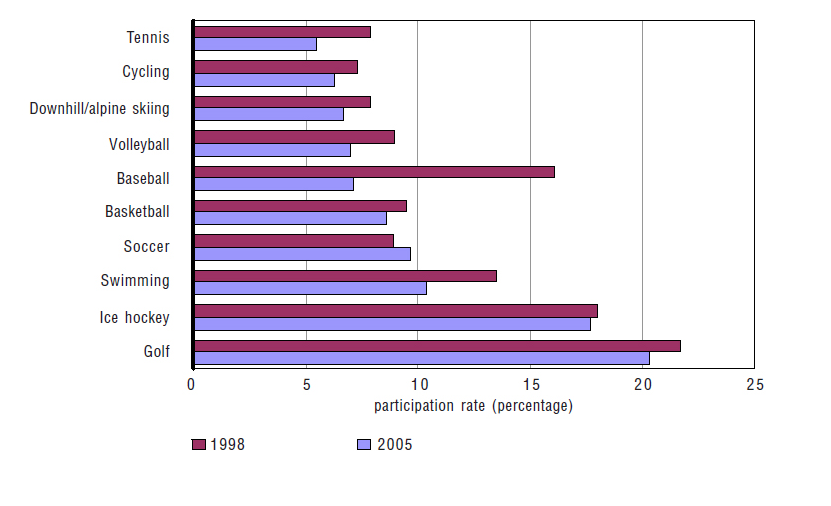
It is even more critical now as baseball is the sport that has been affected most by attrition, in Canadian study done by Statistics Canada from 1998 to 2005 baseball saw overall participation rates drop by over 50% (youth and adult).  Like many other sports baseball is in jeopardy also in terms of fans, the Toronto Blue Jays lost over 7,000 season ticket holders this year.

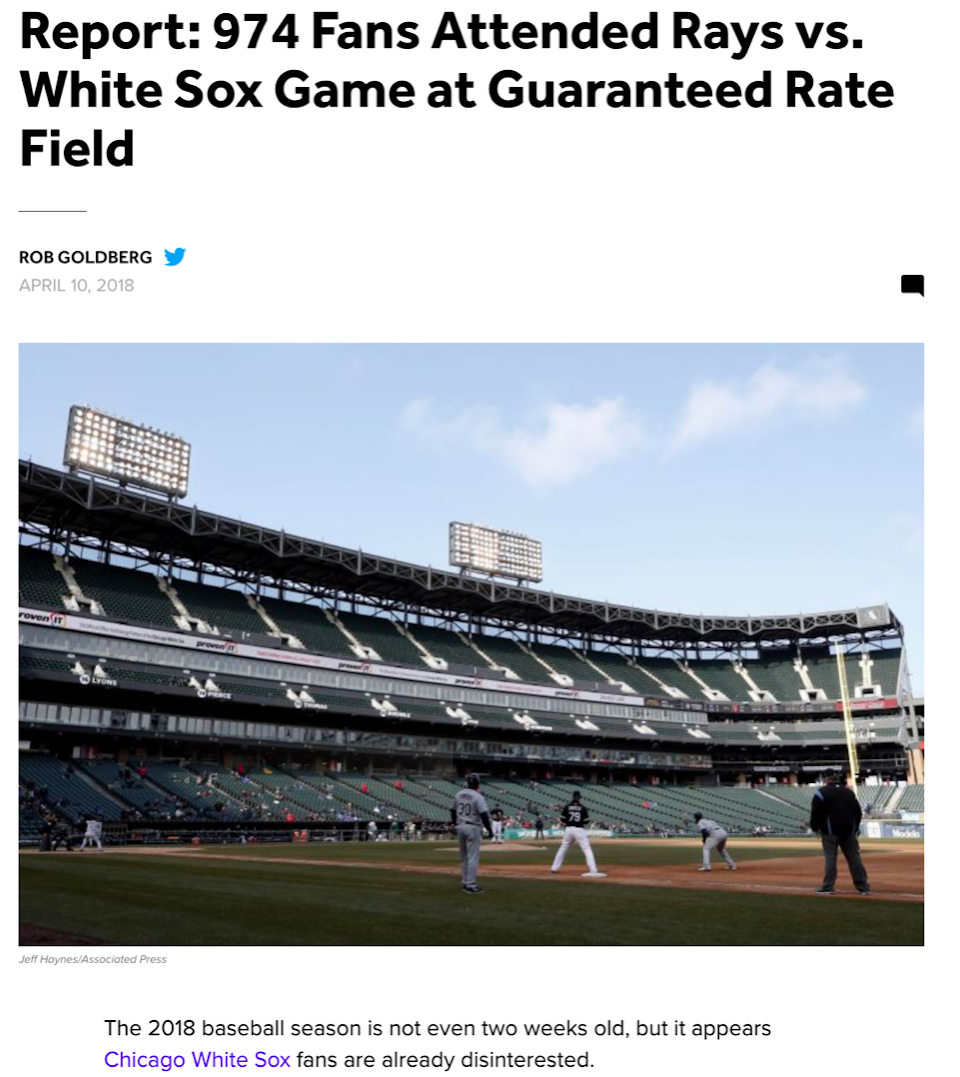
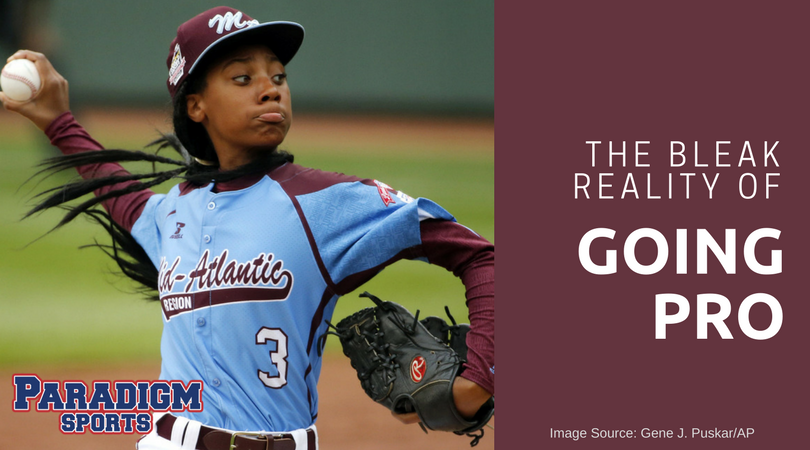
Many MLB stadiums are having the worst attendance they have had to start their spring seasons in decades including image below from recent Chicago White Sox game.


The seats are empty because less are playing to begin with or those that do, are quitting because they are burnt out or are suffering career ending injuries in their teens from overuse coaches not keeping track of pitch counts.

Simple Math – You play the game, then you watch the game because your LOVE IT.

If less play the game, less will watch the game later in life as fans.

Now, more than ever, we must work together to bring the game back to the kids … where it belongs.
PS Tagline - Dont be a kids last coach


The Risk of Specializing at a Young Age

Posted 1 CommentPosted in Uncategorized

BONUS – Download a Free Copy of this Blog in PDF Format HERE 

As I am doing the final tweaks to my presentation for my talk at the upcoming Sport for Life Annual Summit in a couple of weeks, I have done some more research on early sport specialization vs. LTAD and thought would be good to do an update to prior post I wrote last year “Early Sport Specialization does more harm than good

It continues to be one of the top 3 questions I am asked after every presentation, just yesterday when I was asked to be a panel expert for UBC’s KINtribute to Active Society session several of the students that attended approached me afterwards.  Approximately ½ of those that attended the panel got in line to ask me questions as we wrapped up and literally every question revolved around early specialization, even a former gymnast who was now coaching that quit competing at 12 as wanted to try other sports in lieu of being at the gym 7 days a week (although gymnastics is one of those that do require early specialization, she was not the first that shared with me she burnt out early much like those in long term development sports do when specialize too soon).

  1. The Data does not lie – Early sport specialization does more harm than good

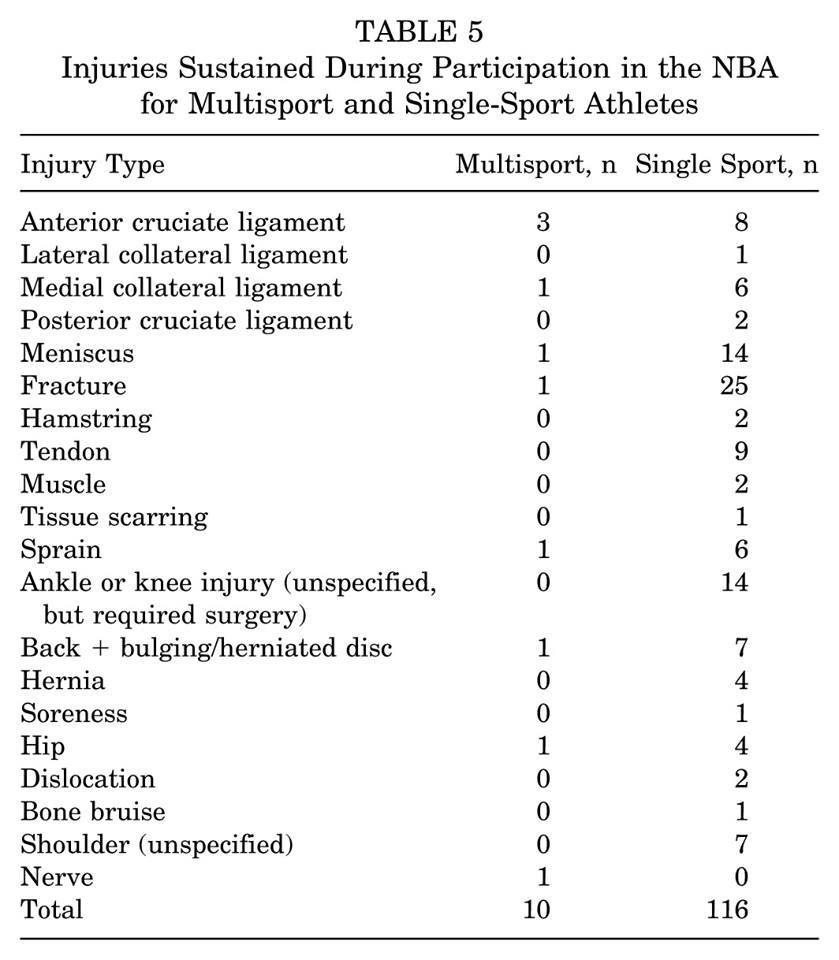
A recent study (Nov. 2017) was conducted by USCF Benioff Children’s hospital in Oakland California that looked at NBA players and whether they played multiple sports or just basketball (already specialized) in high school.

Those that had already specialized in High school and went on to college, play in the NBA suffered 10X more injuries and had shorter playing careers than those that continued in multiple sporting activities in high school and even in college.

“The study included 237 athletes, of whom 36 (15 percent) were multi-sport athletes and 201 (85 percent) were single-sport athletes in high school. The researchers found that multisport athletes played in a greater percentage of total games (78.4 percent vs. 72.8 percent), but were less likely to sustain a major injury during their career (25 percent vs. 43 percent). A greater percentage of the multi-sport athletes were also active in the league at time of the study, indicating increased longevity in the NBA (94 percent vs. 81.1 percent).”

Source:  UCSF Benioff Children’s Hospital – Nov 2017 Study of NBA players

Many basketball players in high school become football in players in college who in turn are drafted to the NFL, Jimmy Graham, Tight End for the Seattle Seahawks being one of many.

  1. Kids are getting recruited earlier and earlier for NCAA Div 1 schools

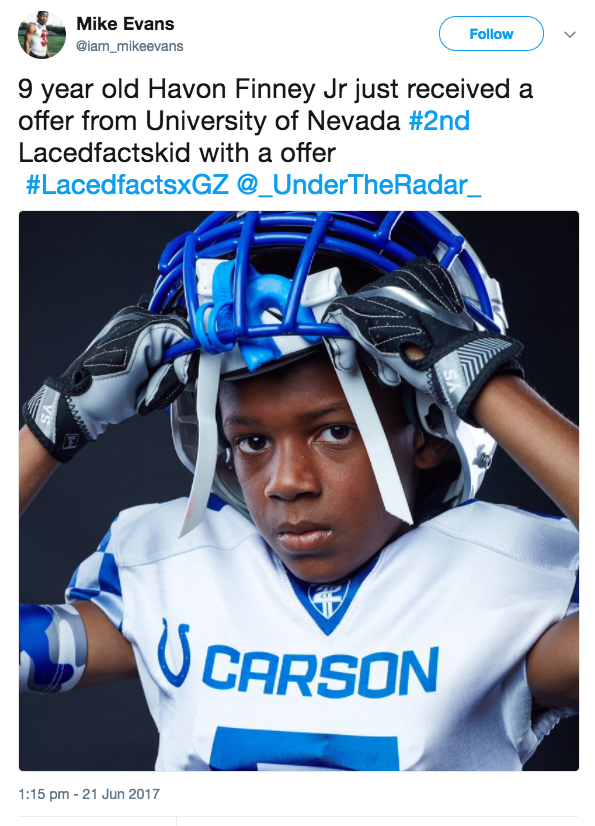
I shared this recent tweet I came across on facebook and twitter, the youngest player I am aware of (to date) that has been offered a scholarship by a NCAA University is Havon Finney Jr, offered a scholarship to play at the University in Nevada in 2027!


Yes… you read this right, he will not be eligible to play collegiate football until he is 18 and was only 9 (Grade 5) when offered his scholarship last June.

It appears that the NCAA has a “little bit of work to do” in terms of early recruiting policies to ensure that we don’t have college coaches showing up at maternity wards down the road (I know that is an extreme but ENOUGH already, let kids be kids)

Kudo’s to NCAA Lacrosse for taking the initiative to eliminate early recruiting practices until kids are juniors in high school (Grade 10 – 15-16 years old).

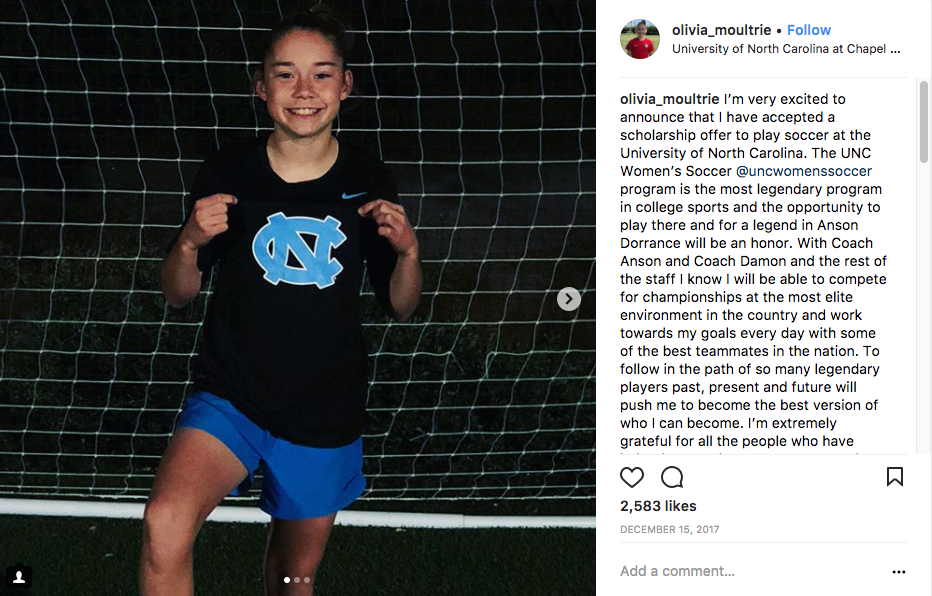
The earliest I was aware of prior to Havon, was 12 year old (Grade 7) Olivia Moultie, offered a scholarship to play at the University of North Carolina, coached by Anson Dorrance who has lead his “women’s” teams to 22 National Championships.


Ironically, when Anson Dorrance was interviewed regarding recruiting players younger and younger he countered if he was not doing so, another Div I School would.

He further shared how it is hurting all concerned …

“It’s killing the kids that go places and don’t play,” he said. “It’s killing the schools that have all the scholarships tied up in kids who can’t play at their level. It’s just, well, it’s actually rather destructive.”  New York Times

 With NCAA schools providing the green light to coaches to verbally commit scholarship monies, what happens (a) when the coach is fired or moves on to another program and (b) what happens when the scholarship coffer accrual is for “prospects” vs. actual players?  With earlier and earlier recruitment, it is no wonder why parents are buying in to early specialization to ensure their kids are considered for scholarships and hey, even if they don’t get to play and sit on the bench, they will get the education the parents should have been saving for when their kids were born like my wife and I did.  I suspect the fallout in years to come is going to be significant and many of the verbal agreements being made now will be rescinded down the road.

  1. Is the cost (overuse injuries, addictions, mental illness) worth the price?

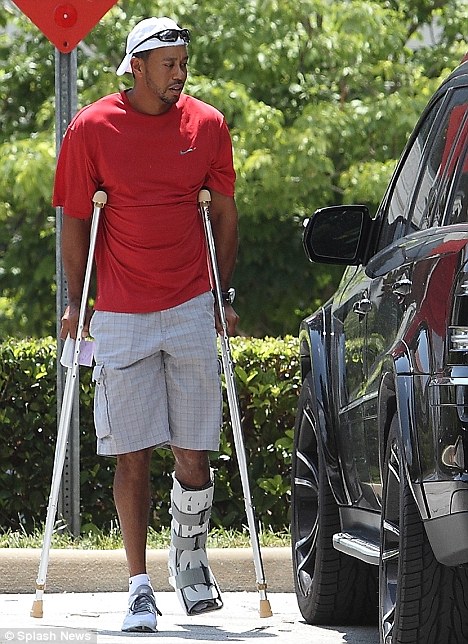
Tiger Woods

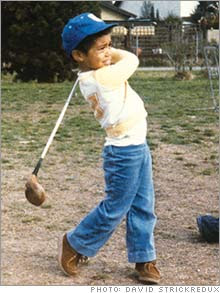
I tried to find the origins of early sport specialization and the only thing I came across was it started in eastern Europe when doping was the norm before the breakup of many communist countries (even though doping is still a hot topic today with now democratic Russia) but I would argue is one of the origins for the early sport specialization insanity in North America was due to Tiger Woods path focusing on golf starting 40 years ago. He appeared on Bob Hope’s show in the putting contest at 2 then the pic below when he was 5 showing his already powerful swing and was one of the World’s top amateurs in all his age groups until he turned pro in 1996 (at 21).

He did achieve great results, won 14 majors (second only to Jack), 79 PGA wins (2nd only to Sam Snead), was the youngest ever to win the Golf Grand Slam and held the #1 ranking in the world for 9 of 14 years.

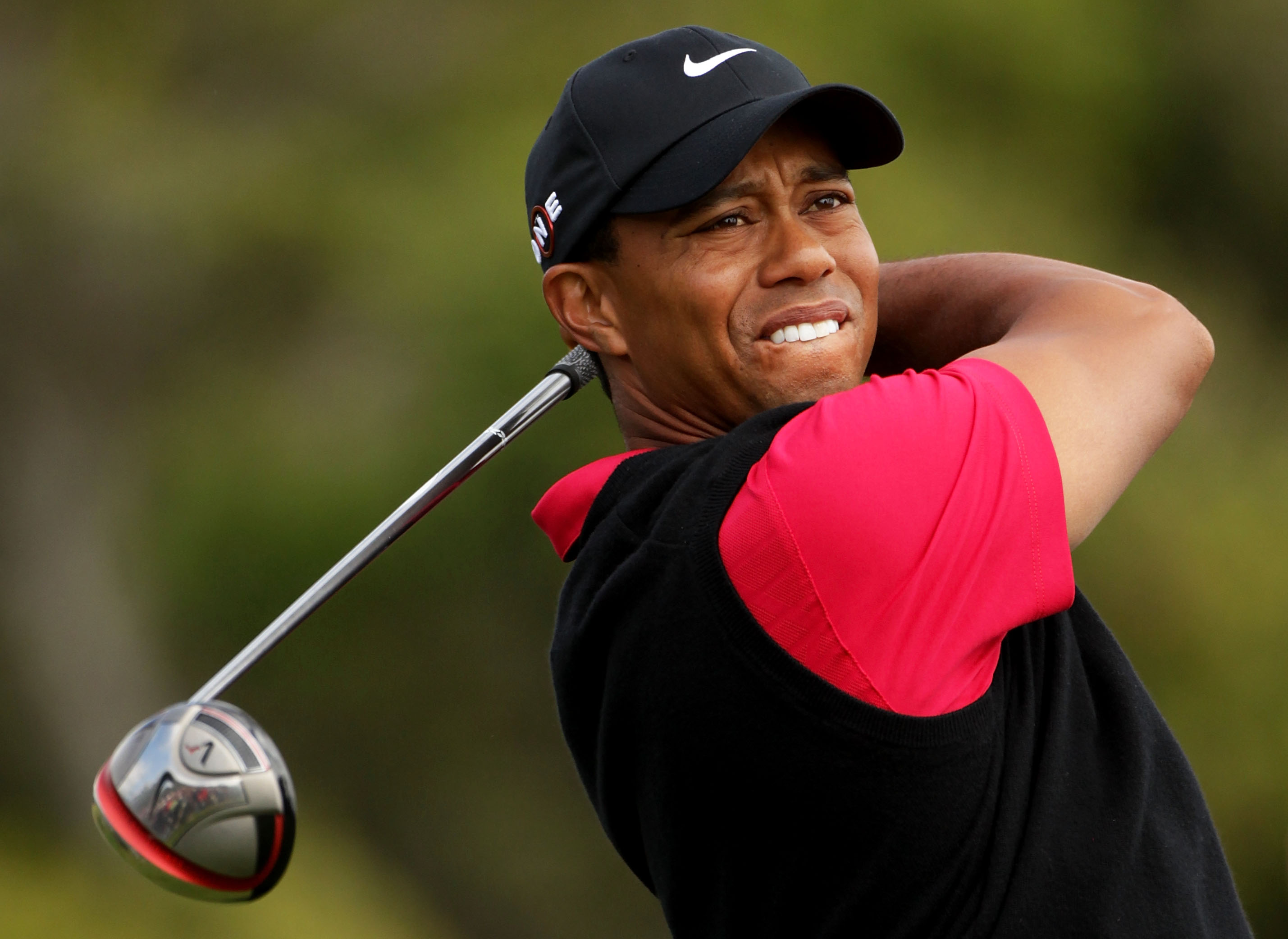
PEBBLE BEACH, CA – JUNE 20: Tiger Woods watches a tee shot during the final round of the 110th U.S. Open at Pebble Beach Golf Links on June 20, 2010 in Pebble Beach, California. (Photo by Andrew Redington/Getty Images)

BUT ……

His body has sustained numerous injuries, many of which required major surgeries even before his professional career started so is the epitome how our bodies can not sustain the same repetitive motion that leads to overuse injuries incurred by athletes that specialize in a sport too early.


Below is the list of injuries that Tiger sustained that took away from competing on tour, his longest the most recent back fusion missing 15 months and only just coming back from another try to return

Before He turned Pro – while at Stanford University – 18 Years Old

Dec 1994 – surgery on left knee to remove benign tumours and scar tissue

After he turned pro in 1996 @ 21 Years Old

@ 33 Years Old

April 15 2008 – Anthroscopic Surgery on left knee to repair cartilage damage

May 2008 – Forced to rest his due to stress fractures on left tibula –  6 weeks off

June 2008 – Left Knee ACL surgery

Dec 2008 – Injured Right Achilles Tendon running

@ 34 Years Old

May 2010 – Pulls out of the Players Championship due to bulging disc on his back

@ 35 Years Old

April 2011 – injures left Achilles during the Masters, pulls out of Wells Fargo even to recover

May 2011 – Pulls out of the Players Championship for second time in a row due to MCL strain on left knee and strain of left Achilles tendon

@ 36 Years Old

March 2012 – Pulls out of the Cadillac Championship 11 holes into the final round due to strained left Achilles

@ 37 Years Old

June 2013 – left elbow strain that occurred at Players championship continues to bother him, pulls out of the US open and next few events to rest for British Open

@ 38 Years Old

March 2014 – Plays the final 12 holes of the Honda Classic with back pain that flared up initially in the Cadillac Open a few weeks prior

March 2014 – Withdraws from Arnold Palmer Invitational – Back Pain

April 2014 – Announces will miss the masters and will not golf until the summer

@ 39 Years Old

Sept 2015 – Undergoes second back surgery to remove a disc fragment pinching on nerve

Oct 2015 – third back surgery to relieve discomfort form second surgery

@ 41 Years Old

April 2017 – Back fusion to alleviate pain in back, neck and hip

Injuries Source: www.pga.com

Almost every injury he sustained was due to the torque and speed of his swing that did force event organizers to “Tiger Proof” their course adding distance due to Tigers initial domination but over the course of his career, injuries and rehab time forced him to pull out of many events or not participate at all so quite possibly would have achieved the 19 majors, most wins goals had that not been the case.

If Tigers medical history alone does not make you question if early sport specialization is worth the price, what will?

Yes Tiger had* (*jury is still out what impact, if any he will make after his last surgery) a great career but had he been a multi-sport athlete like golf’s next phenom, Jordan Spieth, already winning 14 events, 3 of which are majors and only at 22 years had earnings exceeding that in only his second year as a pro!

Like the initial NBA study, I suspect Jordan will achieve more (in terms of wins and earnings) but also play longer and sustain significantly less injuries/rehab than Tiger has but only time will tell.

Todd Marinovich


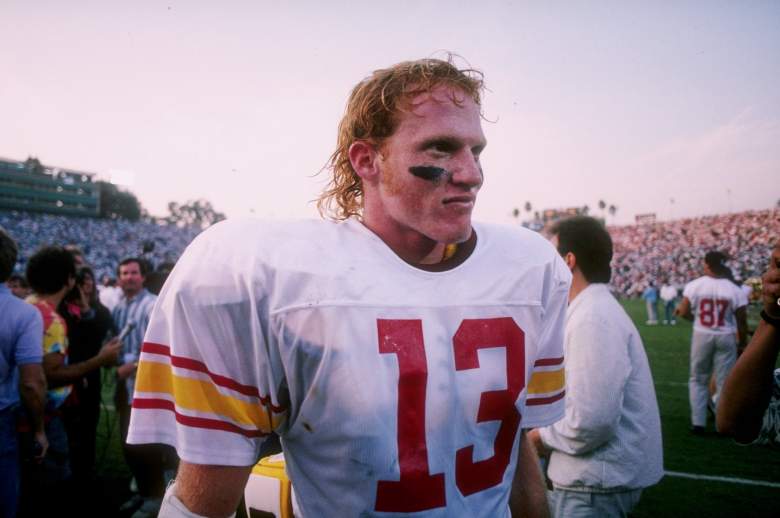
The other example why early sport specialization is not worth the price, is Todd Marinovich.  Like Tiger’s Father aspiring him to become the best golfer in the world, Todd Marinovich’s father,  Marv a former NFL player himself , aspired for Todd to become the best quarterback EVER in the NFL.   Todd had an initial great run winning the Rose Bowl with USC, being drafted in the first round ahead of hall of famer Brett Favre (Green Bay Packers) by the Raiders in the NFL so did reach his (fathers) dream.

Sadly, due to the pressure he had been under since 5 years old from his father to focus on being that Quarterback his NFL career was short lived and what followed was decades of drug and alcohol abuse, struggles with mental illness and time behind bars for drug related offences.

Fortunately he has now received help from several people, including his two children and has turned the corner, being sober now for over a year but he paid a hefty price as a result focusing on football only starting at the young age of 5.  He was deprived of a normal childhood sampling many sports, other things like drama, band, art and just being a kid PLAYING before he chose the game he loved most after high school like Jordan Spieth and many others that followed the multi-sport pathway.


Let’s all work together to bring the game back to the kids … where it belongs.
PS Tagline - Dont be a kids last coach


Early sport specialization does more harm than good

Posted 3 CommentsPosted in Uncategorized

BONUS – Download a Free Copy of this Blog in PDF Format HERE  


Many parents feel pressured to specialize their child in one sport early either because they are showing early promise or coaches are pushing extra weekly sessions and year-round training.

According to a survey done by TD Ameritrade as they were concerned that parents were not investing enough for their retirement, although the survey found that 47% of parents felt youth sports was too expensive, 67% aspired for their kids to get a NCAA full scholarship, 43% aspired for their kids to play professionally and 34% potentially would participate in the Olympics.

The reality – less than 1% reach these elite levels of sport.  Use Hockey as an example, over 1.5 Million youth play globally (just wait for China to ramp up and this will increase exponentially) and there are approx 700 player roster spots in the NHL (with the new Vegas Knights franchise) so only 0.3% of those playing will have a shot of playing in the NHL.

Unfortunately many of the coaches that are for early specialization are working for “development” organizations who are making the recommendations for the mere purpose of protecting their livelihood and don’t have the kids best interests at heart.  It has turned into a HUGE business model, and has lead to the professionalization of youth sports vs. when kids played for the love of the game itself.

Kids develop very differently and if you push a child to one specific sport keep the following information in mind.

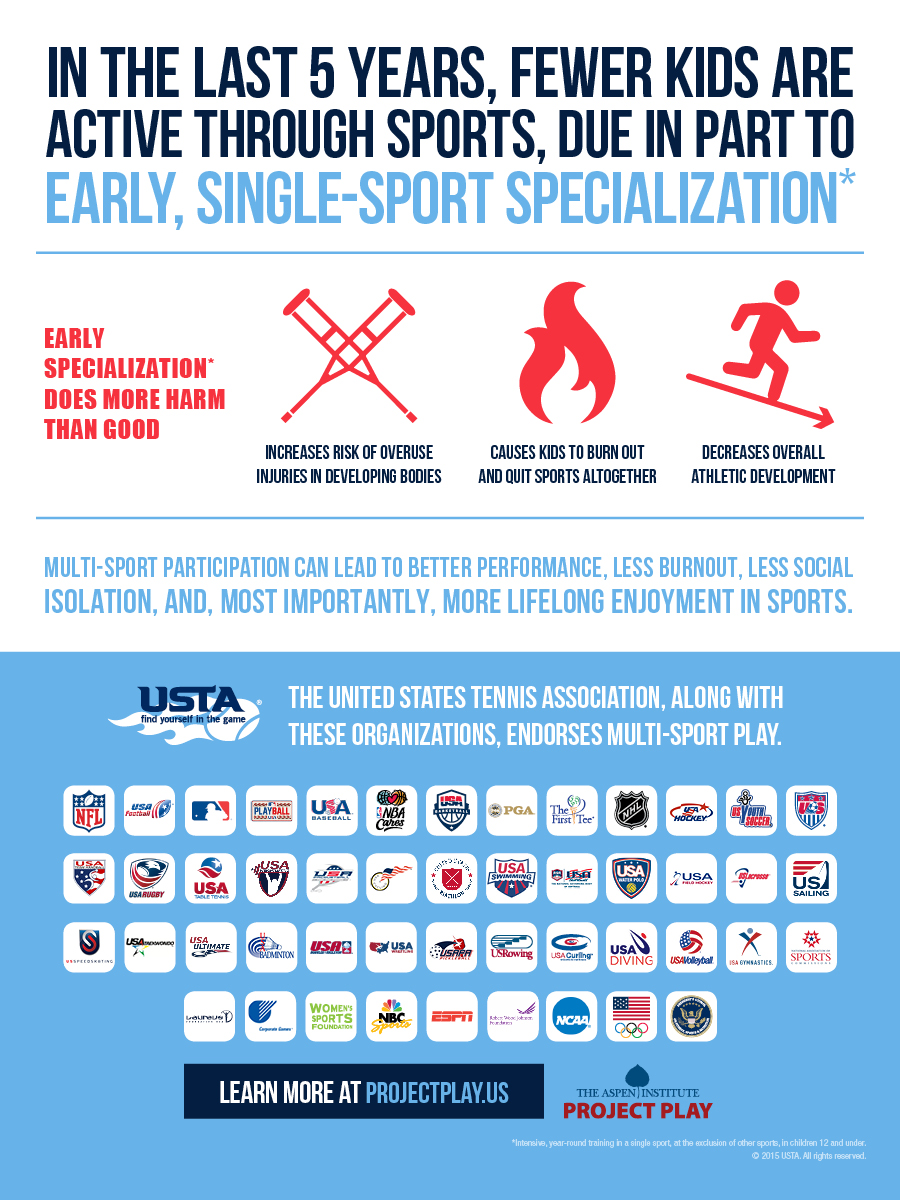
Aspen Institute Project Play, along with USA Tennis and 50 partner National Sporting Organizations are promoting the benefits of Multiple Sport Participation as a result of declining sports participation the last five years.


The three main issues kids should not specialize early in a sport are;

1.Increased risk of overuse injuries

ACL Surgeries have seen a 400% increase between the ages of 10-17 since 2002, the highest incidence is in female soccer.

Now over 50% of the Tommy John Surgeries are pitchers from High School (15-19 Yrs. Old) , a 9% increase this past year ALONE. This a major surgery on the ulnar tendon that was originally for major league pitchers to extend their playing careers into their 30’s, not provide kids robotic arms in their late teens.  Research shows that once the surgery is done, it does not last.  Many pitchers will see a 3-5 MPH decrease in speed due to the surgery.


One example is Roberto Asuna, pitcher for the Toronto Blue Jays, who had  Tommy John Surgery at 18 years old and in one of the pennant race games last season literally pulled himself from the game as his elbow was too sore to continue.

Why do you think that concussions have escalated to the level they have in recent years ?  It is not just due to the contact kids are taking, it is the type of contact and lack of respect for their opposition and how early it is happening.

Refer to our prior post ” Are contact sports in jeopardy?” and watch the videos of young football players under 10 years old hitting at a level of collegiate players.

The level of contact at earlier age groups has lead to a 200% increase in concussions since 2010 between the middle school age group (9-12 years old) which was one of the driving reasons why USA Hockey and Hockey Canada opted to defer bodychecking until the Bantam Age Group (13-14 years old).

We are demanding too much from developing bodies.  These are major surgeries needing medical attention and are a direct result of kids playing one sport year-round with the same repetitive motor movements.

2.Burnout

70% of kids are quitting ALL organized sports by the age of 13 and replacing their former play time with screen time.  The game they once loved and showed early promise in, are being encouraged by parents and coaches to specialize in one sport as early as seven years old.  Over six years it is the equivalent of over 50-175 % more playing time of one sport compared to the multiple sport model

Kid should play sports seasonally.  Their bodies are less likely to be permanently damaged and their chances of staying active for life increases significantly.

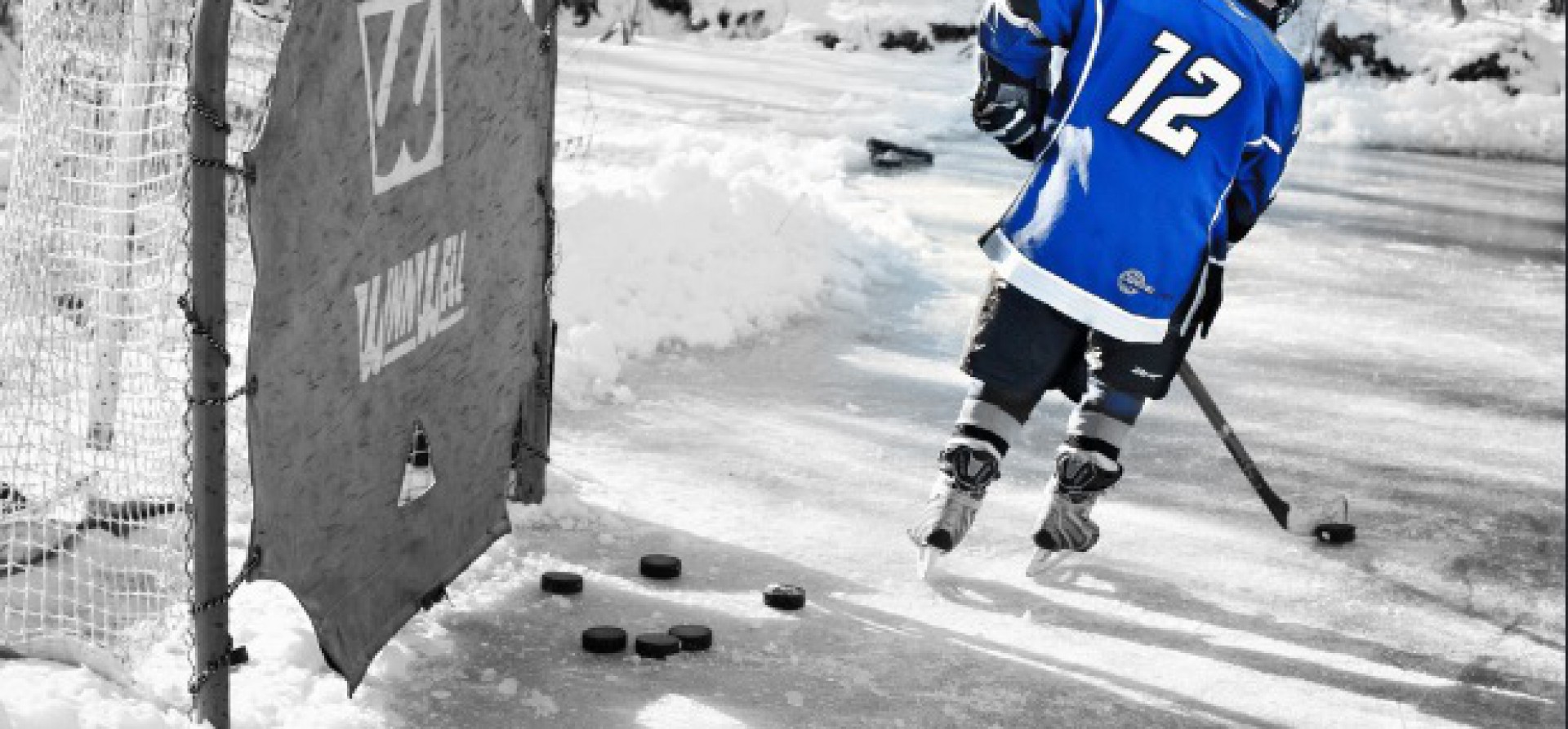
Due to specialization, kids are playing less than 2 sports per year now vs. prior generation would play 3-4 sports plus a multitude of free play activities.  Do you remember when you grew up just playing for playing sake?  Going to a basketball court, playing street or pond hockey, running, biking, swimming at your local pool?  Gone are those days where kids play for hours on end because they loved doing so.

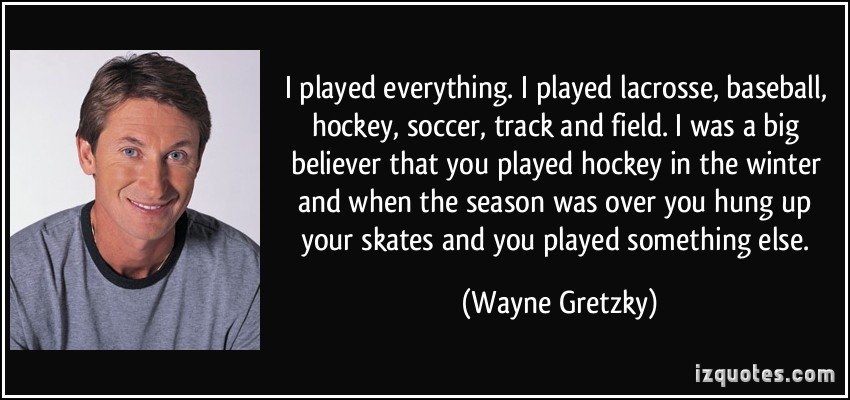
See quote below from the great one, like Wayne Gretzy when he grew up and I believe all would say he turned out to be “pretty good” although he only played hockey seasonally, not year round as many kids do today.


3. Decreases in Overall Athletic Development

The science behind Alberta Lacrosse’s Long-Term Athletic Development (LTAD) or Hockey Canada’s Long-Term Player Development (LTPD) models shows that kids are better off focusing on fundamental movement skills across a broad range of sports during their key development years.  Motor skill acquisition at 6-12 years old along with organized and unorganized free play through kids’ teens is the recommended method to introduce kids to a wide variety of activities.

They also cite the benefits of cross training from one sport to the other, for example benefits of playing soccer helping hockey players receive a puck on their skate and kicking to their stick.

For more insight on Physical Literacy  and LTAD, visit Sport for Life’s website www.sportforlife.ca

As coaches or parents of young athletes, ask yourself the following;

  1. Do you know what you want to do in life?
  2. Do you know what your true purpose is?

Whenever I ask those questions at any presentation I do very few hands go up as many do not know the answers until well into their adulthood.

THAN How can we recommend to a 7 year old kid to specialize in one sport for the rest of his or her life?

On the flip side, here is a short clip from John Smoltz’s MLB Hall of Fame induction speech where he touches on the perils of early specialization.


 Let’s work together to bring the game back to the kids.


Don`t be a kids last coach