Wear your parent hat at home, coach hat at the rink/field.

Posted Posted in Coach, Organization Executive, Parents

Years back I started a tradition with my family as I was traveling extensively for my day job then and when traveling in lieu of buying various touristy items for my kids I opted to buying the latest movie that we would watch when I returned home.

Although my kids have now become adults, as they are still going to college/university, they still reside at home (much like every other 20 something in the lower mainland of Vancouver due to the high costs of housing) and last night we decided to watch “Antwone Fisher” based on a young man who lost his father when he was 2 months old and was given up for adoption by his mother and had an abusive foster family environment until he entered the Navy.

Due to various emotional issues, particularly anger the led to him getting into numerous fights, he was ordered to see the Navy Psychiatrist brilliantly portrayed by Denzel Washington who helped Antwone overcome the various emotional struggles he experienced from losing both his father, turned over to what was an abusive foster care environment by his birth mother and then he lost his best friend in his late teens.

You’re probably wondering why I am sharing this, but the reason I am doing so is that I can relate to Antwone’s journey on a few fronts which is why I get very emotional when I watch the movie.

#1 – Like Antwone, I lost my father when I was very young, at 8 years old and as a result of his work we had had moved 8 times already to be close to the buildings he managed (so can relate to all the military brats out there), but also how disappointed I was that he was unable to honour his promise to coach my baseball team as he died half way thru the season.
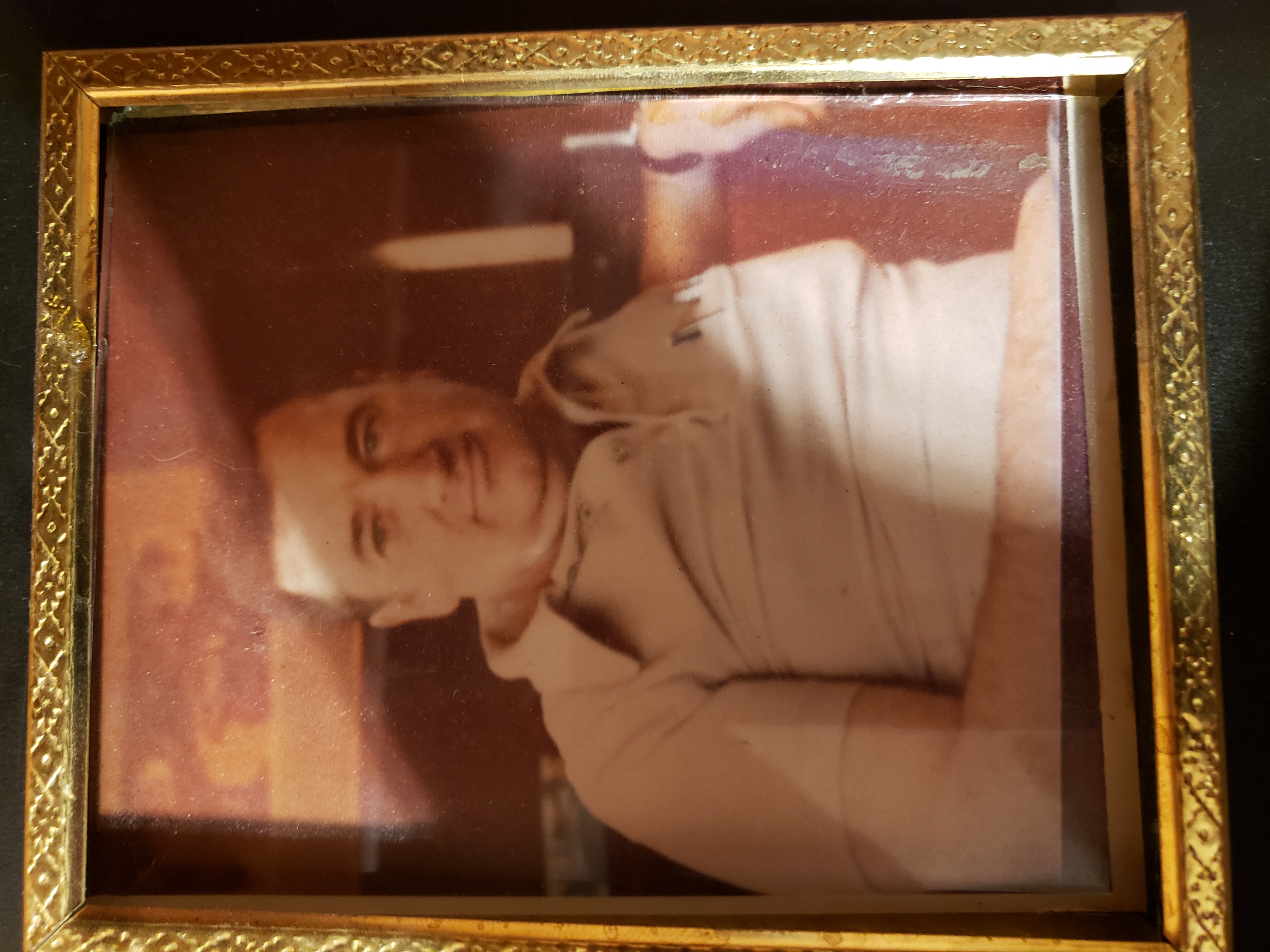
My favorite picture of my Dad that I actually took when we were on the train heading from Montreal to our new home in Vancouver when I was 7 years old

#2 – Like many youth without a father, I ended up hanging out with a group of misfits, my non-sport “friends” in my teen years but also continued to play various sports, in particular contact sports hockey, football and rugby as I too had issues with my temper from not having a Dad to turn to but the team mates in sports and coaches I had help me keep it in check, would say to me all the time to use my temper in a positive fashion by being tough to play against.

One of the main reasons that I am so passionate about sports and kids is all the amazing coaches that I had and team mates who helped steer me down the right path vs. “my friends” that went down the wrong path (many of which did not graduate high school, were imprisoned for various reasons so who knows where I would have ended up)

#3 – Although playing contact sports did keep my temper in check at times, one that I did not try and several said should have was boxing as I did in more than my fair share of bar brawls over the years into my mid  20’s until I lost my “first and last fight” (to that point I had lost a fight in any of the brawls I had been in) and was beaten up so bad that I made the original Rocky pic of Sly look like like he only had a couple of love taps that lead to me recovering from a concussion for several months and ended my collegiate rugby career and chance to represent Canada Nationally as I had been invited to attend the national camp later that year.

All of that is water under the bridge now, as I transitioned to working a day job to coach after I completed my post secondary education at night/weekends  and when I became a parent I made a promise to myself having lost my father so early that I would be there for my kids, be their coach like he couldn’t and support them to the best of my ability.

This Saturday I did a presentation of my core talk “Don’t be a Kid’s Last Coach” for Ontario Lacrosse virtual 4 day conference and shared a couple of tips for the coaches as majority of youth sports are parent coaches;

Tip #1 – When you are a parent coach, ensure you wear your parent hat at home/in the car and when get to the rink/field/court put your coach hat on and vice versa

When I shared that analogy to coincide with a video on the ride home that I have shared for a hockey clinic, one of the coaches came up to me during the break and was in tears and I asked him if he was ok and he said he never thought about it, but his 10 year old son shared with him that he was going to quit hockey as was not having fun that he was wearing his coach hat all the time.

He coached him at home, at the dinner, breakfast tables, in the car to and from the practices and games and shared with me that he will take my advice and only coach at the rink.

The clinic was in November, in March I received an email from the coach later that season sharing how appreciative he was of the advice and the relationship between him and his son was so much stronger and happier,  and his son was looking forward to playing soccer in the off season and told his dad thanks for being his coach and was looking forward to next season in hockey.

Tip #2 – Treat your son or daughter the same as all the other players and ensure they call you Coach when you have your coach hat on and Mom/Dad when you have your parent hat on.

Two things can happen when coaching your kids, you can either make them one of your favorites and give them more playing time, top lines, positions (which is the big reason why competitive hockey now has tried to go the non parent route but at huge cost for honorariums for coaches) OR you can be too hard on them.

The latter is one that I saw in my third year coaching minor hockey,, one of the coaches of the U8 team that shared ice with for practices would constantly scream at his son for making mistakes, although he was an early bloomer and one of the top players in our age group, I could tell every time his Dad did so he lost a little more of the joy he had for the game.  Although I would talk to his Dad numerous times when he beraded his son reminding him he was just a kid, game should be fun, treat him the same as others it went on deaf ears.

I heard the following year that his son had quit hockey and all other sports, his Dad also was not invited to come back to coach again as a result.

I know all too well how hard it can be as a parent coach to ensure you are not biased either way,  I also know how big of a time commitment it can be for all of us that juggle many things including work, perhaps other children, perhaps coaching multiple teams and sports as a result.

Although I know I made my mistakes as well, probably the greatest reward I received was when my son was 19 and was asked to play on a Junior Ball Hockey Team that several of his team mates and he had talked and asked if I would help coach the team as the head coach merely put up his hand as they were having a tough time finding coaches.

To which I humbly said, yes, I would be glad to help out and had a blast coaching my son and many of his friends who he grew up with playing a myriad of sports.

Sadly I don’t get to watch him or my daughter play youth sports any more, but I can look back with a big smile on my face how much I loved watching them and all their friends (part of my extended family) play the sports they loved and continue to be active in their adulthood.

At the end of the day, that is all we can ask for as parents and as coaches, if they play at a high level beyond their high school years that is just cherry on the cake.
PS Tagline - Dont be a kids last coach


Youth Sports Organizations that are bucking the trends

Posted 1 CommentPosted in Athlete, Coach, Early Sport Specialization, Organization Executive, Uncategorized

Many sports organizations are still suffering high rates of attrition where 70% of kids are quitting youth sports by the age of 13 due to the myriad of reasons that we have shared in blogs, presentations, social media and daily interactions with exec, coaches, parents, officials, and players themselves.

It is due largely in part to the professionalism of youth sports and focus on winning at all costs which it turn has led to parental behavior, coach criticism or running short benches, the commitment (time, financial and travel), ride home (and to), harassment and not being safe for kids to fail.

Translation – Kids are quitting in droves because youth sports are no longer fun for them to PLAY.

Last week we posted “Why kids play Video Games” as they are one of the key competitors vying for kids time today where kids are running to screens spending on average 7.5 hours a day so have replaced their former active playing time with inactive screen time.

It seems like literally every day that I open a paper, scroll thru various social media feeds or we follow that there are so many negative posts it is really hard to be positive (Half Full) vs. negative (half empty) outlook.

This only leads to complaining more about the issues in lieu of being part of the solution and doing something about it.

We have been extremely fortunate as an organization to partner with some amazing counterparts across the world who are advocating for the much needed change we need in youth sports and what gets lost in all the negativity we see daily are some of the AMAZING people and organizations that are bucking the trends and reversing their attrition rates by creating an amazing customer and quality sports experience.

This is our focus when working with organizations, to develop programs so they can attract, retain and ultimately grow their memberships.

This week we wanted to share some of those that we feel deserve Kudos for moving the needle in the right direction.

Others we are working with or come access will share in our posts, social media and digital mediums (podcasts, videos) as they deserve to be highlighted for one, but they also provide examples that if all stakeholders within organizations buy-in to the main reason we all are involved in youth sports is to focus on providing the best experience possible so the kids LOVE the game more at the end of a season than they did at the beginning.

These are three of the ones we have had an opportunity to connect with various coaches, parents, board members who have shared how they are moving the needle in the right direction.


I could not write anything about sports organizations that are setting the bar for long term athletic development and reversing their attrition rates if did not reference the one that has been the reference by many in the sports space for several years now.

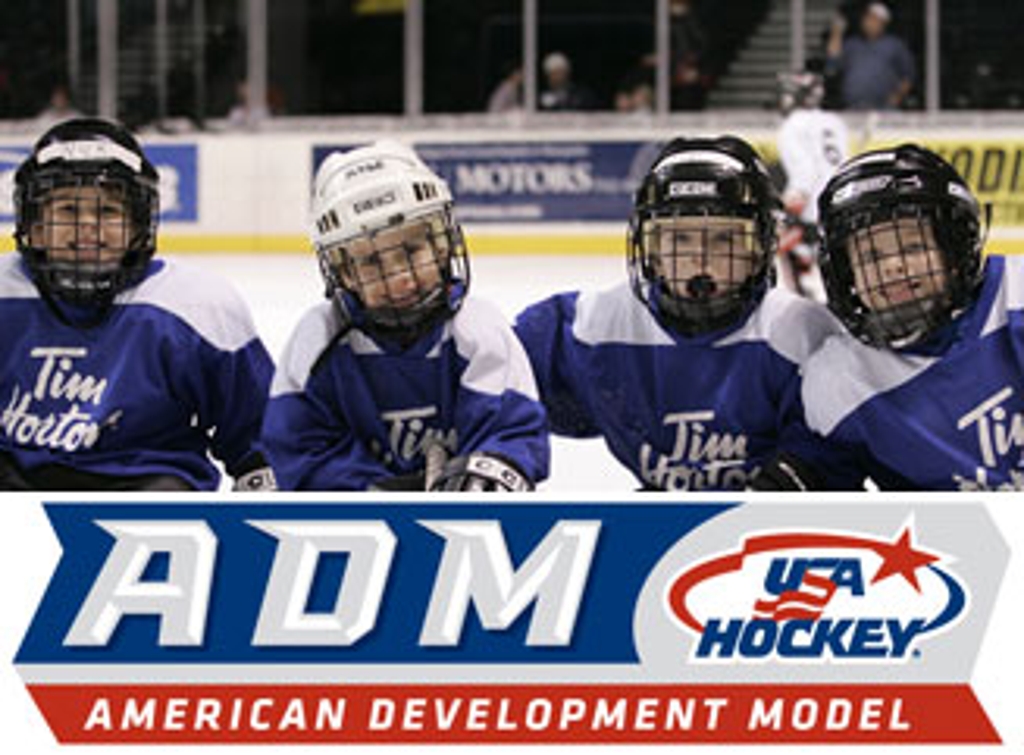
In the fall I had the great pleasure to talk to Bob Mancini, Regional ADM Manager for USA Hockey and he shared with me insight on the roll-out of their ADM model which has been a 20-year work in progress.

From 2002-2012 they worked on creating the framework for the model along with representatives of their state, regional and city hockey organizations.

This included evaluation of various LTAD models adapted by other countries that was created by Sport for Life in Canada in the 1990’s and tweaked the American Development Model (ADM) to work best for their membership to include;

  1. Age Appropriate Training
  2. Quality Age Appropriate Coaching Development
  3. Small Area Games
  4. Cross-Ice Hockey
  5. Smaller equipment, nets, adaptable pads, lighter pucks
  6. Mobile Ap for practice planning
  7. Resources for practice planning by age groups and positions
  8. Promoting Multi-Sport Participation
  9. Equal Playing Time for all players U12

In 2009 USA Hockey rolled out the ADM model and although it was seen with original resistance similar to when Hockey Canada Mandated Cross-Ice Hockey, delaying body checking until Bantam in the competitive stream, removing from all recreational levels, according to Bob when I talked to him he shared that after a few years and doing the Analytics showing the benefits they got buy-in from the entire membership.

One of the hats that I wear for BC Hockey is Regional Evaluation Lead and I am responsible for getting coaches in parts of the lower mainland of Vancouver as well as all of Washington State evaluated running practices to complete their Dev 1 Certification requirements for coaches in the competitive stream.  I also interact with many of them in clinics and when they are prompted about long term player development, physical literacy, fundamental movement skills many of their hands go up as they are about 5 years ahead of when Hockey Canada rolled out their Long Term Player Development model.

Like many other sports worldwide, USA Hockey was experiencing high rates of attrition during the roll-out of ADM, losing 60% of players by peewee (by age of 12)

Three things that they did to reverse the trends

  1. Continued to focus on ADM and age-appropriate coaching development
  2. Focused on FUN
  3. Eliminated their National U12 Championships

It was #3 that Bob shared had the biggest impact as organizations that vied to get teams in their national championships could back off from the former winning at all costs focus (one of reasons why kids quit) and focus on long term development and loving the game.

Their attrition rate reduced to only 8% as a result, retaining 92% of their players at the peewee age group.

For more insight on the USA Hockey ADM Model and other resources, here is a link to their website  www.admkids.com


Another sports organization, TopSports based in Toronto, Ontario, that I had an opportunity to talk to one of the founders, Luke Earl, as he and a few colleagues came together to found a sports organization as were unhappy with current offerings for their young kids.

Luke and all of the other team members are former multi-sports athletes themselves, some playing professionally after their collegiate playing days for tops schools like Yale, Harvard, Ryerson, Loyola and Brock Universities.

They also are going to be one of the first early adopters of the Personal Sport record for all of their programs so they can provide both qualitative AND quantitative measurements to their athletes and their families.


What gets measures – Matters.

What are they doing differently?

#1 Focusing on multi-sport participation – kids play hockey in the winter and hang up their skates at the end of the winter season – No Spring Hockey – No Summer Hockey – No Spring or Summer Development.

In lieu -Playing Lacrosse in the Spring and are working on a Soccer and Baseball arm as well to give kids an opportunity to play other sport

#2 Focusing on LTAD (Long Term Athletic Development)

#3 Having NCCP Certified Coaches for all sports (vs. many private non-sanctions sports organizations where they bring in former players to “coach”, many of which with no or limited coaching experience and no certification

#4 Fees that are 1/3 or less that of other similar sports organizations

#5 Focus on FUN, Life Skills and love for the game

For more information on their organization check out their website www.topsports.ca


I came across representatives of More Sports, a community multiple sport model based in Vancouver, BC in various hubs of Vancouver while I was attending UBC’s Career Fair as potential employer (we sponsor co-op students who do all the AMAZING work behind the scenes so you can read these blogs, listen to podcasts and watch videos, digital events etc.)

They shared with me that they were founded to provide neighborhood-based sports programs for children and leadership courses for their young leaders.  It started when a father took his kids to a local park in east Vancouver in 1998 and was told they could not play on a soccer field without a permit.

They only way they could play soccer would be signing up for the local club with reg fees (at the time of $125) which was more than the family could afford.

Fast forward 20 years later, More Sports has supported thousands of kids playing multiple sports for fees as low as $40 for 12-week programs, and if kids can’t afford that, are subsidized by organizations like Jumpstart and the United Way.

The kids range in ages from 6 to 12 years of age and have an opportunity to sample several different sports including soccer, basketball, spikeball, volleyball, floor hockey, badminton, flag football,  and are looking at including ice hockey to the mix contingent on partnering with groups that can help subsidize.

The other benefit is that all of the “coaches” are not much older than the kids, they are High school age between 12-18 years old, who lead the kids in multiple sports activities and are provided with a youth leadership program who then will give back to the community.

In this day and age of play to play, travel teams leading to even further disparity of the haves vs. the have nots having the opportunity to participate in sports, it truly was refreshing to see a community-based sports organization that was providing great experiences to all those involved.

I hope to have the opportunity to visit their programs and share more insight in the future.

For more information, check out their website wwww.moresports.org

These are just 3 great examples of organizations that are bucking the trends from a national governing body to two community-based organizations who are providing quality sports experiences and unlike many other sports organizations the,y not only are attracting but retaining and GROWING year after year.

The needle can move if all stakeholders buy-in to move it.

Let’s all work together to bring the game back to the kids … where it belongs.


Don`t be a kids last coach


Back to the Drawing Board

Posted Leave a commentPosted in Athlete, Coach, Organization Executive, Parents


I must confess, I, like many of those I have talked to since Sunday, are still recovering from this year’s SuperBowl, not from the bevies, but from the fact that one of the top offensive teams the past two seasons only touchdown they scored was when their plane landed in Atlanta.

Many I talked to felt it was the worst Super Bowl they had seen as a result, which they shared and agree with in part but felt it was not …

… because the Patriots, under Bill Belichick and the ageless wonder Tom Brady, winning their 6th Super Bowl together in 9 tries since they became the tandem that turned the Patriots into one of the all-time dynasties in the NFL

… because CBS, Tony Romo, and Jim Vance were chosen to be the commentators for the game vs. Fox,  Joe Buck, and Troy Aikman as had been the case for many years prior

… because the Halftime Show was “Just OK” from one of the top pop bands in music today, Maroon 5, which one of the only highlights was the drones with balloons forming the shape of words Love and One, but two different rap artists intertwined where one had to have several profanities omitted in the live broadcast. Even Adam Levine tried to play the part of Rap artist with the heavy chains around his neck, and showing off all of his tats when he removed his shirt (What was up with that?)

… because it was shared after the fact that Maroon 5 was a last minute replacement for other musical acts turned the offer to do so from the NFL, Rhianna and Carbi B, due to the ongoing controversy pertaining to Colin Kaepernick’s kneeling at the anthem to protest inequality in the USA towards black and other minority groups and resulting lawsuit filed by Kaepernick for exclusion since he last played in 2017.

… because Jim and Tony joked at one point that one of the plays of the game that people will be talking about was not one of what should have been numerous TD’s, field goals with two of the NFL’s top offences matching up in the NFL but instead a 65 yard punt of the multiple the Rams Kicker was forced to make as their offense was shut down by the Patriots Defence.

… because the perceived underdog according to Tom Brady and company was in fact the Patriots and relished the role even though the Vegas bets were heavily in their favour.

… because we finally were able to see all of the infamous Super Bowl Commercials live in Canada during the game vs. being replaced with Canadian Content but none I felt were on par with past ones that people talked about for days, weeks after the game.

… because after 3 quarters of play, the score was 3-3, the equivalent of what happened last night as does in many NFL games and the winner of the 4th quarter or OT (if it had gone there) would win the game.

Like many others, the 4th quarter Tom Brady did what he has done for years, took control and threw short passes to MVP winner Edelman, the long bomb to Gronk to set up the game-winning touchdown.

… because my son, who is not a fan of football, actually sat and watched the game from start to finish with me for the first time EVER and it left him with such a sour taste in his mouth he probably will never watching another Super Bowl (although a D-Man in Hockey, does not appreciate that defense wins championships in Football).

… because the announcement of the NFL player who received the most prestigious award amongst players, the Walter Payton Award, for their contributions not only to the game but their community involvement away from the game that was awarded to Philadelphia Eagles player Chris Long did not permit him to say a few words to the crowd humbling accepting for the amazing work he does off the field.

This not only included Founding Waterboys to provide safe drinking water for kids in Tanzania 4 years ago and donating his salary for an entire season to funding scholarships and literacy programs, the epitome of giving back.

Below is induction for the award and his full acceptance speech.


I suspect his Dad, NFL Hall of famer and now Fox commentator Howie Long, was a very proud Daddy for all the great work Chris is doing off the field.

It was because of the news articles and interviews up to and after the game focused on how Tom Brady and company were the underdogs and how much adversity they had over come this season to get to the game, how much it meant to Tom Brady more than the past 5 and so on.

In lieu of it being touted as underdogs (one could argue Rams were due to how Vegas laid down the bets) for me it was a battle of the old guard (Belichick and Brady) vs. the new guard (McVay and Goff) and it truly was disappointing to me that Sean and company could pull it off with the offense they built to get the needle to swing in their favour

For me, the Superbowl happened early in the season, when the Chiefs and league MVP Patrick Mahomes dueled it out with the Rams (what I was hoping to be the Super Bowl Match-up) for the total opposite, 54 (Rams) to 51 (Chiefs) where it truly showed the offensive upside of both teams and lack of defense.

This was the epitome of the amazing transformation that Sean McVay had done since he became the youngest NFL head coach of all time at 31 years of age.

In just the two years under his watch, he has taken the Rams with much of the same nucleus of players who were coached by long term Jeff Fischer in 2016-17, from 4-12 record to reach the playoffs in the first time with a record of 11-5 in 2017-18 losing to Matt Ryan and the Falcons in the Wild Card Round, to 13-3 and getting a bye then wins against the Cowboys and Saints to reach the Superbowl this year.

As a result of making the playoffs last year with the Rams, Sean McVay was awarded the coach of the year award in just his FIRST year as a head coach in the NFL.

How then, has he transformed the Rams?

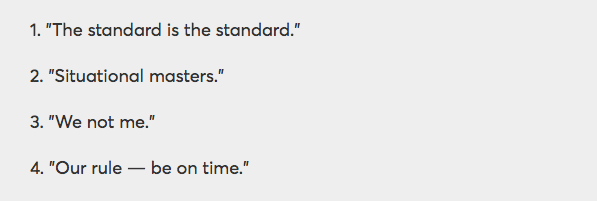
Be developing a culture of excellence with what has become known as the 4 McVayism’s that are now posted in the  Rams Dressing Room.


In essence, his key standards/rules like John Wooden and other great coaches have implemented with their teams to develop their own cultures of excellence.

What do they mean?

  1. The Standard is the Standard = the players set the bar for themselves and there are no excuses, the accept ownership for how they perform on the field.

      2. Situational masters – meaning the players capitalize on the opportunities as they present themselves in games, whether it be creating turnovers or fighting for that extra inch to get that first down

     3. We not me – equates to the there is no I in team, under Sean McVay, it is all about the team, not the achievements of individual players. The same analogy holds true when you play for the crest in front of your jersey, not the name on the back.

  1. Our Rule – be on time – this is very similar to one of John Wooden’s top 3 rules, his first of three, was be on time. He, like Sean, and many other coaches that have developed cultures of excellence on their teams believe in the importance of starting practices on time, ending on time, being on time for any team events so that they can accomplish everything set out in practice and game plans.  I learned the expression for a coach years back that I share with all of my colleagues, staff all the time – If you are not early, you are late.

Another thing that Sean has done has incorporated in the team is shared ownership, in lieu of old school coaches at times being dictators (AKA my way or the highway), he believes in an open door policy and communication and input from all players on the team how they (as a team) can become better so everyone shares in the success or in this case the misfortune of losing and having to got back to the drawing board.

Although the current rendition of the Rams struggled in the Super Bowl 53, under Sean McVay I don’t suspect they will be back, I KNOW they will be back, possibly as early as next season as Sean has now gone back to the drawing board to make the necessary adjustments not just during half time but throughout games as those in the Old Guard have shown can do time after time.

I suspect he and his coaching staff are already started to brainstorm how they can continue to improve their culture of excellence and build on the 4 McVayisms in the dressing room.

As the old cliché goes, 3 times a charm, in year 3 under the leadership of Sean McVay I am picking the Rams to not just make it to the Super Bowl, but be holding that trophy at the end of the game and hope like many others, that there truly will be a change of the guard in the AFC for someone other than the Patriots for them to face, the Kansas City Chiefs.

Don`t be a kids last coach


The Reality vs. the Dream of NCAA Scholarships and Going to the Show

Posted 21 CommentsPosted in Athlete, Coach, Organization Executive, Parents

Every day I come across another study, article, or blog post about the dangers of early sport specialization and the driver for same is parents aspiring for their son or daughter to receive a NCAA scholarship for their chosen team sport to ultimately be drafted to play professionally.

Translation – Get a full ride to get an education and save Mom and Dad over $200K USD, get drafted and then you can take care of us with your Multi-Million Dollar Salary playing professional sports (ROI = Return on investment)

As I have shared with every coach, parent over the years, if that truly is your goal for your son or daughter, start a RESP (registered education savings plan in Canada) or the whatever the equivalent is in your nation when your son or daughter are born.

By the time they are ready to apply for post-secondary education, you will have their scholarship.

IF, you roll the dice and encourage them to specialize as early as 7 years old, these are the real statistics that you need to be aware of before you do so;

  1. Specialization will lead to burnout, even though they may love the sport you encouraged them to specialize in early, the trend where 70% of kids quitting that sport and all sports in general before they enter high school still continues in many developed nations across the globe.

Translation – the 10’s of thousands of dollars, thousands of hours you and your child invested chasing the scholarship or ultimately playing professionally will be for not

  1. They will potentially suffer one or more major injuries that could end their season, worst case, career ending due to overuse

Translation – Again the 10’s of thousands of dollars, thousands of hours you and your child invested chasing the scholarship and ultimately playing professionally will be for not

  1. Full Ride scholarships also are few and far between, most are partials, approx 8.7K – 10.6K USD. Majority of those are for Div 1 schools only (the most expensive tuition and hardest to get into), some in Div II and none in Div III schools.

Translation – Even IF your child gets thru 1 and 2 and is offered a scholarship, it will only partially offset the  actual out of pocket costs.  Compound that with tuition fees alone for international students to the very same schools that offer scholarships can exceed $40K per year it will still leave the family with huge financial outlays each year.

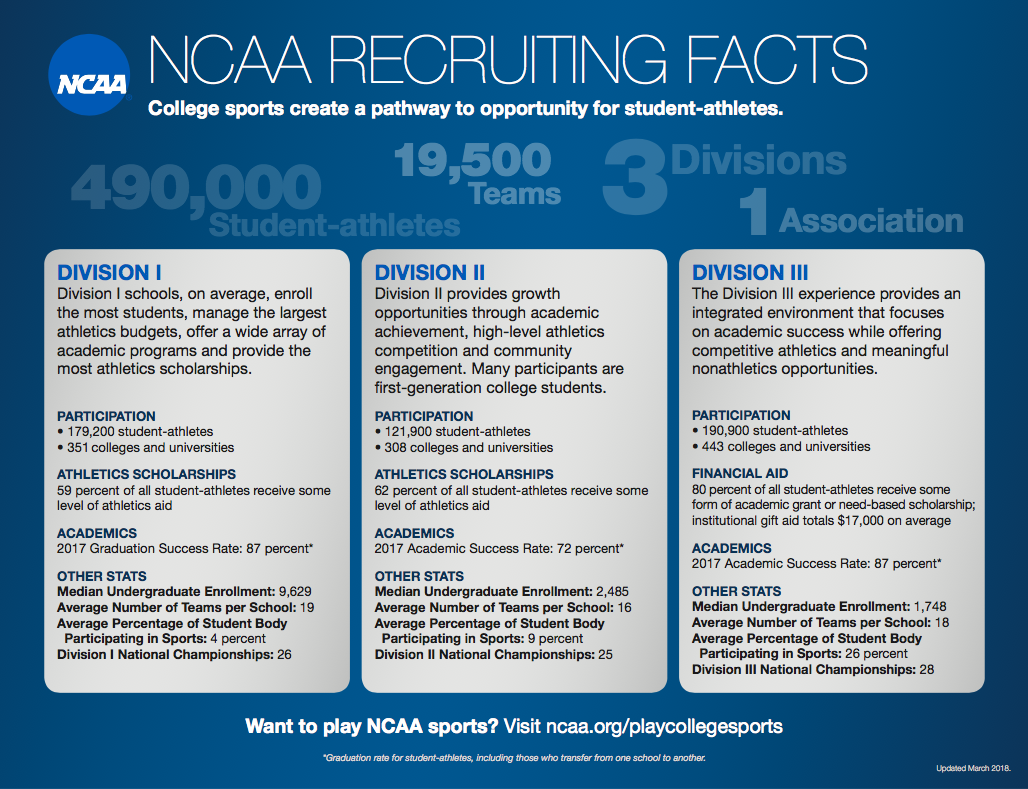
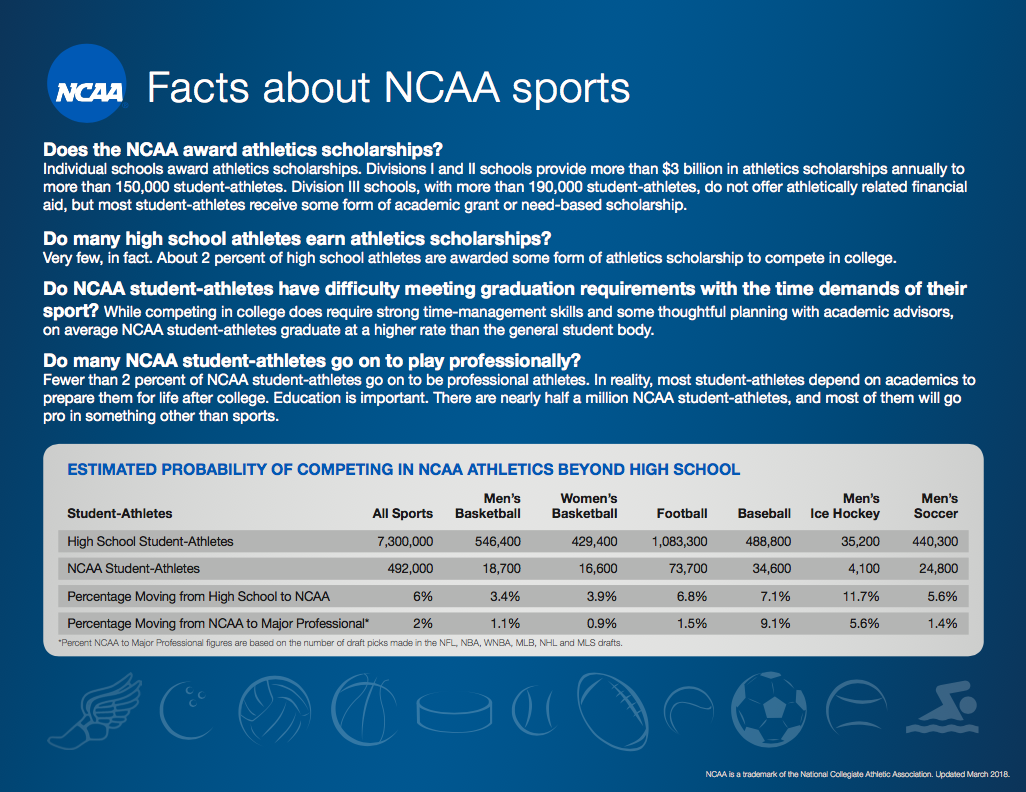
See below for the NCAA facts from March 2018


FACT – Only 2% of the NCAA athletes will be drafted to their major professional team sports but there is no guarantee they will actually PLAY even one game.

The two main NCAA team sports that are driving specialization are Baseball and Men’s Ice Hockey that have much higher % of players being drafted to their major professional levels (9.1%) and (5.6%) respectively vs. other team sports.  Being drafted is one thing, but being drafted, signing a contract, playing a game or a having a long career is another thing altogether.  One of the downsides of specialization is even those that do get to play if specialized starting in high school they will have shorter playing careers than those that continued to play multiple sports until or even in college/university as we shared in our January post

Early Sport Specialization does more harm than good

In the early 90’s, the OHL did a study based on the 1975 birth year of players, approx. 30,000 registered at the time in Ontario,  when they were eligible for the NHL draft and this is what they found;

  • 262 were drafted to the OHL (0.87%)
  • 113 drafted to the NHL (0.37%)
  • 38 Signed an actual contract (0.13%)
  • 22 Played only one game (0.07%)
  • Only 11 were active at 24 years old (0.04%)

I have yet to come across a similar study for MLB players drafted vs. those that will play for the major-league clubs they signed with, but like NHL, the majority come from the first round and after that will potentially have long careers for their minor-league affiliates.

Here is the math based on current trends of kids specializing at 7 years old and entering clubs/academies for 10 years before they even reach the collegiate level.

Most Current Data Set Available from 2013 for team sport participation

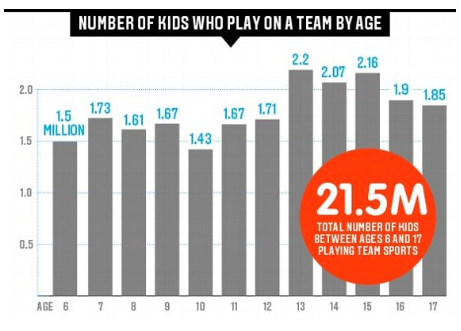
21.5M kids playing youth team sports in the USA;

  • Of those 7.3M will play team sports in high school (football being number one with over 1M) = 34%

Per March 2018 NCAA Facts (of those that played team sports in high school that went on to play in the NCAA)

  • 492K went on to play at the NCAA level = Only 2.3%
  • 59% of athletes at Div I schools offer a handful of full ride scholarships, majority are partials
  • 62% of athletes at Div II schools receive some level of financial aid/smaller scholarships
  • 80% of athletes of Div III school athletes receive some form of financial aid only, no scholarships

Student-athletes in Div II and III schools aid is more in student loans than actual bursaries or scholarships, subject to being repaid back (which puts further stress on the family to do so) vs. scholarships for Div I schools do not require repayment.

  • According to Mark Emmet, President of the NCAA, when players on NCAA men’s basketball teams were surveyed, 75% of Div I, 50% of Div II and 25% of Div III athletes believed they would play professionally when just over 1% were drafted to the NBA in 2017
  • Assuming 2% of NCAA Athletes go on to major professional levels, that is 9840 of the 492K student-athletes
  • Going back to the total 21.5M that played team sports from 6-17 years of age as the feeder group to those that went on to play at the NCAA level, those that were drafted to major professional sports (9840) only equates to  0.04% 

This is the same % that I have shared from numbers shared at the Hockey World Cup Summit in Toronto in 2016;

  • Approximately 2M kids playing hockey globally, Canada and USA accounting for 1.2M, the rest for other nations in Europe and did not even include the sleeping monster China
  • 700’sh roster spots in the NHL = 0.04%
  • The number of NCAA scholarships offered to Ontario born players has dropped 63% the last 10 years. Why? Because the USA has developed their ADM (American Development Model) over the same time period and is developing their own vs. those born elsewhere

Similar Stats in terms of soccer (MLS) based on registration numbers in the US in 2014;

  • Approx 5.7% of the 414K boys played soccer in high school
  • 7% (23,602) will go on to play soccer in college
  • About ½ of those (2.8% or 11.6K) will play Div 1 level (where athletic scholarships are available)
  • Average scholarship = $8.7 – 10.6K USD (gone are the days of full rides, now the average is approx 8.7K for all sports other than football and basketball that the average is 10.6K USD falling well short of that the actual annual costs will be)
  • Only 72 of those playing in college will go on to PLAY professionally = 0.02%
  • BUT 26% of parents think their kids will play professional soccer

I suspect the same % would hold true for English Premier League (European Football), NFL or other professional sports programs where players salaries have increased to the millions of dollars (not including the lucrative endorsement deals)

TD Ameritrade did a study with their clients in 2015 as they were concerned they were not investing enough for their retirement.

  • Many of those that replied stated a large portion of their disposable* income was being spent on youth sports.


  • 43% of those stated that youth sports were too expensive.


  • 67% aspired for their child to get an NCAA scholarship (only 2% potentially will)


  • 47% think their kids will play professionally ( reality = less than 0.5%)


  • 34% think their kids will become an Olympian (reality = less than 0.1% will)

* How many of us actually have disposable income anymore, with rising costs of housing, gas alone, more and more families are living paycheque to paycheque

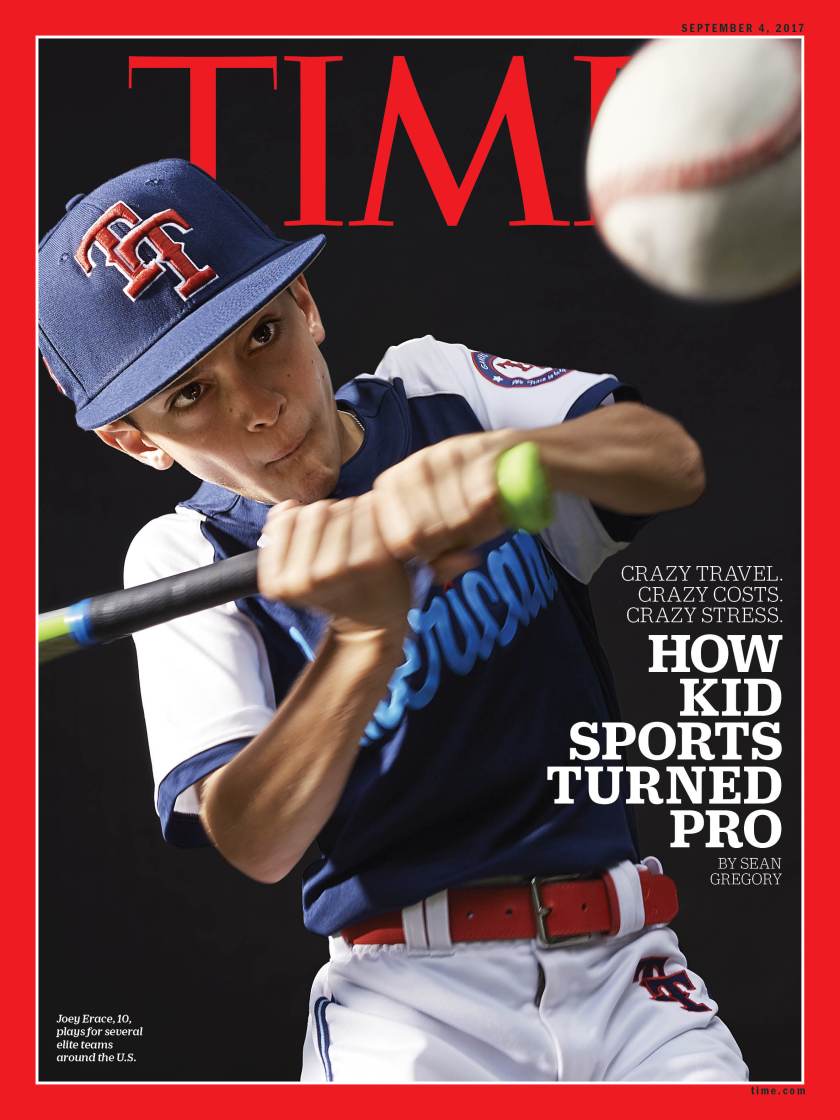
Two Years Later – Time Magazine shared that youth sports in the USA had evolved to a $15 Billion Industry due largely to specialization and the growth of private for-profit clubs and academies.  The industry has literally doubled in revenue in less than a decade!


These private programs are now costing anywhere from $15 to 50K per year (some include travel costs, some do not) so using an average of $25K per year (for travel, programs, gear, specialty trainers etc), and you signed up your “talented” child to year-round program starting at 7 will exceed $250K even before they get to college (AKA – NCAA PREP)

This does not include the opportunity loss of taking personal days, weeks off from your job to chauffeur or fly your child to all the prospect tournaments, games so a scout may “potentially” see them play (if they are good enough, they will be seen TRUST ME, you don’t need to spend all that extra money and time and if you truly aspire for that level, majority of college and professional coaches are recruiting multi-sport ATHLETES)

This is roughly the equivalent what it would work out to for a Div I school tuition for an international student which “may” only be offset by partial scholarships (literally covering meals) of 8K per year (full rides are about as rare as the Giant Panda).

This also does not include the equipment, apparel or other costs that I call “the fluff”

Drum roll …….

NET out of pocket for NCAA PREP (academies) and NCAA education WITH partial scholarship support can still cost …

ALMOST HALF A MILLION DOLLARS invested chasing the dream of playing professionally when the average is only 2% of NCAA athletes will get drafted and even if they do the majority will never play other than for their minor club affiliates and the actual number that may play in the Show works out to 0.02-0.04% in all the data referenced above).

Sadly, many parents are chasing THEIR dream, not their child’s dream, and when I have talked to parent’s almost all share they have not kept track of the math as either too scared to do so or they merely were trying to provide their child the same opportunity as others (AKA keeping up with the Jones).  Thanks to the traditional less costly community and high school sports programs competing with private clubs and academies they all get caught up in the same race only to find out at the end, the costs far outweigh the rewards.

One of the hardest things that I had to tell my son in his last year of minor hockey (when he was 17 years old) was I could not justify paying for AAA hockey thanks in part to mandatory travel tournaments that would push our out of pocket costs over $10,000 for the winter season.  This was MINOR HOCKEY, not an academy where the costs can push 20-50K.

Ironically it was the same conversation I had with my mother she shared that she could no longer support me playing hockey as my father’s life insurance ran out (well before specialization, spring, summer camps, $300 sticks, $1000 skates, Mandatory Travel tournaments)

What did I say to her?

It’s Ok Mom, I love hockey, but I would like to keep trying other sports, so I signed up for football in the fall ($125 reg fees that included all the equipment but cleats), rugby in the Spring (No reg fees, just $200 for jersey and cleats) and taught myself to play golf in the summer (junior fees were free or very low and I bought a used golf set for $100.00).  I had already won provincials (equivalent to a state title) in Hockey, and then went on to play for teams that won provincials in Football and Rugby.

What did my son say?

He understood and said he would rather play High School Volleyball ($125 athletic fees plus a pair court shoes) and Rugby  ($125 athletic fees plus a pair of cleats) and golf in the summertime so he could just go out there, work up a sweat, have fun and be with his friends.

At the end of the day, that truly is the reason why kids PLAY sports.

Sometimes we have to hear from the mouth of babes to bring us back to reality.

Let’s all work together to bring the game back to the kids … where it belongs


PS Tagline - Dont be a kids last coach