If you pick them, PLAY them

Posted Posted in Athlete, Coach, Organization Executive, Parents

Earlier this week I received a message thru our Facebook page then exchanged a few emails with a parent who reached out as they were concerned that his sons U13 competitive stream (rep) coaches were running short bench game after game including having specialty teams like a power play, penalty kill.

It was not the first reach out I have received nor do I suspect it would be the last but the parent shared with me that he came across the blog that I had written about my son whose coach used the very same short bench tactic time after time, but for me really became personal when he did so a month after my mother passed away and he shared my son had dedicated the game in her memory

The wave of emotions that I experienced then is not as high now as I have really tried to focus on the half-full approach working with coaches and parents in recent years to highlight the good work that is being done by many youth sports organizations to bring the game back to the kids.

I have always been a believer in all the sports I coached to give every player an opportunity to contribute to the outcome, and even went to the extent to ensure that every player had opportunities to play positions that everyone wanted to, in baseball to play pitcher, shortstop or catcher, in hockey all positions including goalie until U13 (even then had to have players suit up when both our goalies got injured).

The reason?


In this day and age where more and more kids are pulling out of youth sports as Project Play highlighted last year where 62% “retire” by the age of 11 after an average 3 year “career,” one would think that youth sports organizations would be doing EVERYTHING possible to reverse these trends and not turning a blind eye to coaches that are missing what youth sports should be, a safe environment to develop not only the skills of the game but skills of life.

What life lesson does a 11-year-old kid learn when he does not get the opportunity to play when it is their time to go out?

Having talked to many kids that were victims of short benches going back to 7-8 years of age, all told me the reason they quit is the coach only played their favorites.

Here’s my take on the coaches that do so.

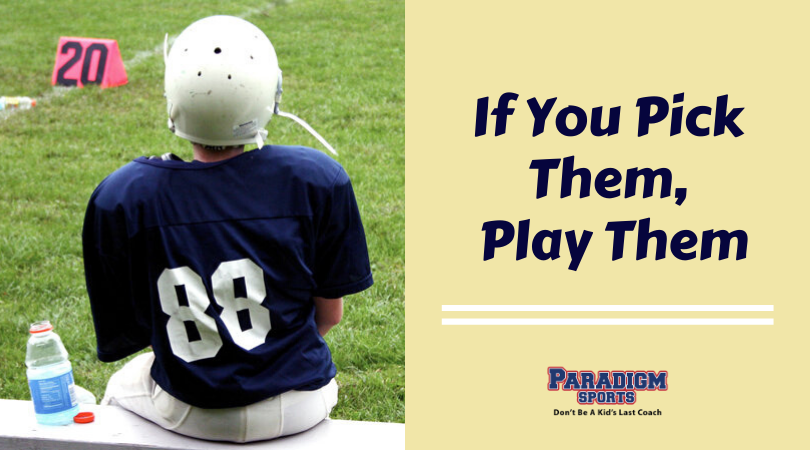
If you pick them, PLAY them.

The worst culprits in the youth sports space that run short benches to win games at all costs are the ones in the competitive stream or rep level, but even when I have had recreation stream coaches in clinics or workshops they have shared with me they have seen more than their fair share of coaches that run short benches to win games, some as early as the beginning of the game, many in the latter stages of a game when it is close.

In many sports, particularly the recreation level, youth sports organizations do have what is called fair play, equal play policies where coaches must play all players as equally as possible.

But entice those coaches with a tournament trophy, banner for league or playoffs, or just a feather in the cap as their team won against a rival association then it is like offering a bonus to a car sales rep for selling 20 cars in a month … it becomes the end all and be all, do whatever it takes even if you have to take shortcuts to do so.

The big issue I have when coaches do so is they picked the players for their teams either thru the tryout process (which painfully starts earlier and earlier every year) or a draft (usually started U9 age groups in many sports).

This means that they chose the players for their teams yet they think nothing of sitting a player and playing their favorites game after game in lieu of focusing on developing every player on their team so the team as a whole collectively gets better?

They also will have those very same favorite players on specialty teams which further deprives players of playing time and the opportunity to contribute to game outcomes.

Over the last few years, I have highlighted some examples of nations or sports organizations whose participation rates are not declining like many of those are in USA and Canada but are GROWING.

Perhaps youth sports orgs and their coaches (which I recognize many are volunteers) could learn something from those as they also have had many players reach high levels as a result of their development models.


SWEDEN
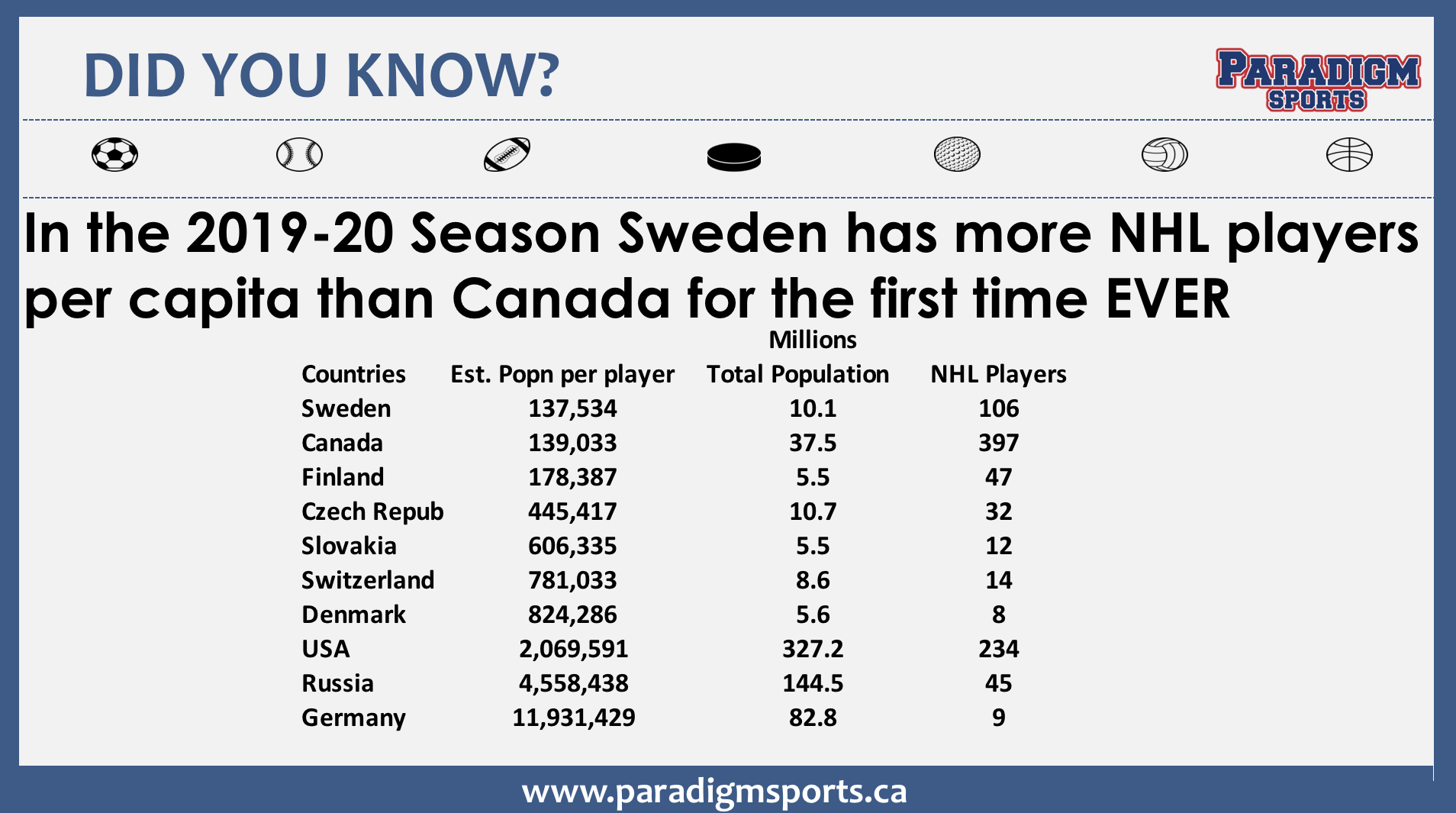
 

Hmmm .. maybe Sweden is on to something in terms of the player development model?

What makes the Swedish hockey model different?

#1 – All of their ice rinks are community-owned, unlike Canada and the USA where private multi-sheet facilities are almost on every street corner like a Tim Hortons is in Canada or Dunkin Donuts in the USA. Because they are community rinks and Sweden recognizing the importance of multi-sport participation they melt their ice on April 1st every year.

This means NO SPRING HOCKEY.

A phenomenon that has exploded in Canada in the USA that both Hockey Canada and USA Hockey are not sanctioning as they don’t want kids to play hockey year-round.

#2 – Because of the Spring Hockey model, the youth sports coaches that coach in winter as volunteers may aspire to get a paid position coaching in the spring which means they have to win as many games as possible to apply for those spring hockey coaching gigs.

#3 – Unlike Canada and the USA, Sweden does not COMPETE until the kids are U15 age (13-14), there are no scoresheets, scorekeepers, standings or individual stats being kept

Why?

Because Sweden’s model emphasizes the importance of focusing on the core skills of hockey during the key motor skill acquisition years.

#4 – Practice to Game ratio is minimum 3:1 also, as Sweden recognizes that players develop in practices, not games and in some instances with the explosion of spring and travel teams, kids as young as 6 years old may play over 80 games in one year, equivalent to the NHL?

In terms of the practice to game ratio in Canada, this could be fixed very easily as most rep teams get 2 practices, 2 games a week, convert one of the game slots to a practice slot and alternate home and away weeks with other teams in your tier.

Voila – 3:1 Practice to game ratio.

Based on the fact that parents pushed back because their 6 year old super elite prospects would not be able to play full ice hockey when Hockey Canada rolled out cross-ice hockey a few years back (proven to optimal development) I suspect although a simple fix, the push back will be even worse.

The fixation with playing competitive games in Canada is too much, too early and we could learn from Sweden as well as another country that is setting the bar, Norway


NORWAY

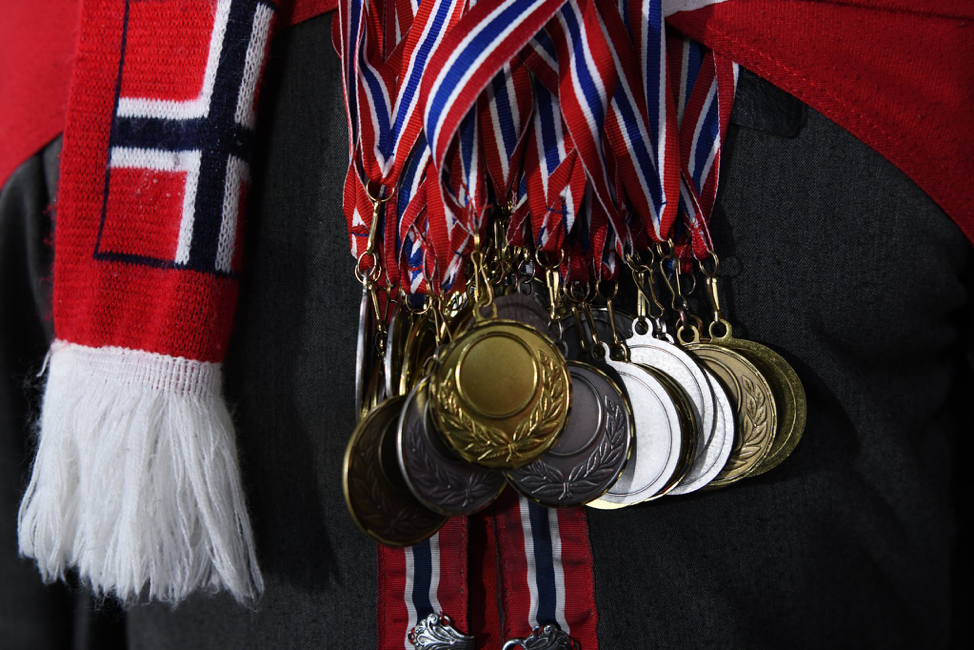
Another country who has set the bar for reaching the highest level of competition is Norway, who won 39 Medals in the 2018 Winter Olympics made them the all-time winningest country since the inception of the Winter Games.

Like Sweden, they don’t promote competition in youth sports until the kids become teenagers (13) and focus on multi-sport athleticism so kids become the best athletes they can become.

They both focus on the importance of playing with their friends, playing for their communities (vs. travel teams) and having FUN.

As a result, both nation’s youth sports participation rates are over 90% vs. those in Canada and the USA seeing the attrition rates we are seeing.

They also DON’T have the issues attracting and retaining officials like we do where our rates are as high as 50% of young officials quit in their first year, 30% every year thereafter due to the abuse they are taking from those winning at all coaches and over the top parents.

Coaches, if you pick them, play them.  Focus on developing all players and winning will be the byproduct in lieu of the focus.

AND

If you do so, they will love the game more at the end of the season than the beginning and come back with big smiles on their faces next season in lieu of many of the players quitting a game they once loved.

Don’t be one of “those” coaches that thinks nothing of sitting a 10 year old kid to win a game when every player on your team should be given the opportunity to contribute to the outcome, win or loss.

In doing so, their confidence will remain intact and like all the players I coached their only questions after the game will be ….

  1. What’s the Snack Coach?
  2. When do we Play again?

If you are still playing a sport in your adulthood as still love the game as you did as a youth player ….

The first question you ask when you get in the dressing room?

Who has, how much is the beer?  THE SNACK

When do we play again?

Take the high road and if you pick them, PLAY them so they keep playing well into their adulthood.

 

PS Tagline - Dont be a kids last coach


What do parents expect for their kids in youth sports?

Posted Posted in Athlete, Coach, Organization Executive, Parents

As we head into another fall season of a myriad of youth sports, thought this would be a good time to share with coaches the importance of having answers to the top 3 questions that parents will be asking in their upcoming parent meetings.

#1 – What is your background as a coach?

This is particularly top of mind for parents in the competitive streams, many of which will make decisions whether they will support their son or daughter trying out for competitive teams based on the coaches that have been selected by organizations.

When it comes to the recreational stream, particularly the earlier age groups, parents more often than not are happy that someone put their hand up to coach the 5-8 year old age groups and are more concerned when/where they should drop their kids off for various team events than whether their kids are in qualified hands.

Whether it be recreational grassroots level or higher level older age group teams, however, this is an answer that all coaches should have the answer to before they meet the parets for the first time.

Things like;

  1. Playing experience in the respective sport they are coaching
  2. Certification they have completed
  3. If they have children themselves (more often than not parents are those that start coaching the youngest age groups)
  4. How many years they have coached
  5. How committed they will be (dedication is key, coaches should be there for the kids)

#2 – Why do you Coach?

It amazes me when I speak and ask coaches the questions to provide answers to that very question how few hands go up to begin with but am thankful for those that to stand up and share all kinds of reasons why they coach like;

  1. They love the game and want to give back
  2. They want to help kids learn the skills of the game, but also skills of life
  3. They Love Kids and watching them grow
  4. They want to help kids have a positive experience
  5. They don’t want kids to have a bad coach like they did

It is at this point where I also hear coaches shared their core values like respect, sportsmanship, winning with humility, losing with dignity, developing leaders and teaching various other life skills that the kids will need beyond the sport.

Then the one that gets me the most, when they share how passionate they are about the game and kids to love it as much as they do.

One of the things I share all the time is kids should love the game more at the end of the season than they did at the beginning of the season.

Ironically, as we shared in last weeks post, the #1 thing that parents are looking for in terms of their kid’s sports experience is that they develop character, which is followed by them having fun and making friends.

Great Coaches, as we have shared in past, are ones that truly care about the kids the coach, and those that are passionate about the game, as a parent, they had me at HI.

#3 – What is your coaching philosophy?

This again is one that I find we really need to work on with grassroots coaches, when I prompt coaches to share their philosophies either en masse or in small groups, only a small % are able to do so.  In part because they are still developing their philosophies of coaching, in part because they have never put it in writing.

Once they do so, it makes them accountable so if they talk the talk, they must walk the walk not just for the players but also for the parents, board members, officials etc.

I remember last year when I put forth the query in a clinic I was running, one of the coaches stood up and shared a very detailed coaching philosophy, so much to the point, that I then worked with him after the fact to tweak it so it was not more than a couple of sentences.

Think about it being your mission statement for WHY you coach, what your raison d’ê·tre (reason for being) which goes hand in hand with your core values that you have learned from parents, family, education, work etc.

Like that coach, I had a very lengthy coaching philosophy that was several paragraphs long until I reviewed it with one of my mentors and he told me that it had to be no more than two sentences … there was no way I would be able to share my philosophy with board members when I was interviewing for coaching positions or parents after the fact when met them for the first of several meetings over the season.

My philosophy evolved over the next couple of years to one statement:

FUNdamentals, not winning, at all Costs.

Why is Fun in Caps?


I believe strongly in developing kids skills of the game in part, but more so the skills of life to make a difference by developing youth into adults.

AND

I Have learned there is a fine line between winning and winning at all costs.

Without going into a deep dive on the article itself, just wanted to touch on a recent article co-authored by two faculty members at the University of Waterloo posted in the conversation which was reshared by the Vancouver Sun under permission.

The Conversation Title:

“Making Youth Soccer less Competitive: Better Skills or sign or coddling kids”

In the paper edition of the Vancouver Sun the article was titled:

Removing Competition: Good or Bad for Kids?


In the Vancouver Sun Digital Edition the article was titled:

Ryan Snelgrove and Daniel Wigfield: Is less-competitive youth soccer a sign of coddled kids?

My comments to the digital edition version:


Below is a image we shared out in the fall where the GTHL had a novice hockey game (8 yr olds) still playing full ice hockey where the final score was 41-0 although they only showed 6-0 on the scoreboard so as to “not hurt the kids feelings” that was referenced in the article why Ontario Soccer has shifted to the model of not keeping track of scores U12.


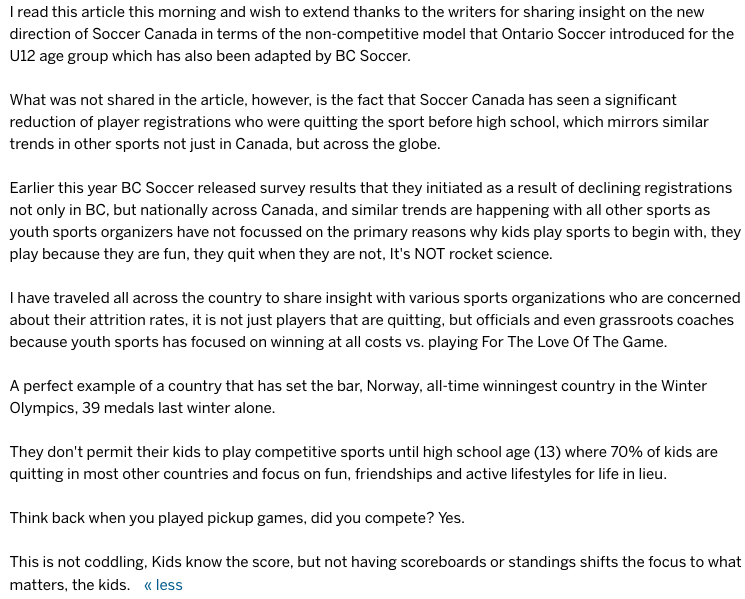
Like the Ontario Soccer article, there were two sides that came forward, those supporting the move to push competitive play to later age groups, and those arguing that competition introduced at earlier age groups teaches kids life lessons.

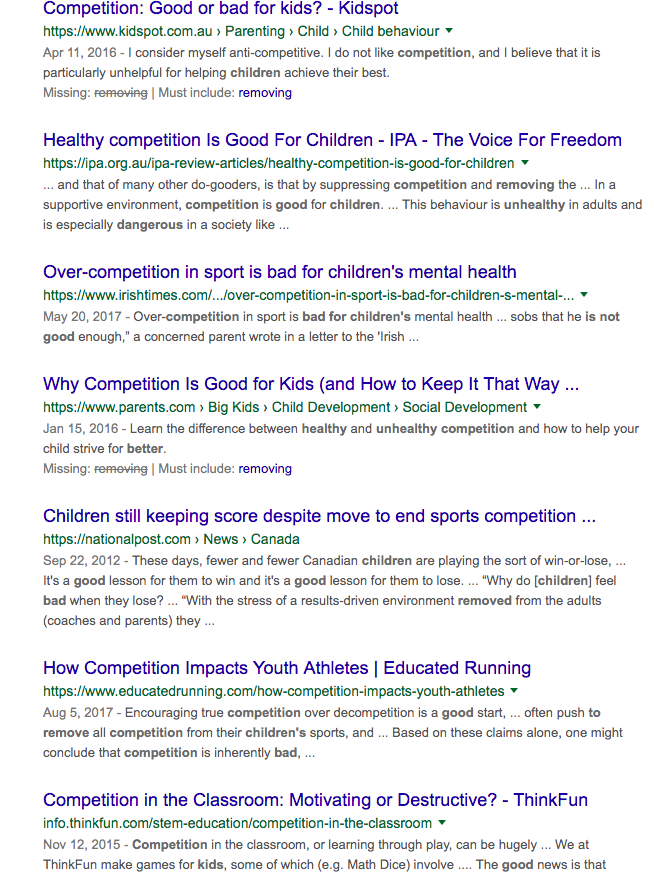
Below are just a number of other articles on page one of google pertaining to the pros and cons of competition with several other articles on subsequent pages with those for and those against having scoreboards, scoresheets for the younger age groups


I know that there is always two sides to every story, but if we let the adults who are pushing the pay to play winning at all costs model becomes the norm, not the exception, the kids LOSE regardless of the age group.

What coaches must be cognizant about as they head into the upcoming seasons is what both parents and the kid’s expectations are.

The top three Parents expectations they share with me when doing presentations are for their kids to build character, have fun and make friends.

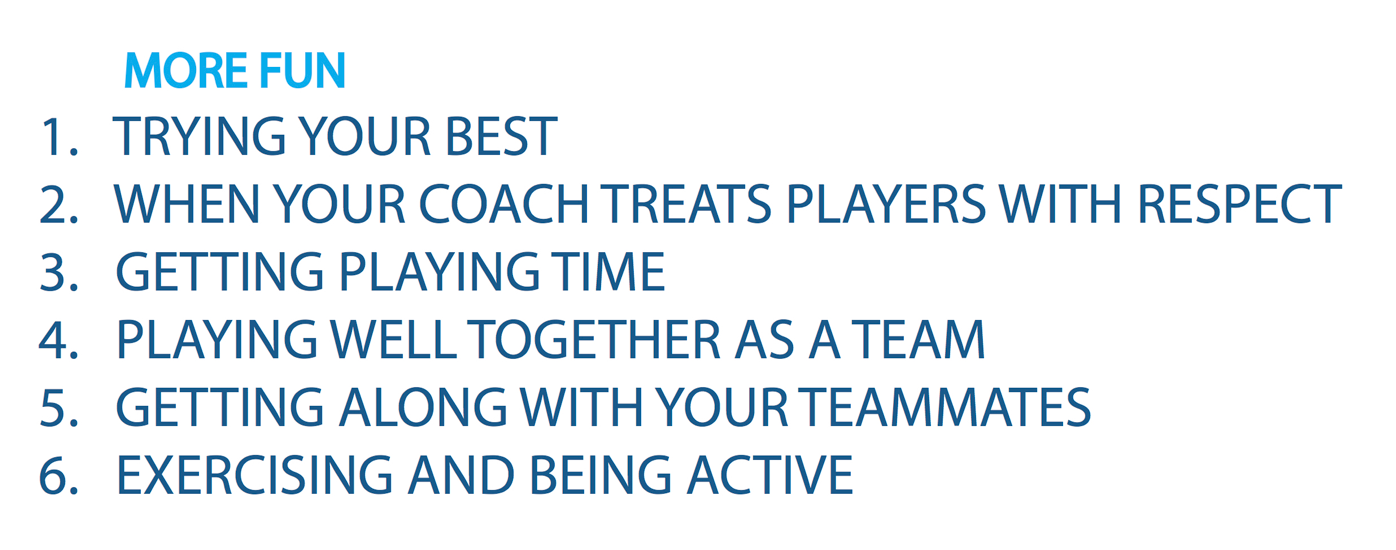
The top three kids share why sports are fun (the reason they play) per Amanda Viseks research and my surveys of kids in numerous sports is when they get to try their best (work on their skills), when coaches treat them with respect (by treating them with fairness, teaching them the skills of the game and of life) AND when they get playing time (kids just want to PLAY).

And if you are the naysayer or sarcastic adult think that removing the scoreboard is for the kid’s sake, not hurt their feelings, coddle them no, it could not be farther from the truth.  Kids keep track of all the goals, assists, who the top players are, who the players are that need to develop and so on.  Before youth sports became adultified as it is now, kids formed their own teams, made and enforced their own rules, rebalanced as needed so games were competitive NOT blowouts or having coaches run short benches to win games to pad their resumes, not to develop all kids on their teams.

The reason why there is no scoreboard in the earlier age groups already in Soccer, Hockey, Baseball and many other sports to follow is so that the parents and coaches don’t take the game too seriously which has led to bench-clearing brawls involving the most infamous one to date of parents fighting at 7-year-old baseball game because a 13-year-old official made a call the spectators did not agree with.


Really?  Is winning or losing at that age group really matter? Should it not be about developing the kid’s love for the game, working on the core skills, and all the other benefits kids can reap from playing sports?

Having worked with many parents I can tell you first hand none went to this game expecting to get into a brawl, they had hoped to just go watch their kids play but as winning has become the epicenter of youth sports, anything impacting a win or loss (in this case the call by a KID) set fuel to a fire.

We (as in all the adults) must remember that youth sports are games played by KIDS, with many of the official’s kids themselves, and too many are quitting before they should and once they do, many don’t return to the game they once loved.

Let’s all work together to bring the game back to the kids … where it belongs.

Don`t be a kids last coach


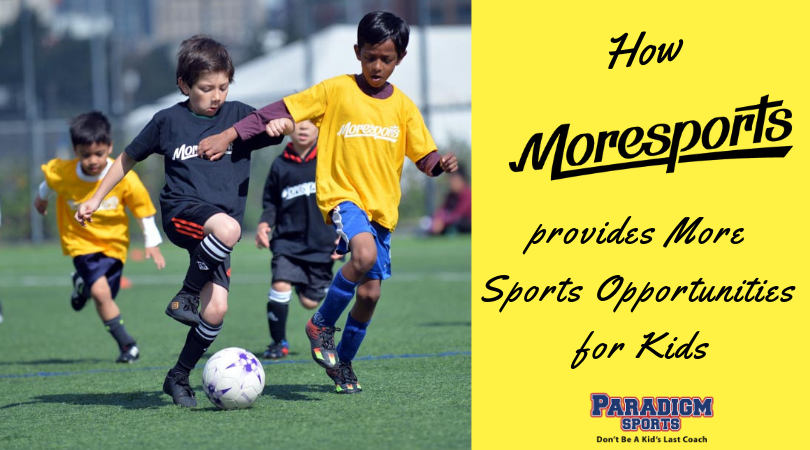
How Moresports provides more sport opportunities for Kids

Posted Posted in Athlete, Coach, Organization Executive, Parents

This past weekend I had the opportunity to visit with Cynthia Lee, Coordinator, and Yosephine Yao, Hub Leader, and see the amazing program that they do with Moresports, a community-based multi-sport program that has been under the radar screen mainly in East Vancouver since 1998.  Previously I shared insight on their program in “Youth Sports Organization that are Bucking the trends” after I initially connected with Yosephine at UBC’s career fair we were exhibiting at.

The program was started because a father took his kid to a local soccer field and was refused access as was not part of the local soccer association and was advised would need to sign up his son to play on the field as they were allocated by the city.  The registration fees for their family were too much (and that was well before the era of early sport specialization and the professionalism of youth sports and he decided to do something about it so could offer cost affecting community programming to kids in the area.

Since then, Moresports has blossomed into a program with 11 hubs that permit kids to participate in multi-sport programming weekly in fall, winter and spring (unable to run programs in Summer due largely to schools they run many of their programs close for the summer) but in the course of the few hours I was with Cynthia and Josephine I learned just how an organization could, in fact, provide programs for kids, especially those that are economically challenged, to be involved in various sports.

Below is a compare/contrast table that I put together after my visit that I will expand on below;

Moresports Other Sports Groups average
 

Coach Ratio Male:Female


20-25% Female, 75-80% Male  

75-80% Male, 20-25% Female

Format Community Not-For-Profit Not-For-Profit or Private
Facilities Parks Boards and schools Parks Boards, Schools plus private facilities
Equipment Moresports pays for and provides focus on ball sports (limited equipment) Orgs plus individuals pay for (i.e. 300.00 bats, sticks)
Score/Timekeepers None – non-competitive Yes – starting at 8 yrs old
Age Groups K – Grade 8 (5-12 yrs. Old) K – Grade 12 (5 – 18 yrs. Old)
Location(s) 11 Hubs – Vancouver ONLY Various across the country
Registrants Yearly 400 per hub, 4-5,000 annual registrations (no one turned away)

** Annual Soccer Jamboree

Varies, from 200- 1000+ but many sports suffering attrition rates
Fees 40.00/8 sessions (5.00 session)

Waived if can’t afford

Varies (seasonal fees + equip)

Camps 20.00 Session Average

Funding Provincial/Municipal/Charity Provincial/Municipal/BC Lottery/Bingo
Coaching Certification High Five + NCCP (new) Subsidized RIS / CRC / NCCP / Private
Officials None (non-competitive) Starting Age 8 (house or competitive levels)
Staffing Coordinator, Hub Leaders, leaders, and coaches Board members, coaches, officials, rec centre staff
Economic Status 80% Economically Challenged 20% Economically Challenged
Programs Run Fall/Winter/Spring – No Summer Year Round (with early sport specialization)
Sports Offered Soccer/Basketball/Dodgeball/Spikeball

Looking at Floor Hockey and others

Various – Single Sport orgs or multi-Sport Camps
Schools require custodians No – Leaders have keys to access Yes – Required
Parent Participation Yes – First 15 minutes Free Play No except Coach Parents
Community Leader training Yes – Junior and Youth No – only coach training
Established 1998 Various
Player attrition an issue No – continue to grow yearly Yes – 70% quit by 13
Coach Attrition No – ongoing leadership ID and training starting at 12 yrs old Yes – Volunteer Pool getting smaller and harder to recruit
Official Attrition Not applicable (no officials needed) Yes – 30% per year quit
Parent Behavior an issue No – they get to participate then watch quietly Yes – Vocal Minority (5-10%) spoil experience for others
Uniforms Jamboree only – t-shirts sponsored Yes (in fees)
Coaches Paid Lead Coaches honorariums, leaders volunteer to gain experience Head Coaches in many sports, plus TD’s + $50K per year

This is the epitome of social inclusion and social innovation IN ACTION, if more sports organizations recognized the importance of collaborating with all the stakeholders the issues, as Moresports is doing, they would be able to improve their programs to provide a quality sports experience.

The first thing that jumped out to me is the vast majority of coaches and leaders involved in the program are female, approximately 80%, most of which were former “campers” that participated in the various programs when they themselves were kids going back to as early as Kindergarten.  A TOTAL polar opposite from the various team sports that I have worked with across the country where even with all the initiatives in recent years and government funding to promote gender equality we still have so much work to do to get more female coaches, officials and board members.

Like many other sports organizations, Moresports buys the necessary equipment needed for their programs and then the hub leaders store on site for use during the weekly or weekend sessions.  As sports equipment has escalated in many sports, they focus on those that require minimal equipment, Soccer, Basketball, Dodgeball are core, with some hubs running baseball, spikeball and aspirations for floor hockey.

Unlike all team sports, Moresports does not have tiering for recreational or competitive levels, every kid that aspires to play, get an opportunity to do just that PLAY.

Uniforms are limited to t-shirts that are funded by the local Kidsports chapter in Vancouver, mainly for their one large event they host years, the soccer jamboree, where all hubs come to one facility to play games for a weekend.  Compare that to hockey where they have 85.00 home and away jerseys, even alternate travel, and practice jerseys, pant shells and so forth.

Another area where they differ from traditional team sports is the coaching certification that they do is high five, required for recreational leaders and incremental leadership training that is fully subsidized for the leaders, coaches as many of which could not afford if required to pay for out of pocket.

Hmmmm .. what a concept, provide FREE coach and leadership training so leaders are not out of pocket.  Many of the team sports do reimburse coaches for their NCCP and other training they are required to do, but not until well into or end of the season once they have completed their coaching certification requirements.  This has been one of the deal breakers for coaches that I have talked to who can be on the hook for hundreds of dollars until they recoup later in the season.

The best part that Cynthia and Josephine shared with me, is they have approximately 4000 kids participating in their programs annually and if they could scale up could accommodate more (scaling is contingent on funding and development of leaders/coaches).

Because their programs are non-competitive (no scorekeeping, scoresheets, rankings, banners) vs. organized sports, they don’t require officials but as fees are so nominal, even if they did have organized games based on the parents sitting quietly on a stage watching their kids play for an hour with HUGE smiles on their faces I suspect that official attrition would be WAY below what the average 30% is annually for organized team sports.

Many organizations that I have talked to have shared their pain points of recruiting coaches, due in part to out of pocket costs, due in part to time commitment, but also due in part to many don’t step up to coach as they don’t want to “deal with parents”

The other difference to Moresports vs. organized sports is they identify, recruit potential leaders who are participants in their programs starting as early as grade 7, then provide those that are selected free leadership training starting with the junior youth (ages 10-12) then youth leadership training (12-17).  Many of which become coaches themselves both for Moresports but then for other summer recreation programs to give back in their respective communities.

Hmmmm … what a concept, provide a fun environment to play various sports in then ID potential future leaders for the same program and beyond so in lieu of relying on the “help, we need coaches and taking any that put their hands up approach organized sports do” to identification, recruitment and training approach.

All of the hours that the volunteer leaders contribute is also tracked for their community volunteer requirements and other leadership opportunities.

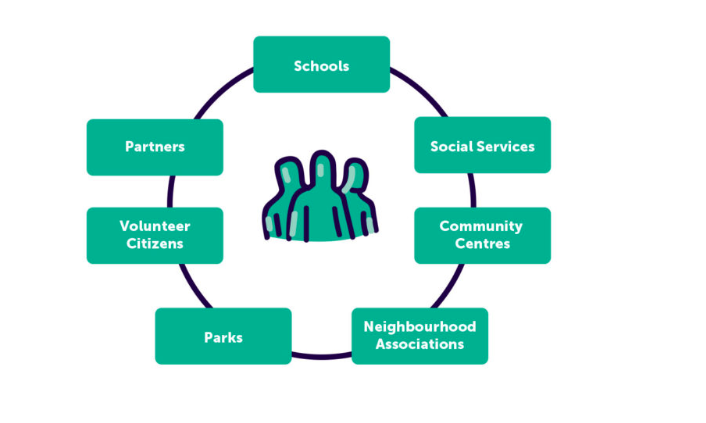
All of the great programming that Moresports is providing would not be without their core and community partners


My overall observation was one that remembered all too well growing up as kid myself, all the kids that came to the K1 or 2-5 groups I had the opportunity to observe showed up with big smiles on their faces, smiled throughout and as they were leaving.

Why?

Because they had FUN.

All the volunteer leaders, head coach and Cynthia/Josephine did the same.

When I asked how they ID potential leaders or coaches they shared with me that they did not need to have the high level skill or playing experience in sports, the only requirement is that they had a true passion and cared for kids.

Hmmm … another refreshing epiphany moment when I heard that.

The #1 characteristic of the greatest coaches of all time is they truly cared about their players as people first.

I think all organized sports programs that are experiencing the challenges of high rates of attrition of players, officials and even coaches could learn from the great work and model of Moresports.

Make it Fun – Make it Safe – Teach Skills – Care passionately

And by doing so are not a kid’s last coach

Almost all of the kids that become participants come back for each session and for years.

Many of which as they have developed a passion for being active then move on to organized sports when they enter high school, the coach of the Saturday Session was one of those. She started in Grade 2 as a grassroots “camper”, then became a leader, coach and has lead many of the boys to provincials in high school.

For more information, visit their website www.moresports.org

I was invited to come out to their big event in June and looking forward to seeing many more kids smiles playing for the sake of playing, like our generation did and somehow we must find that happy medium and work together to bring the game back to the kids.

Don`t be a kids last coach

BONUS – Download your free printable flipbook/ebook copy of this blog HERE

Playing For the Love of the Game

Posted Leave a commentPosted in Athlete, Coach, Organization Executive, Parents


This coming Monday I will be returning back to Nanaimo to speak on behalf of Changing the Game Project hosted by Nanaimo Minor Hockey who is working with various other sports groups to develop an amazing sports experience for the kids in their community.

As I was when I made the ferry trip in October, I am truly honored to be invited to share nuggets but also interact with so many amazing people who are passionate about quality sport.

I came across some great nuggets the last few weeks that I will be sharing in the presentation that thought would be great to share on this week’s newsletter as well.

Why do Kids play Sports?

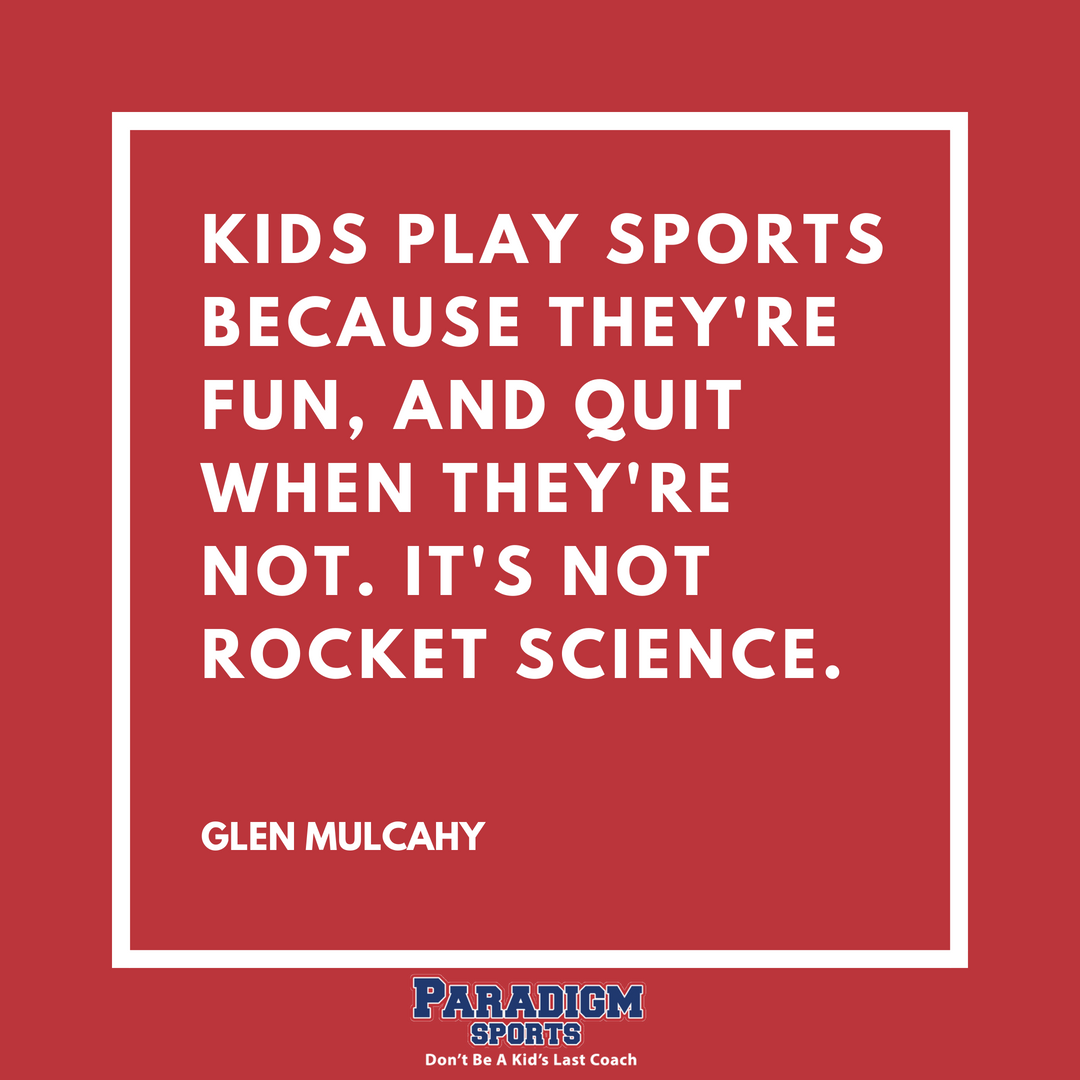
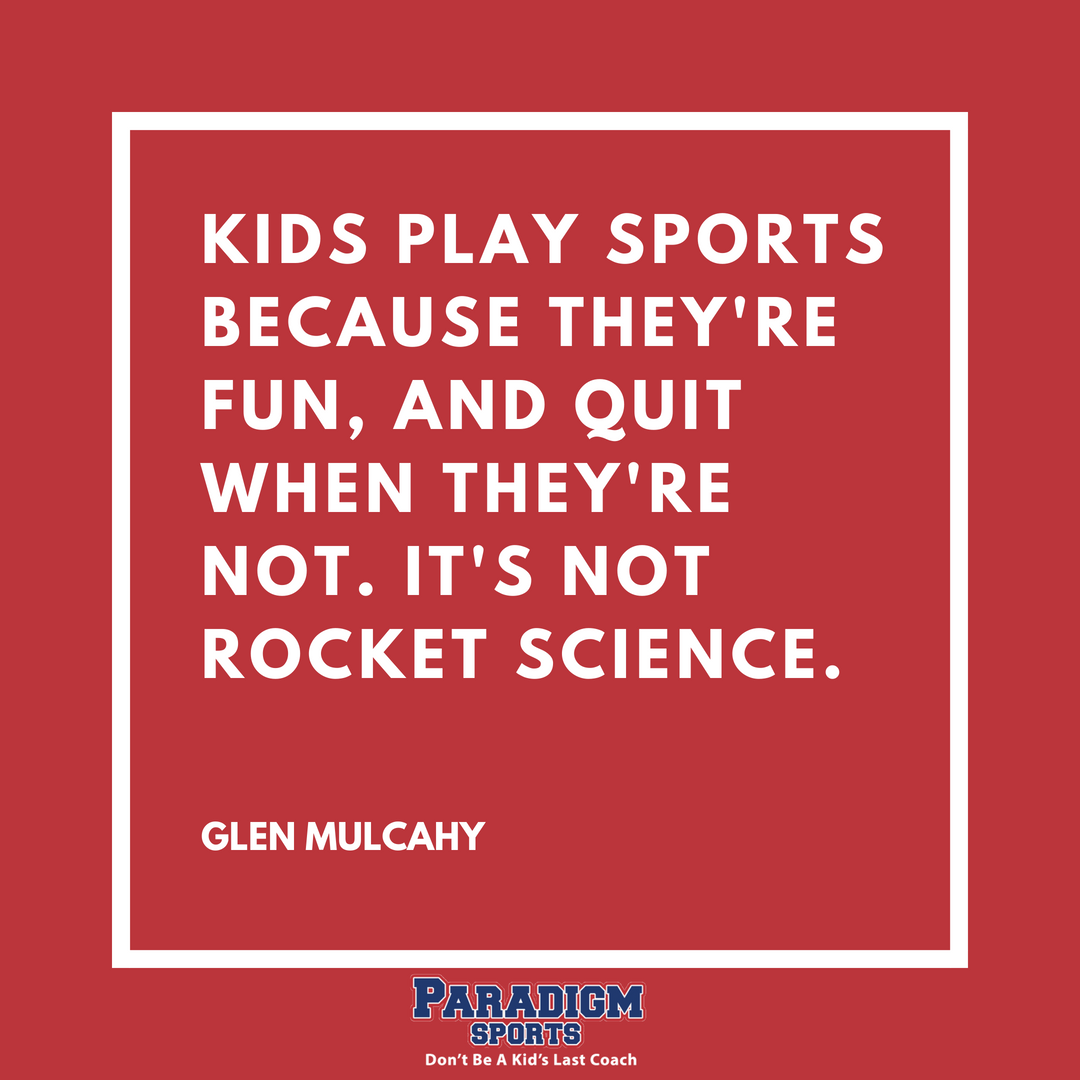
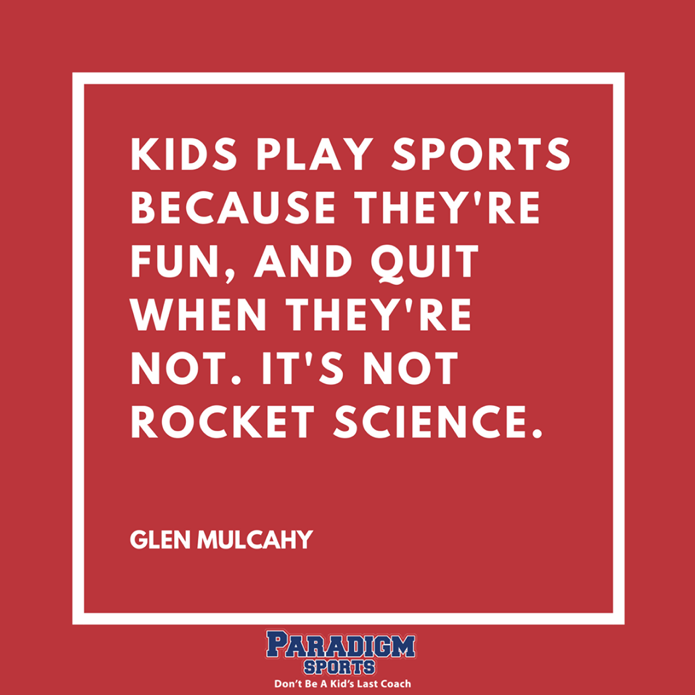
Simple, they play because they’re fun, they quit when they’re not.  It’s NOT Rocket science.

This is the quote that I have shared for years and it really comes down to just that.   What our role as parents, coaches should be, however, is not just making sure that youth sports are fun, but they should also ensure that kids love the sports they are playing more at the end of a SEASON than they did at the beginning.

Due to the growth of early sports specialization, however, there are no more seasons to youth sports, and in lieu of PLAYING sports, kids WORK sports for over 10 months of the year

As Wade Gilbert, the Coaches Doc, shares in many of his talks … do kids ask you Mom, Dad can I WORK Hockey? WORK Soccer?  No, they ask you if they can PLAY baseball, PLAY football and so on.

The more I thought about the reason why kids played a sport for more than one season is this held true, I Loved the Sport more at the end of a season that I could hardly wait to return to play again.  This was because when the season ended in March, I hung up my skates to play baseball, golf, go to the beach, ride bikes, hike, swim, tennis and so many other activities so when the season started again in Sept I missed the rink, my buddies, coaches and was eager to start another season.

Thank you for being a sport that helps me with other sports.


Why then do Officials (refs, umpires) start or continue to officiate?

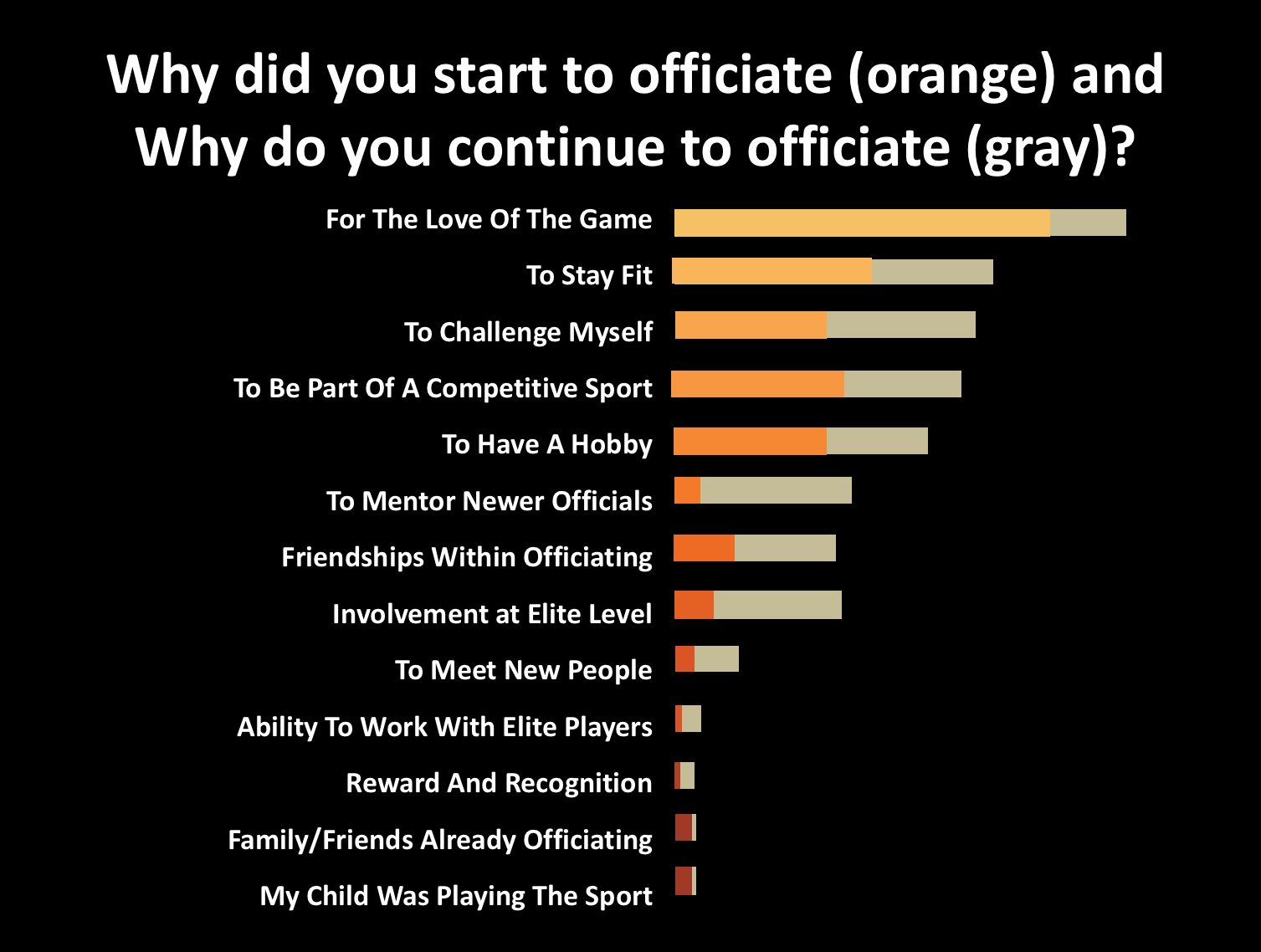
According to the largest survey I have come across today over 17,000 officials were asked why and the #1 Answer was “For the Love of the Game”.

See below for the other top 10 reasons why they started and continue to be officials.


Other reasons included staying fit, challenge self, be part of the competitive sport, have a hobby and near the bottom was reward/recognition and lowest motivator was the fact that they had a child playing the sport.  This is probably due to the fact that a lot of officials start before they are parents, and ironically one of the motivators that organizations do is provide stipends for refs to do so so if get enough games, they can have a decent part-time income of the course of those seasons.

Why do Coaches Coach?

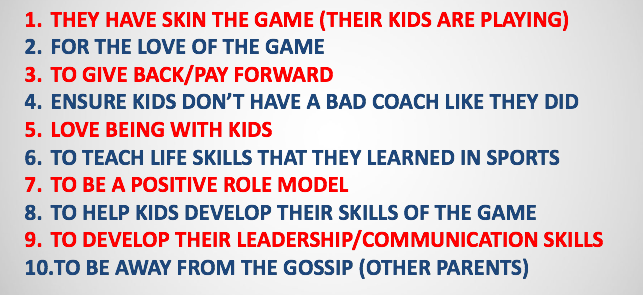
Ironically, when I have surveyed grassroots coaches over the years in clinics or talks and asked them why they coached, the #1 answer is because they had skin in the game, they stepped up to coach because their kids were playing and either asked them to coach OR a board member runs around the field, rinks at the beginning of the season asking for help.

I was one of those “suckers” initially putting my hand up to help on ice when board members came calling when my son was 5 starting hockey or my 7-year-old daughter in softball and 15 years and hundreds of kids later, I still put my hand up, now is to mentor the coaches of kids so they can help them become the best people they can become.

See below for the other reasons why Coaches Coach that I hear over and over again when I prompt coaches why they are coaching;

The second reason, whether they are a parent or not, is coaches step up to coach For the Love of the Game, they love the game and everything that it did for them, that they want to give back/pay it forward to help others reap the same benefits.

Many of which shared they are coaching so kids don’t have a BAD coach like they did when they grew up (which sadly there are still coaches even with all the certification coaches have today that coach the way they had been coached)

One reason that parents may not be aware of, coaches have also shared with me and I can relate, they are at the games anyway, drive to the practices and no point going home, so they put their hand up to help coach.  They also do so, as I did, to be away from the gossip that parents at times will share amongst themselves or worse yet those would be too vocal and scream coaching instructions at their kids or critique them/coaches or officials.

Another interesting stat came out of official vs. coach surveys, although officials receive fees and some coaches get honorariums for coaching now, neither officials or coaches stated when surveyed they started or continued to do so for the $$ in their top 10 reasons for doing so.

They do so not only because they love the game, and a few weeks into a season realize they also love being with kids as they have adopted large families when they start coaching.

Now let’s talk about why these three key stakeholders QUIT the Sports they once loved

Why do kids Quit Sports?

They not only quit because they are no longer fun, but they quit because the lost the passion, love for the game they once had and for various reasons lost their way in a sense.

More often than not, they no longer love for the game as they have been deprived of the opportunity to play in all key situations in games, have had adults screaming at them when made mistakes or have been on teams where harassment has taken place to some extent.

They quit because the games are no longer about what snacks they get after the games and being with their buds in the dressing room, hanging out in dugouts or sidelines it is about the results of the game that takes the focus due to winning at all costs.

They also quit because they can’t afford it any longer due to travel, equipment, spiraling fees and all the other costs now associated with youth sports unlike the “good old days” where you community sports were just that, played in the community or at high schools with low, no fees and even could use the same pair of cleats for 3 different sports as I did (baseball, rugby and football)

Why Do Officials Quit?

#1 Reason Poor Sportsmanship

As I shared in a prior post “Why do officials officiate” the #1 reason why officials quit is due to poor sportsmanship.

In the NASO study of over 17,000 officials, almost 40% of the respondents stated that parents caused the most problems with sportsmanship, followed by just shy of 30% of coaches.

When asked who is responsible for improving sportsmanship, over half stated coaches were.

Why?

Because they are the catalysts for change.

They interact with their players, assistant coaches, officials, board members and parents but also coaches and players of other teams, perhaps even their parent groups.

If coaches do not talk the talk but also walk the walk and demonstrate and expect good sportsmanship then whom is going to improve it?

They also quit because they are concerned about their safety, over 40% of male and female officials are due to administrator, parent, coach or player behavior

Even worse, they are intimidated by their fellow officials who will criticize them during games?

I just came across this extreme video where one parent kept telling the refs after a call he did not agree with “would see them after the game” (meaning we will duke it out in the parking lot – really?), but the entire group of parents and fans were ejected from a youth soccer game due to their behavior and threats towards young officials (about the same age of the players they were officiating)

This after each day I came across similar parental behavior, coach abuse towards players or officials, series of articles about sexual abuse, or various issues at minor hockey associations I shared in last week’s post “When will the culture of Youth Sports change for the better?”

Why do Coaches Quit?

Coaches, like players and officials, are either not putting their hand up, to begin with due to lack of willingness to “deal with” parents OR are quitting due to frustrations of the problems they had “dealt” with over their coaching careers.  This is why the most common ask I receive is “who do I deal with parents” to which I counter, it is not about dealing with parents, it is all about how you engage them as allies.

Over 80% of coaches surveyed by Syracuse.com stated that parent issues had gotten worse over their careers, the #1 problem they dealt with by over 80% of the respondents was parents complaining about their kids playing time.

IF a coach is playing everyone equally so they all have an opportunity to contribute to the outcome of the game in ALL situations this would be a non-issue (the exception being when kids need to be disciplined for behavioral issues).

I argue that coaches in a sense are a victim of their own demise, due to our winning at all costs culture, many coaches who may have had the best of intentions when they started coaching fall into the trap of running short benches starting from the beginning of the game and parents are merely venting their frustration as they ALL PAY THE SAME $ so expect all kids to PLAY THE SAME amount of time.

Again it comes down to pointing fingers at one of the key stakeholders that impacts what should be a quality and positive sports experience and the majority of the issues could be avoided from the GET GO.

In lieu, the officials blame the parents, the coaches blame the officials, players or parents, the parents blame the coaches, officials or board members blame the parents and goes round and round in circles like the merry go round at schools I loved when I was a kid (which kids can’t ride anymore as they may get hurt?)

When then are we going to stop pointing fingers at each other and understand the motivation for the players, officials, coaches to begin with?

They started because wanted to try a sport For the Love of the Game, they continue to do so for the same reason, and they quit because they lost that Love and passion they had to start with due the various issues that have taken the Play out of Play Ball.

In lieu of pointing fingers, what I suggest to all parties concerned is bury the axe, work on collaborating so it is a quality sports experience for ALL stakeholders so they all can do so For the Love of the Game.

Let’s all work together to bring the game back to the kids ….. where it belongs.


The Top 10 Characteristics of great coaches

Posted Leave a commentPosted in Athlete, Coach, Organization Executive, Parents, Uncategorized
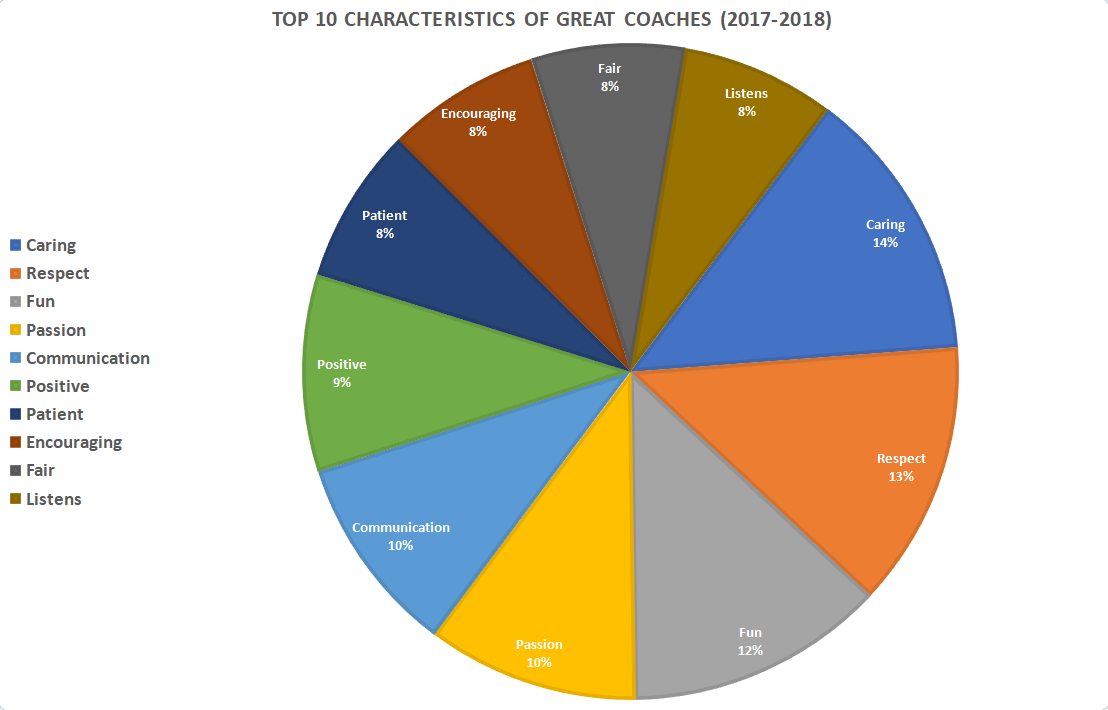
This is an update to last years post that I posted in December 2017 as I have continued to interact with coaches at conferences and clinics and ask them; What are the top 3 qualities of the greatest coach (or teacher, manager) you ever had? Last fall our co-op student created a tracking sheet to summarize all the characteristics that I had recorded by various means and now our “informal” database is just shy of 1000 coaches, board members and even parents. By no means is this a formal research study, but the below pie chart outlines the updated results for the top 10 characteristics;
Just as it was last year, and every time I do the exercise, the Number 1 characteristic was the coaches cared about their players. This also was one of the characteristics when I talked to the amazing guest speakers in our summer and winter digital summits we hosted thru our digital arm For the Love of the Game. Number 1 (always)
Not only do they care about helping them develop into the best athletes they can be, but the best people. This is what John Wooden, Clare Drake, Phil Jackson in past and current coaches like Pete Carroll, Mike Kryzyzewski, Sean McVay and others have demonstrated or shared with journalists what was really important to them as they guided their teams to achieve at the highest level. Coaches that care, not only teach the skills of the game, but the skills of life. Number 2  (moreso the reason kids play but coaches must foster an engaging environment for it to be fun)
Another of the top characteristics was they coaches made the experience fun, both in games and practices as well as other team activity. Many misinterpret that I am not competitive because my philosophy of coaching is “FUNdamentals, not winning, at all costs”. Like all the great coaches who worked on the process of developing all players on their teams that lead to results on the scoreboard, I know how important it is for players to have fun, even on the most competitive teams. As I have been saying for years;
Mike Babcock, now the highest paid NHL coach with Stanley Cup, World Championship and Olympic Gold achievements on his resume is another one of those great coaches. When he became the coach of the Toronto Maple Leafs, he shared that his main role was to develop all the players into great young men. Prior to the 2010 Olympic Gold Medal game, when he was coaching some of the best players in the WORLD at the time, when asked by the media what he told the team before the game he said “I just told them to go out there and have fun.” Many people think when kids they just want to have fun that it means goofing off, but kids actually don’t want their team mates to do so they want to play, the want to compete, they want play for the love of the game. That is what fun is. Number 3:
When Amanda Visek did her groundbreaking study and identified the 81 characteristics of what is fun in youth sports, the number 2 reason, second only to having the opportunity to try your best was when coaches treated players with respect
Although I would NEVER consider myself to be in the same company as John Wooden, his three rules are very similar to mine and his third was “Never criticize your teammates”, mine is Respect. Respect yourself, teammates, coaches, officials, other teams, parents, class mates, parents and so on. I believe respect is a two-way street, if coaches respect their players then they players will in turn respect their coaches and vice versa. Sadly, although the many coaches in youth sports do respect their players, there are coaches that think nothing of screaming at a player, singling them out in front of the teams, criticizing their mistakes over and over again and other ways that are not only disrespectful but crossing the fine line from demanding (pushing players to be their best) to demeaning (belittling players). It is no wonder why 70% are quitting by the age of 13 in majority of sports, but as I recently found out due to changes that USA hockey made to focus on fun, ensure the coaches respect their players and recognizing that it is all about the kids, they have moved the needle where they only lose 8% of their kids by the age 13. Number 4:
One of the key takeaways for every talk that I do for coaches is “Care Passionately“.  For me, caring and passion go hand in hand, when coaches are truly passionate for their sport, the kids will become passionate. When I think of the greatest coaches I had in many sports, same held true for me, they took on the role as father figure and truly cared about me become a better player, but also a well rounded person.  Many of which were so passionate about the game I could not follow suit which is one of the reasons why I played so many growing up. The remaining top 10 characteristics from our 2018 summary include great communicators, were positive, patient, encouraging, fair and listened. Coaches can also fill the gap for kids like me who lost their father at a young age to guide them, mentor them, and steer them out of trouble if they head down that path. Great teachers do the same, if it had not been for my Grade 12 French Teacher who took me aside one day and said “you can do better” after I acted up in class for the umpteenth time who knows where I would have ended up. She was the one that motivated me to pursue post-secondary education and as a result I was the first of all my cousins from both our extended Roman Catholic Families (over 30 first cousins) to graduate from University and one of my proudest moments as my Nanny (grandmother) was there to see me accept my degree. Think back when you grew up, did you ever take a class in school and thought you would HATE it like calculus, accounting, history, literature? Then to you surprise you ending up loving the course – Why? Because your teacher was so passionate about the subject. Same holds true for youth sports … if coaches are passionate about all aspects of the game they will instill that same passion in their players so they love the game more at the end of the season than they did at the beginning. Other – the list of other responses were endless but included characteristics like calm, challenging, committed, confident, consistent, disciplined, demanding (not demeaning), energetic, enthusiastic, fair, firm, forgiving, genuine, trustful, inspiring, integrity, invested, kind, listens, motivator, organized, personable, positive, role model, teacher and leader. In addition to care passionately and making it fun, please make it safe (to fail and for all forms of harassment), teach skills and lastly …..

Don’t be a Kid’s Last Coach