The Reality vs. the Dream of NCAA Scholarships and Going to the Show
Every day I come across another study, article, or blog post about the dangers of early sport specialization and the driver for same is parents aspiring for their son or daughter to receive a NCAA scholarship for their chosen team sport to ultimately be drafted to play professionally.
Translation – Get a full ride to get an education and save Mom and Dad over $200K USD, get drafted and then you can take care of us with your Multi-Million Dollar Salary playing professional sports (ROI = Return on investment)
As I have shared with every coach, parent over the years, if that truly is your goal for your son or daughter, start a RESP (registered education savings plan in Canada) or the whatever the equivalent is in your nation when your son or daughter are born.
By the time they are ready to apply for post-secondary education, you will have their scholarship.
IF, you roll the dice and encourage them to specialize as early as 7 years old, these are the real statistics that you need to be aware of before you do so;
- Specialization will lead to burnout, even though they may love the sport you encouraged them to specialize in early, the trend where 70% of kids quitting that sport and all sports in general before they enter high school still continues in many developed nations across the globe.
Translation – the 10’s of thousands of dollars, thousands of hours you and your child invested chasing the scholarship or ultimately playing professionally will be for not
- They will potentially suffer one or more major injuries that could end their season, worst case, career ending due to overuse
Translation – Again the 10’s of thousands of dollars, thousands of hours you and your child invested chasing the scholarship and ultimately playing professionally will be for not
- Full Ride scholarships also are few and far between, most are partials, approx 8.7K – 10.6K USD. Majority of those are for Div 1 schools only (the most expensive tuition and hardest to get into), some in Div II and none in Div III schools.
Translation – Even IF your child gets thru 1 and 2 and is offered a scholarship, it will only partially offset the actual out of pocket costs. Compound that with tuition fees alone for international students to the very same schools that offer scholarships can exceed $40K per year it will still leave the family with huge financial outlays each year.
See below for the NCAA facts from March 2018
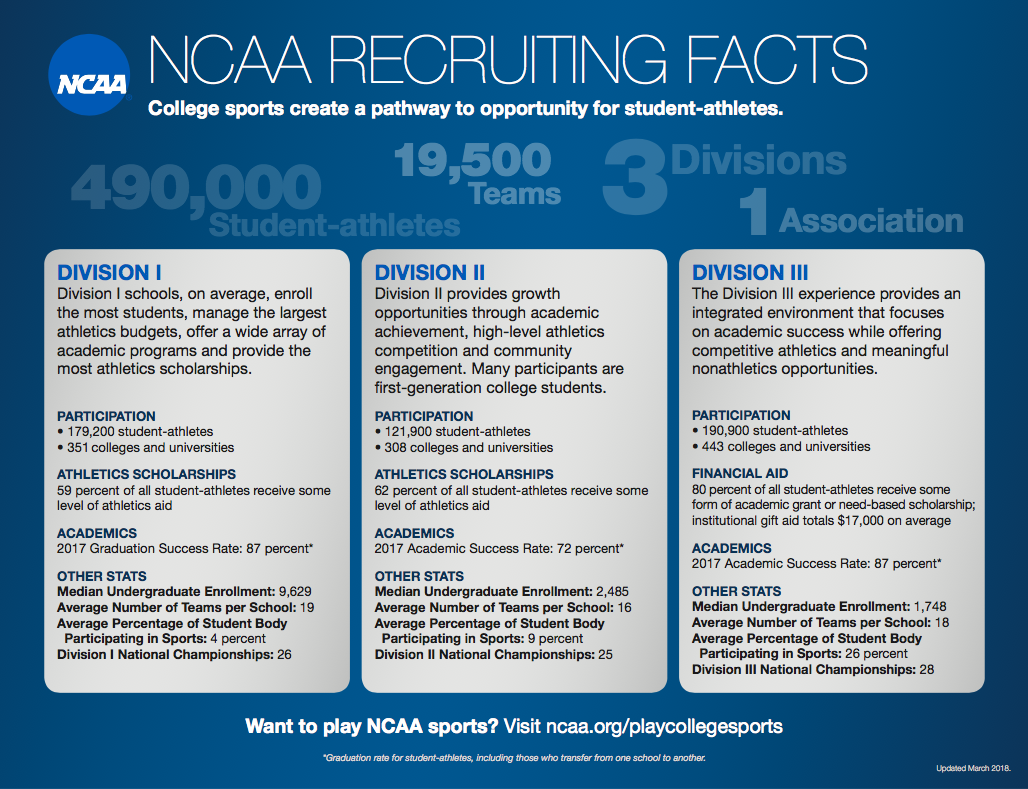
FACT – Only 2% of the NCAA athletes will be drafted to their major professional team sports but there is no guarantee they will actually PLAY even one game.
The two main NCAA team sports that are driving specialization are Baseball and Men’s Ice Hockey that have much higher % of players being drafted to their major professional levels (9.1%) and (5.6%) respectively vs. other team sports. Being drafted is one thing, but being drafted, signing a contract, playing a game or a having a long career is another thing altogether. One of the downsides of specialization is even those that do get to play if specialized starting in high school they will have shorter playing careers than those that continued to play multiple sports until or even in college/university as we shared in our January post
Early Sport Specialization does more harm than good
In the early 90’s, the OHL did a study based on the 1975 birth year of players, approx. 30,000 registered at the time in Ontario, when they were eligible for the NHL draft and this is what they found;
- 262 were drafted to the OHL (0.87%)
- 113 drafted to the NHL (0.37%)
- 38 Signed an actual contract (0.13%)
- 22 Played only one game (0.07%)
- Only 11 were active at 24 years old (0.04%)
I have yet to come across a similar study for MLB players drafted vs. those that will play for the major-league clubs they signed with, but like NHL, the majority come from the first round and after that will potentially have long careers for their minor-league affiliates.
Here is the math based on current trends of kids specializing at 7 years old and entering clubs/academies for 10 years before they even reach the collegiate level.
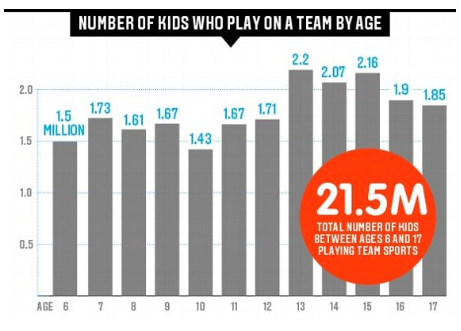
Most Current Data Set Available from 2013 for team sport participation
21.5M kids playing youth team sports in the USA;
- Of those 7.3M will play team sports in high school (football being number one with over 1M) = 34%
Per March 2018 NCAA Facts (of those that played team sports in high school that went on to play in the NCAA)
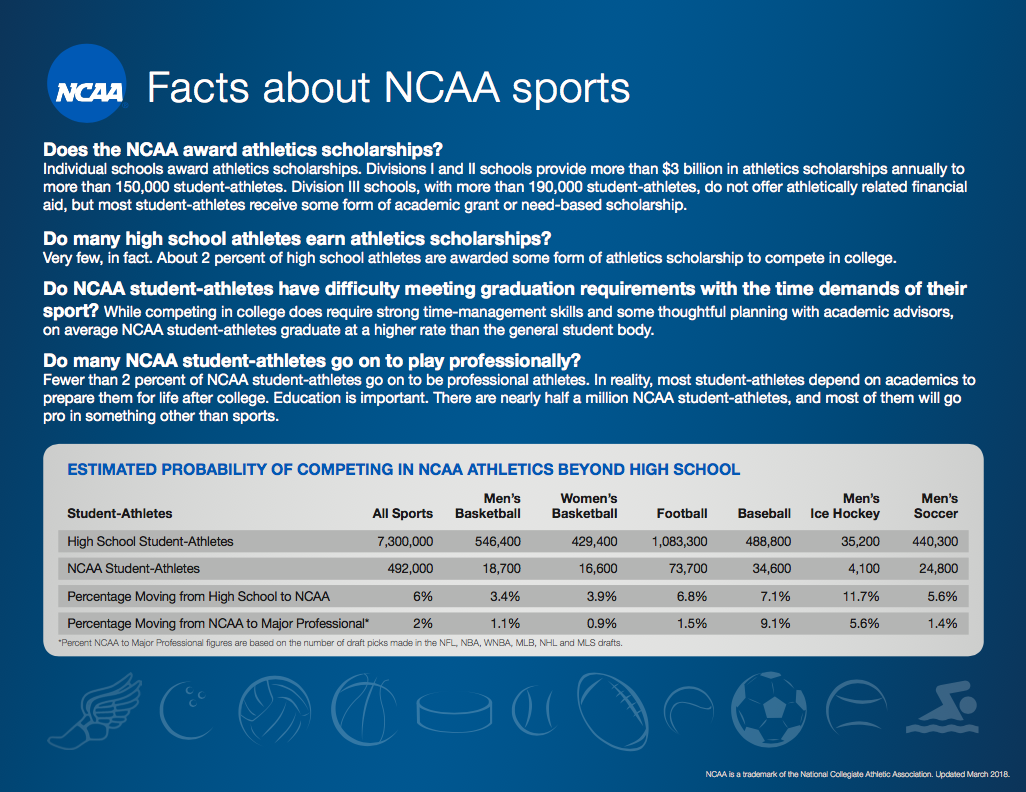
- 492K went on to play at the NCAA level = Only 2.3%
- 59% of athletes at Div I schools offer a handful of full ride scholarships, majority are partials
- 62% of athletes at Div II schools receive some level of financial aid/smaller scholarships
- 80% of athletes of Div III school athletes receive some form of financial aid only, no scholarships
Student-athletes in Div II and III schools aid is more in student loans than actual bursaries or scholarships, subject to being repaid back (which puts further stress on the family to do so) vs. scholarships for Div I schools do not require repayment.
- According to Mark Emmet, President of the NCAA, when players on NCAA men’s basketball teams were surveyed, 75% of Div I, 50% of Div II and 25% of Div III athletes believed they would play professionally when just over 1% were drafted to the NBA in 2017
- Assuming 2% of NCAA Athletes go on to major professional levels, that is 9840 of the 492K student-athletes
- Going back to the total 21.5M that played team sports from 6-17 years of age as the feeder group to those that went on to play at the NCAA level, those that were drafted to major professional sports (9840) only equates to 0.04%
This is the same % that I have shared from numbers shared at the Hockey World Cup Summit in Toronto in 2016;
- Approximately 2M kids playing hockey globally, Canada and USA accounting for 1.2M, the rest for other nations in Europe and did not even include the sleeping monster China
- 700’sh roster spots in the NHL = 0.04%
- The number of NCAA scholarships offered to Ontario born players has dropped 63% the last 10 years. Why? Because the USA has developed their ADM (American Development Model) over the same time period and is developing their own vs. those born elsewhere
Similar Stats in terms of soccer (MLS) based on registration numbers in the US in 2014;
- Approx 5.7% of the 414K boys played soccer in high school
- 7% (23,602) will go on to play soccer in college
- About ½ of those (2.8% or 11.6K) will play Div 1 level (where athletic scholarships are available)
- Average scholarship = $8.7 – 10.6K USD (gone are the days of full rides, now the average is approx 8.7K for all sports other than football and basketball that the average is 10.6K USD falling well short of that the actual annual costs will be)
- Only 72 of those playing in college will go on to PLAY professionally = 0.02%
- BUT 26% of parents think their kids will play professional soccer
I suspect the same % would hold true for English Premier League (European Football), NFL or other professional sports programs where players salaries have increased to the millions of dollars (not including the lucrative endorsement deals)
TD Ameritrade did a study with their clients in 2015 as they were concerned they were not investing enough for their retirement.
- Many of those that replied stated a large portion of their disposable* income was being spent on youth sports.
- 43% of those stated that youth sports were too expensive.
- 67% aspired for their child to get an NCAA scholarship (only 2% potentially will)
- 47% think their kids will play professionally ( reality = less than 0.5%)
- 34% think their kids will become an Olympian (reality = less than 0.1% will)
* How many of us actually have disposable income anymore, with rising costs of housing, gas alone, more and more families are living paycheque to paycheque
Two Years Later – Time Magazine shared that youth sports in the USA had evolved to a $15 Billion Industry due largely to specialization and the growth of private for-profit clubs and academies. The industry has literally doubled in revenue in less than a decade!
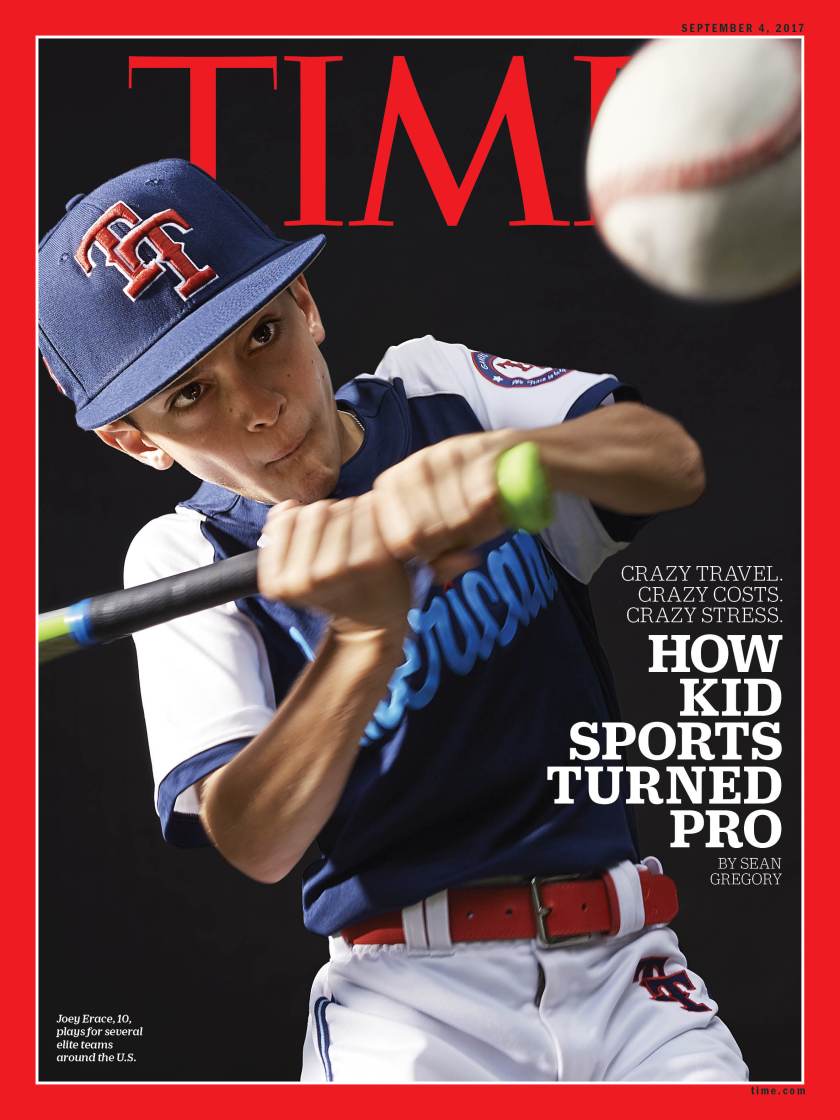

These private programs are now costing anywhere from $15 to 50K per year (some include travel costs, some do not) so using an average of $25K per year (for travel, programs, gear, specialty trainers etc), and you signed up your “talented” child to year-round program starting at 7 will exceed $250K even before they get to college (AKA – NCAA PREP)
This does not include the opportunity loss of taking personal days, weeks off from your job to chauffeur or fly your child to all the prospect tournaments, games so a scout may “potentially” see them play (if they are good enough, they will be seen TRUST ME, you don’t need to spend all that extra money and time and if you truly aspire for that level, majority of college and professional coaches are recruiting multi-sport ATHLETES)
This is roughly the equivalent what it would work out to for a Div I school tuition for an international student which “may” only be offset by partial scholarships (literally covering meals) of 8K per year (full rides are about as rare as the Giant Panda).
This also does not include the equipment, apparel or other costs that I call “the fluff”
Drum roll …….
NET out of pocket for NCAA PREP (academies) and NCAA education WITH partial scholarship support can still cost …
ALMOST HALF A MILLION DOLLARS invested chasing the dream of playing professionally when the average is only 2% of NCAA athletes will get drafted and even if they do the majority will never play other than for their minor club affiliates and the actual number that may play in the Show works out to 0.02-0.04% in all the data referenced above).
Sadly, many parents are chasing THEIR dream, not their child’s dream, and when I have talked to parent’s almost all share they have not kept track of the math as either too scared to do so or they merely were trying to provide their child the same opportunity as others (AKA keeping up with the Jones). Thanks to the traditional less costly community and high school sports programs competing with private clubs and academies they all get caught up in the same race only to find out at the end, the costs far outweigh the rewards.
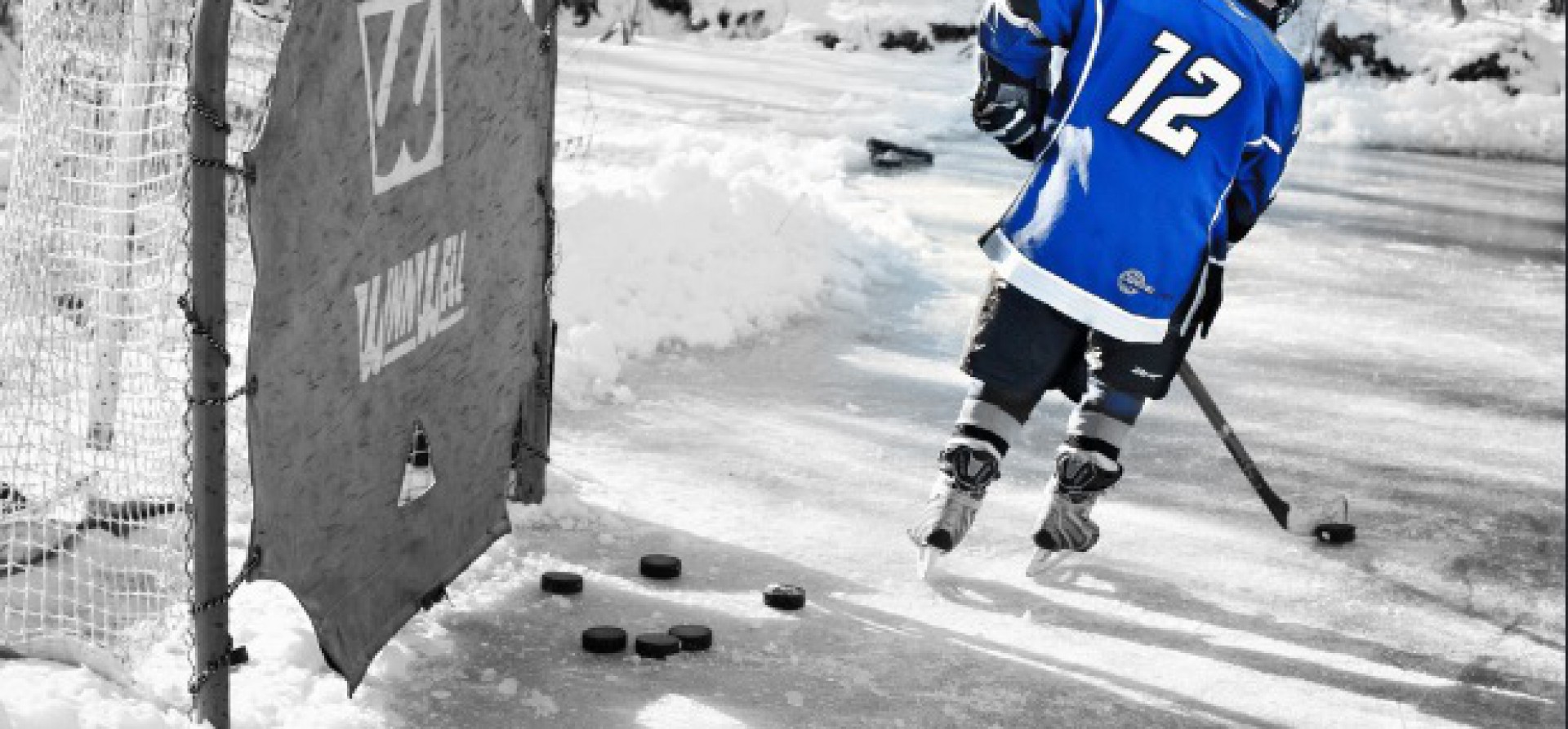
One of the hardest things that I had to tell my son in his last year of minor hockey (when he was 17 years old) was I could not justify paying for AAA hockey thanks in part to mandatory travel tournaments that would push our out of pocket costs over $10,000 for the winter season. This was MINOR HOCKEY, not an academy where the costs can push 20-50K.
Ironically it was the same conversation I had with my mother she shared that she could no longer support me playing hockey as my father’s life insurance ran out (well before specialization, spring, summer camps, $300 sticks, $1000 skates, Mandatory Travel tournaments)
What did I say to her?
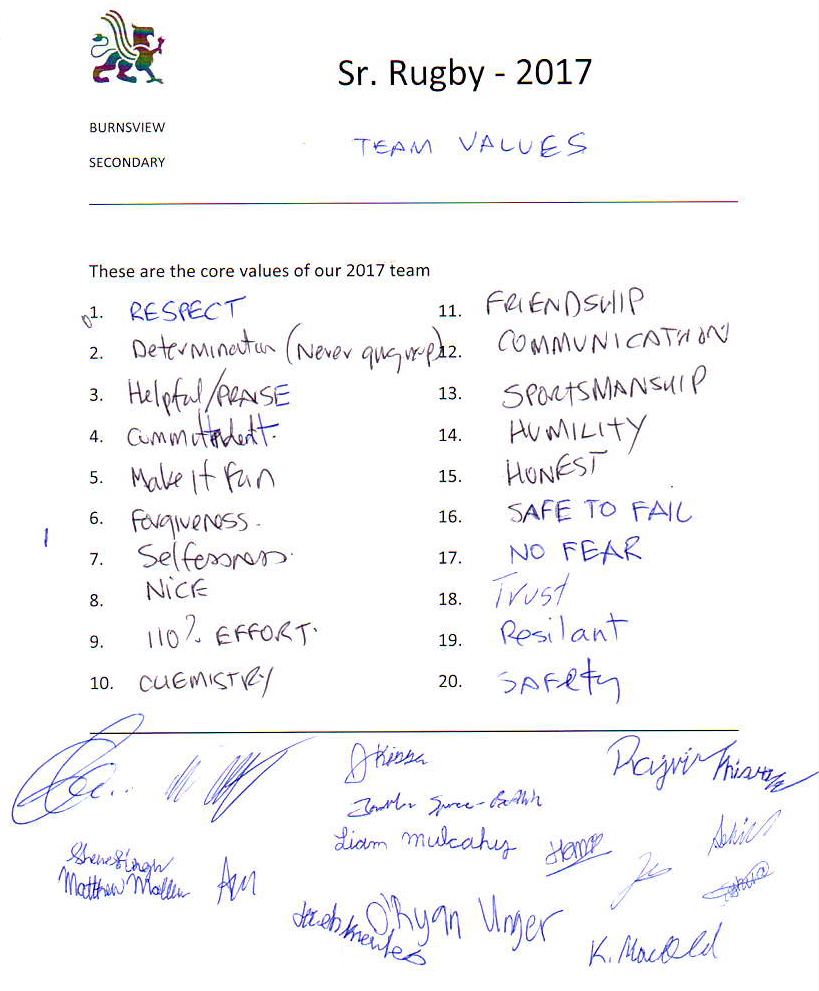
It’s Ok Mom, I love hockey, but I would like to keep trying other sports, so I signed up for football in the fall ($125 reg fees that included all the equipment but cleats), rugby in the Spring (No reg fees, just $200 for jersey and cleats) and taught myself to play golf in the summer (junior fees were free or very low and I bought a used golf set for $100.00). I had already won provincials (equivalent to a state title) in Hockey, and then went on to play for teams that won provincials in Football and Rugby.
What did my son say?
He understood and said he would rather play High School Volleyball ($125 athletic fees plus a pair court shoes) and Rugby ($125 athletic fees plus a pair of cleats) and golf in the summertime so he could just go out there, work up a sweat, have fun and be with his friends.
At the end of the day, that truly is the reason why kids PLAY sports.
Sometimes we have to hear from the mouth of babes to bring us back to reality.
Let’s all work together to bring the game back to the kids … where it belongs