
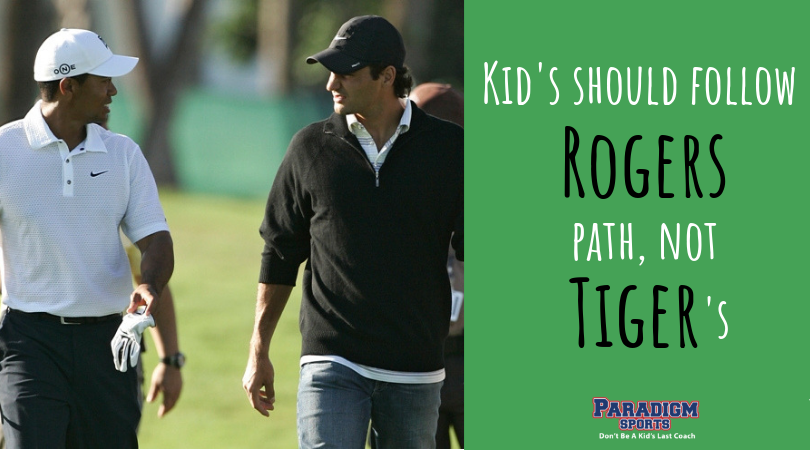
Kids should follow Rogers Path, not Tigers
One of the questions that I ask speakers for our Love What You Play online events is if they have any books to recommend for coaches to read to help them become better coaches.
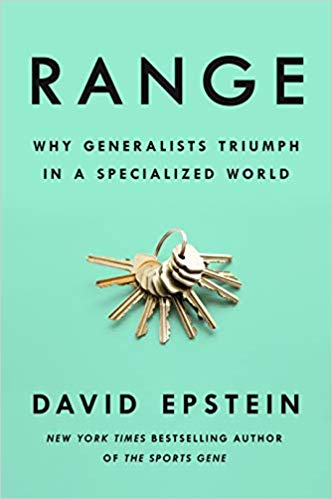
For the last 4 weeks I have been talking to another group of amazing speakers and many of which have shared that a MUST read for every coach and even parents, or anyone involved in youth sports segment is David Epstein’s second book, “Range: Why generalists triumph in a specialized world”, following up from his other must read “The Sports Gene”
In my interview with John Kessel, Director of Sport Development for USA Volleyball, who has been coaching for over 50 years, the last 3 decades coaching coaches, when I asked him for book recommendations he pulled many from his vast library and the last was Range that he waived in the air like a giddy kid and I countered “You got it (the Book Range) before me!!” (mine was en route).
I was originally made aware of his new book when David debated with Malcolm Gladwell regarding his 10,000 rule that has been a reference point since he wrote Outliers in 2008 where he admitted to David that he was wrong.
During the interview, David shares insight on his new book prior to its release in May and some of the anecdotes to further support his argument put forth initially in the sports gene that early sport specialization (10,000 hours) is the wrong path to follow (thanks largely to the research that David has done to prove otherwise).
Initially, he was going to title the book Roger vs. Tiger and the first chapter of the book focus on the paths that Roger Federer and Tiger Woods took to reach the highest levels in their sports (Roger in Tennis, Tiger in Golf) but as he was doing his research in other sectors found many other examples why being a generalist was a better pathway to go.
There are so many other great nuggets in Range that I thought would be a great reference point for this weeks post, here are just a handful to entice you to order the book on Amazon and read to add to your toolbasket;
#1 Roger vs. Tiger
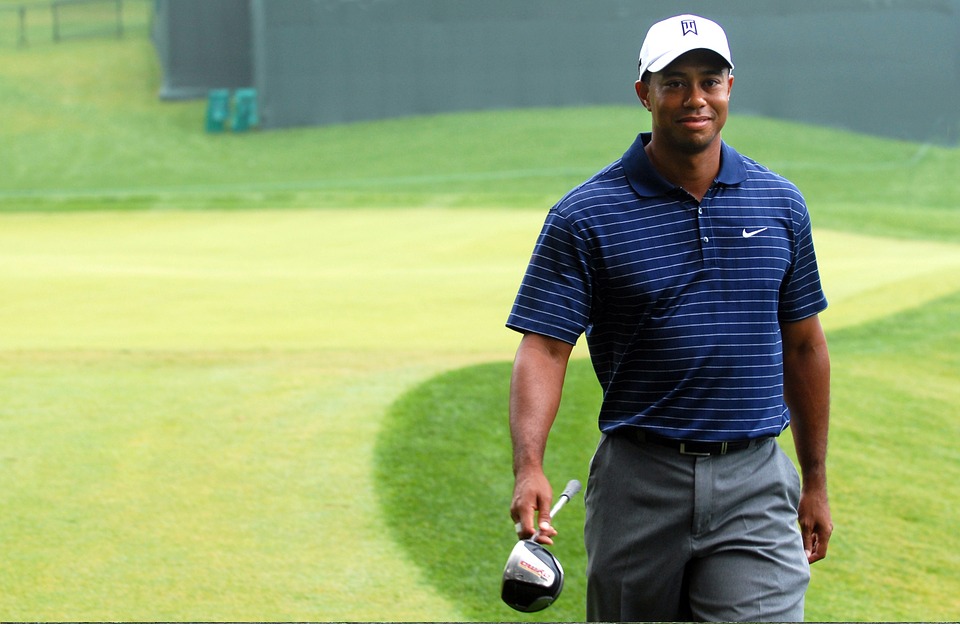
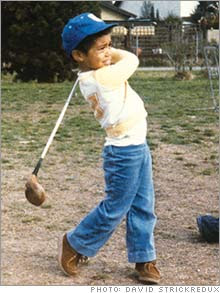
The story of Tiger Woods path to becoming one of the greatest golfers of all time has become one of the driving reasons why so many kids start to specialize in sports early, going back to when he was on the Bob Hope Show at 2 putting, his smooth swing at 5, starting to win tournaments soon after, the US Amateur and hit the tour with vigor after being a standout at Stanford for their golf team.
His father, Earl, identified early on that Tiger had potential as he himself was a high-level athlete himself, played collegiate baseball as the only black player in the conference but also a member of Army’s elite Green Berets and felt from his early childhood that Tiger “was the chosen one”.
I will never forget watching Tiger play in his first major tournament, the 1997 Masters championship with such a powerful swing and distance on his drives he shattered the record with -19 (a record to this day), winning by 12 strokes over the rest of the field. Although Augusta’s design had not been tweaked since Bobby Jones designed, the Masters’ organizers added distance to as many holes as they could to “Tiger Proof” the course.
Tiger went on to win 15 majors and 67 PGA events (81 total), now second to overall to Sam Snead but it has not been without adversity.
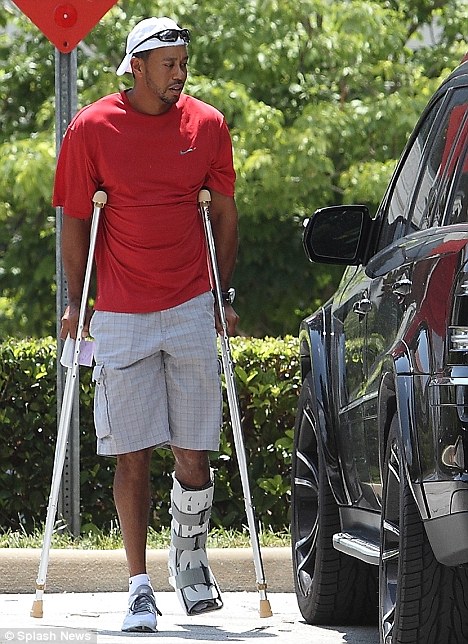
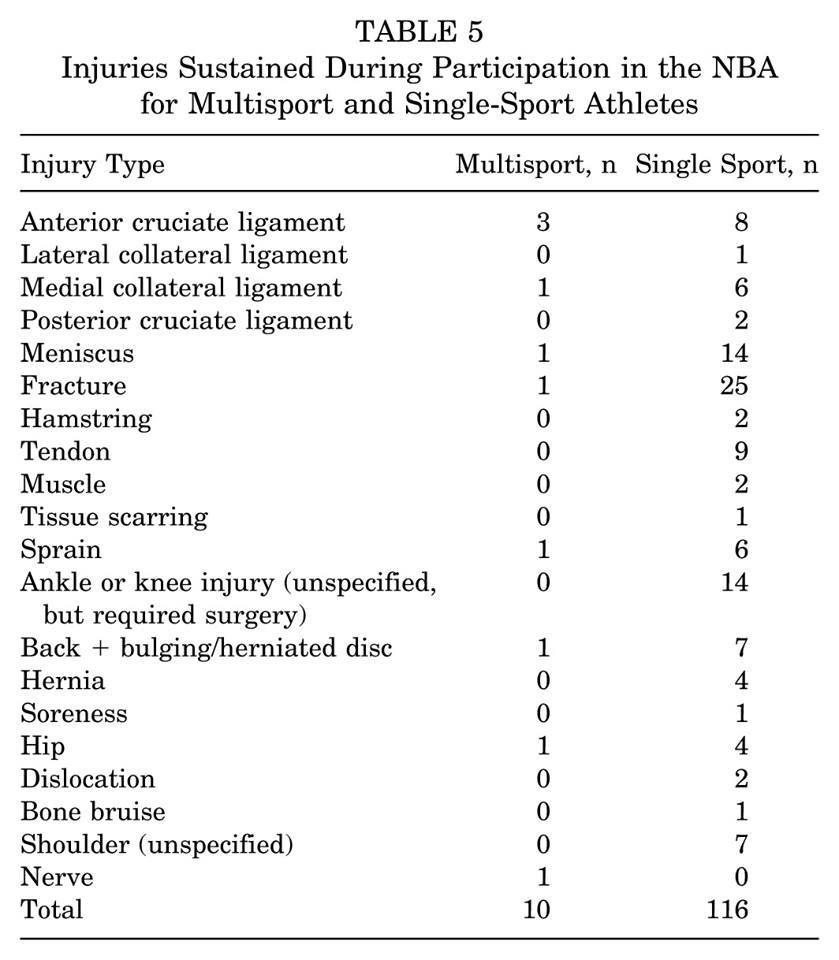
Early in his 30’s, as a result of playing golf as his one and only sport since a young boy, his body fought back, where he suffered multiple back, knee, Achilles injuries multiple surgeries and extensive rehab, the last being the back fusion surgery that he had merely to be pain free not thinking that he would ever return to competitive golf.
But his come back is probably going to be one of the best examples in history of sport how one can overcome adversity against all odds and in the last FedEx Cup of 2018 thousands of people followed him on the fairway as he won his first event in many years, then this Spring winning his 15th major, the 2019 Masters.
I have shared in past posts his journey and challenges, and although Tiger has accomplished so much, it cost him a marriage due to personal challenges he had, 10+ years of chronic pain where he reached the point where he opted for the fusion surgery merely so he could WALK again pain-free.
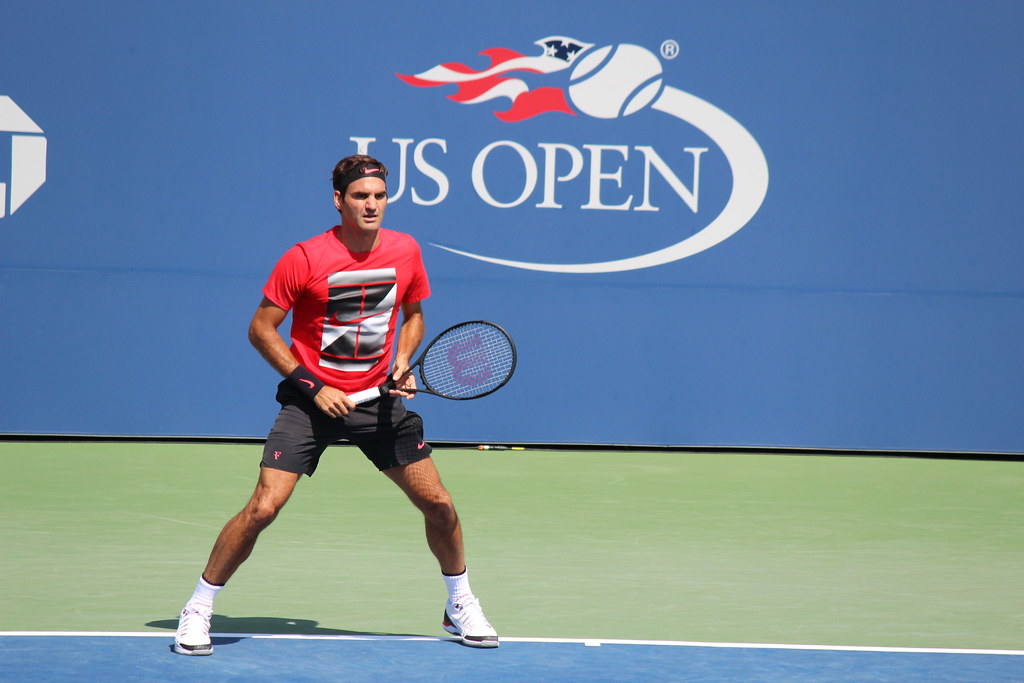
David then goes on to share the generalist path that Roger Federer took, the one that all the science supports, the multi-sport path.
Rogers mother was a tennis coach but opted not to coach him and with her husband supported him to sample as many sports as possible growing up. He played squash with his father, tried skiing, wrestling, swimming, skateboarding and played basketball, handball, tennis, table tennis, badminton, and soccer.
Roger did not lean towards tennis as his preferred sport until his late teens and when he decided to do so, and instructors saw he had potential to be really good and wanted him to move up to compete with older players but he refused, as he wanted to stay with his friends (one of the top reasons why kids play sports0
Like Tiger, who was ranked #1 on many occasions over his career, Roger also has been ranked #1 but much later in his career, in his mid-thirties was ranked #1 in the world.
To date, Roger has over 100 wins, including a record 20 grand slam singles titles and in 2019 at the age of 37 years old, he is currently ranked #3 in the world, but many feel he could reach that top plateau again.
Two different paths to greatness, but here are some of the other great nuggets why being a generalist until much later is the optimal path.
#2 Learning: Fast vs. Slow – Academics
In this chapter, one example why it is better for students to space out their learning of subject matter like the traditional model where teachers would focus on a subject for a week at time them move on vs. staggered approach over the course of the school year.
He cites an example where students learning Spanish would be tested the same day vs. tested a month later. EIGHT years later with no studying in between, the latter group retained 280 % more.
The motor skill equivalent is akin to teaching a kid to walk too early, they are going to learn to walk at some point and there is no evidence that rushing it will matter.
“Learning deeply means learning slowly.”
#3 The trouble with too much grit
David shares an anecdote by telling the story of a gifted artist by laying the groundwork first where I kept thinking to myself, who is talking about?
One that grew up in the Netherlands who tried freehand sketch as a boy he destroyed it and refused to try again but in lieu spent hours wandering outside looking at things, tried art school when he was 13 away from home and left at 15, then worked for an art dealership, pursued religious studies, worked in a bookstore, became a teacher but never succeeded.
In his late 20’s he came around full circle and tried watercolors under the guidance of his former boss of the art dealership which was short lived as his mentor stated he started too late.
In his early 30’s he tried oil and canvas and was responsible for launching a new era of art where he did the majority of his paintings in the last two years of his life.
If you are an art expert, you probably figured it out at the Netherlands, and as my daughter graduated from Emily Carr, one of the top Art schools in North America and I shared the story after the fact she nailed it right away.
The artist – Vincent Van Gogh, one of the most famous and influential figures in Western Art.
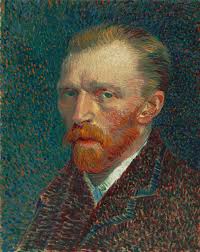
His entire life consisted for trial and error, had he not done so, had he not had the determination to pursue the various acumens’ he did, the world would have been deprived of one of the greatest artists of all time.
There are numerous other examples that I could cite from the rest of the amazing chapters but will leave you with a couple of takeaways;
#1 – One of the answers I get from parents all the time why they opted to support their kids to specialize early is “They love the sport”
My counter: Do you kids love Chocolate Cake?
Their answer: What did doesn’t?
Me: Would you let them eat the ENTIRE chocolate cake in one sitting?
Them: No.
Me: I rest my case.
#2 – The other is like Tigers Dad, based on advice they have from the “private skills developers” how identified their son has “special” skills (when they are just an early bloomer) and recommend they specialize in one sport as they may be “the next chosen one” and go on to get an NCAA scholarship and play professionally (0.03% do)
My counter: If a teacher told you that your child showed proficiency in one subject in school, say math, would you pull them out of school to focus on that subject only?
Their Answer: No
Me: Why?
Them: Because we want them to become well rounded, be strong in all subject areas, math, science, language, art etc. so they do well on the SAT and get accepted to university.
Me: I rest my case.
Regardless if your child loves or shows proficiency early on and are leading the beehive early (early bloomers) in a sport the various examples from Sports, Art, Music, Science, Business sectors in David’s Book should guide you in helping your child find their optimal path.
Just make sure that you support them to try as many different sports and other activities including free play early so they can choose their path later that they aspire to otherwise they may never find and pursue their true love vs. potentially being deprived of it if they specialized in one sport too early.
Let’s all work together to bring the game back to the kids … where it belongs.

Bonus – Download a Free Printable PDF Copy of this blog HERE


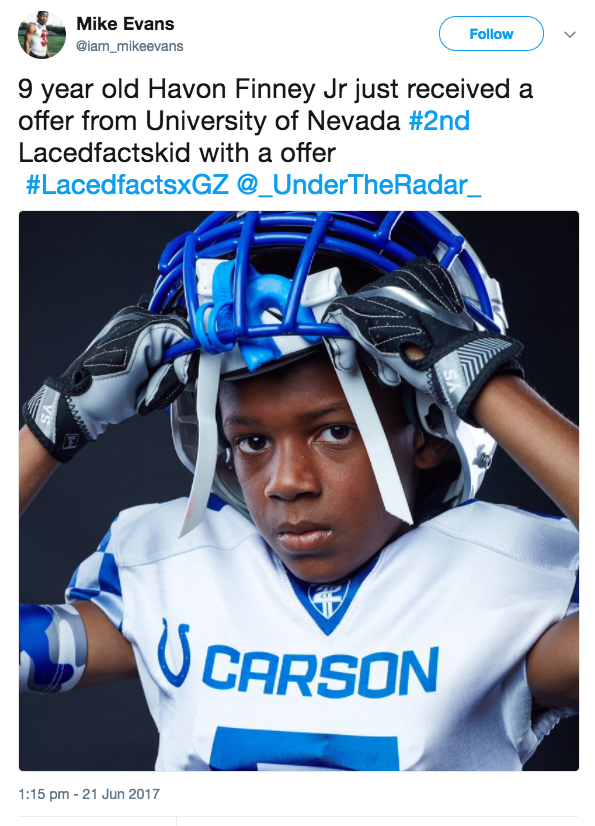
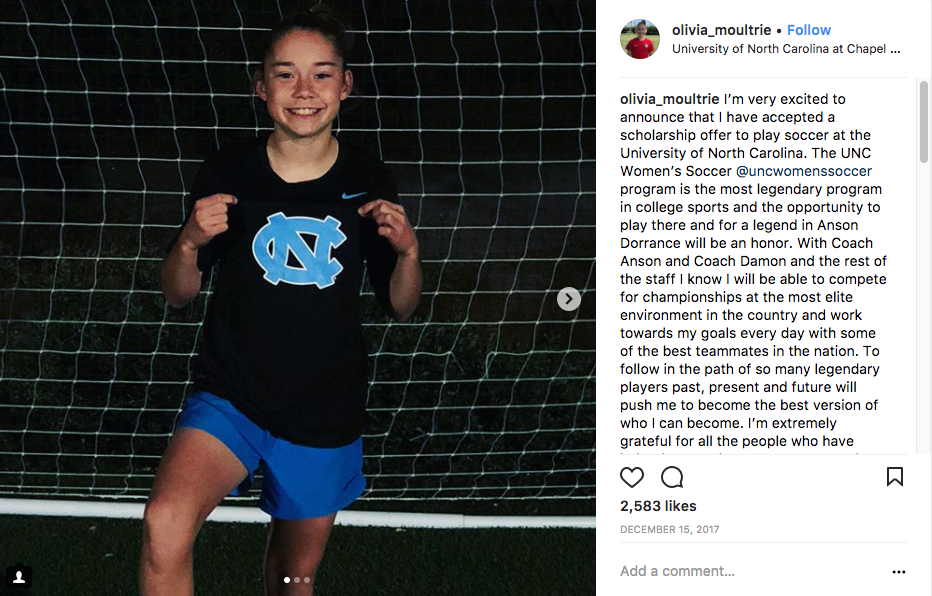
 With NCAA schools providing the green light to coaches to verbally commit scholarship monies, what happens (a) when the coach is fired or moves on to another program and (b) what happens when the scholarship coffer accrual is for “prospects” vs. actual players? With earlier and earlier recruitment, it is no wonder why parents are buying in to early specialization to ensure their kids are considered for scholarships and hey, even if they don’t get to play and sit on the bench, they will get the education the parents should have been saving for when their kids were born like my wife and I did. I suspect the fallout in years to come is going to be significant and many of the verbal agreements being made now will be rescinded down the road.