
THANK YOU!

Posted Posted in Athlete, Coach, Early Sport Specialization, Organization Executive, Parents

Our 4th Youth Sports Digital Summit ran this past weekend and I am writing this at the halfway point and must confess I am truly humbled from all the feedback, comments, shares and overall numbers that visited our site, signed up and watched one or more session.

I plan to do a Facebook live version of this prior to scheduling out our newsletter but I know I will miss someone so I felt best to share in a blog as well.

As the youth sports community is in limbo as the world continues to practice physical distancing, what amazed me the most the weeks going into the summit was the fact that so many amazing organizations and sports leaders reached out either directly or by sharing out via their social media platforms to make it our best Summit to date.

It was when we were having our weekly 2-4-1 Sports Zoom call and Steve Boyle said he would jump on Facebook live with myself and team member Geoff Lenahan was a wow moment for me.

Then I spent the better part of Thursday afternoon, less than 12 hours before the summit was going “live” to figure out how we could do a joint Facebook Live Call and thanks to my best friends Google and Youtube we were able to figure it out.  After a hour of testing with our co-op students we ready to do so at 9AM Friday morning on day 1, Steve and I went “live” (albeit not without glitches as the first time).

The number of people reached, engagements and views of our first and second Facebook live posts was tenfold what we normally see on our social media.
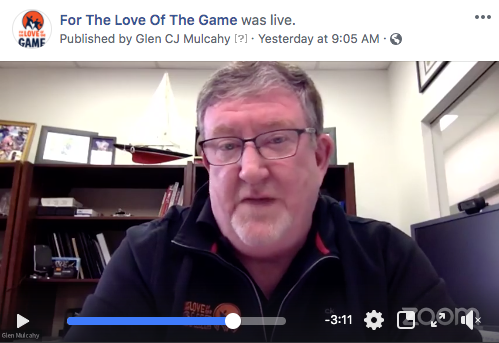
 

I would be remiss if my first thank you was not for Steve and Geoff for jumping on the Facebook live this weekend, THANKS GUYS!

I also want to take the opportunity to thank all of the amazing speakers who shared their insight for this and all of our past summits going back to Summer 2018.  Each time a speaker accepts our invitation or reaches out to me directly to participate I am truly humbled they do so.

Thanks to all of our team members, Geoff, John, current Adriel, and Isabel and all prior co-op students who have put in the work to make the digital summits, podcasts and other digital resources we have built available in the last couple of years.

Thanks to the Federal and Provincial Grant Programs to provide funding to us as a small not for profit organization so we can sponsor students to provide them valuable work experience and help us continue to grow as an organization.

Just like it is when I have attended conferences either as a speaker or as attendee I know that it will take a few weeks to reflect on this weekend and the last few weeks that lead up to what was our 4th Digital Summit.
 

Kudos to every single person who visited our site, signed up for the summits, and watched one or more of the interviews to add to their tool basket and hone their crafts during this time of hiatus.  Special thanks to all of you that signed up for monthly or yearly membership passes to help us continue providing all grassroots sports stakeholders resources, especially now, when everyone is tightening their wallets due to the impact COVID-19 has had on so many industries, not just sports.

Ironically, the platform that we have been utilizing for over 3 years is one that is being ok … in December they had 10 million users, 4 months later, Zoom has over 200 Million users like schools, workplaces are shifting to digital vs. face to face meetings.

Thanks for everything that you do in the youth sports space, whether it as a coach, parent, official, volunteer board member volunteering for why we all do this, the kids.

The very same kids that are cooped up at home during this hiatus and when health authorities do ease up on physical distancing restrictions permitting kids to return to play at parks, fields beaches or organized sports the big unknown is what is that going to look like post-COVID-19.



I know after coaching for over 25 years how it can be a thankless gig in a sense and those of you that understand the importance of lifelong learning and are doing so to get ready for the time we can return to play …. THANK YOU!!!!

To all of our allies across the globe, thanks for locking arms with us in recent years so we can all work together to bring the game back to the kids … where it belongs.

Last, but not least, I would be totally remiss if I did not thank my amazing family, my wife Melissa for 25 years, daughter Erin and Son Liam for their unwavering support to permit me to do what I am truly passionate about, Kids and Sports.

Just like it is when I have attended conferences either as a speaker or as an attendee I know that it will take a few weeks to reflect on the last few days and weeks that lead up to our 4th Digital Summit.

With the uncertainty of when youth sports programming will ramp up again, I to add a live webinar (or some facsimile thereof) in the coming weeks to augment our podcast and building other digital resources.

In the event I forgot anyone, I apologize for doing so, I will ensure that I amend this blog and update if so as all of those that have supported me I want you to know

I am truly humbled and gracious for your support.

 

#WeApplaud #OnApplaudit

Please say thank you to all medical and front line workers you know for their selfless dedication to fight this fight.

We are all in this together.

Be Safe.



Make it Safe

Posted 1 CommentPosted in Uncategorized


One of the key takeaways that I share in every presentation that I do is the importance of making it safe to fail and from all forms of harassment, in this post I will expand on the latter.

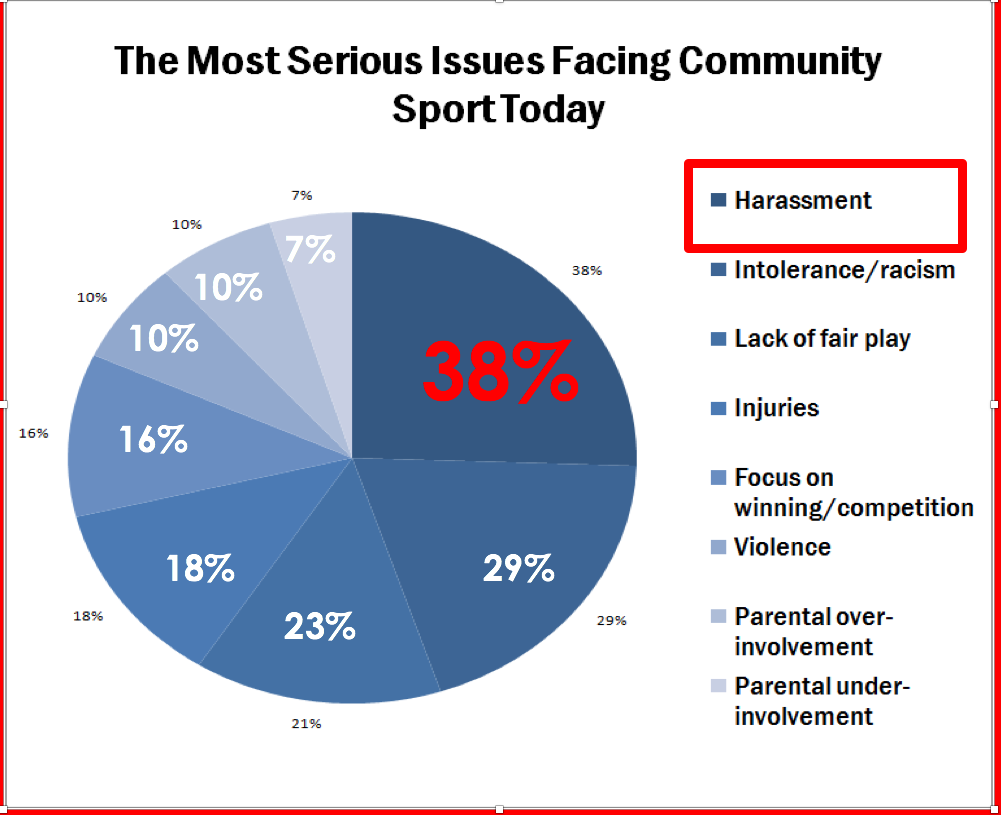
Below is a summary of survey results of a study that True Sport posted in their 2008 report where respondents stated what they felt the most serious issues facing youth sports.

BONUS – Download a Free Copy of this Blog in PDF Format HERE  


Source: 2008 True Sport Report

1.  38% of those surveyed stated that the most serious issue facing community sports was Harrassment.


This includes bullying, cyberbullying, sexual harassment and hazing.


Sadly, I have either dealt with various forms of harassment personally as a parent or coach, or heard thru various colleagues who have.  The biggest challenge that we all have is many parents don’t know the differences nor do they know how they can escalate to the point where it can cause serious psychological, even physical harm to those who are victims of harassment.


Several initiatives have evolved the last two decades to remove harassment from sport but we still have so much work to do to educate coaches, parents and sports administrators what the various forms of harassment are and what we can do to remove for sport.


  • Respect Group – formed by Sheldon Kennedy in 2004 as a result of the physical abuse he suffered while playing junior Hockey. They are responsible for the respect in sport program that parents, coaches, officials must take and now take refresher online course every few years.

Website:  www.respectgroupinc.com

  • Erase Bullying – Established to eliminate bullying from sport.

Website:  www.erasebullying.ca

Here is a great video from some of sports icons in British Columbia in partnership with ViaSport


  • Prevnet – Canada’s authority on research and resources for bullying prevention

They provide resources as well as links to all the other initiatives in Canada that are working on eliminating bullying from sport.

Website: www.prevnet.ca

  • Stop Hazing – A Leading Resource for Hazing Research and Prevention

Website:  www.stophazing.org

Facebook: Make Hazing Stop

Hazing has traditionally been the right of passage for those pledging for universities and collegiate sports programs, but is now happening in youth sports.

Hazing differs from bullying as it is more about inclusion to participate (making the teams) vs. excluding individuals and it can start with subtle hazing (rookies having to pick up the pucks in practices) to hazardous hazing including drinking excessive alcohol, having to digest chewing tobacco and other vile substances or various forms of sexual harassment.

In 2005, one of Canada’s most prestigious universities, McGill, scrapped their football season due to a hazing incident and since that time there has been 40 other reported hazing incidents in Canada and the USA.

The biggest issue with Hazing, is that majority of incidents are NOT reported as the victims do not want to be the whistleblowers and jeapordize their opportunities to be included or accepted on the teams they are rookies on.  Some even feel that going thru hazing is the right of passage and any identifying marks they receive are “badges of honour”.

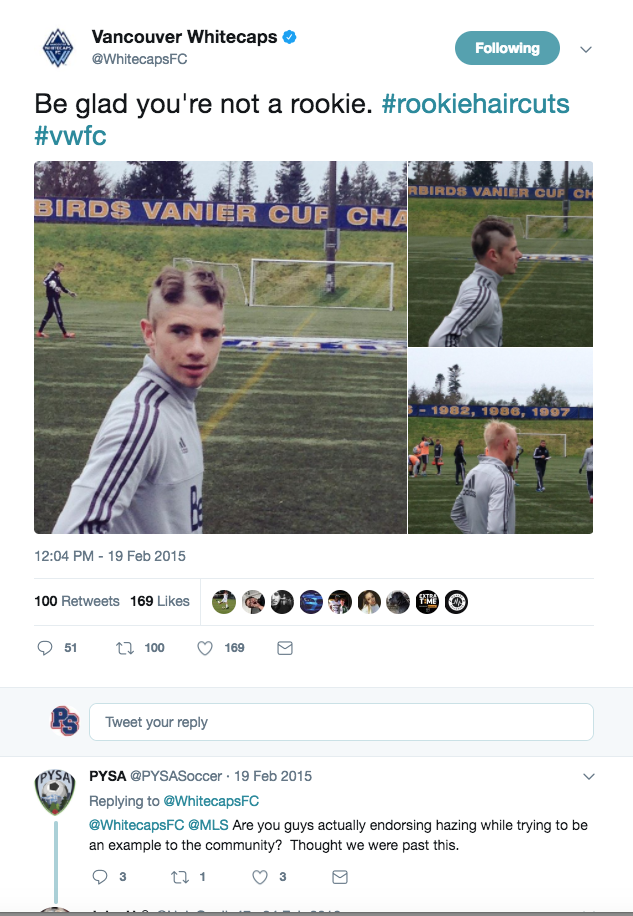
Below is another recent example where rookies on the Vancouver Whitecaps had their heads shaved (badge of honour) by their team mates;


If you go to the original tweet and review the comments, approximately 100 people tweeted and all but a few were beside themselves that rookie initiations like this were still happening.

  1. The second most serious issue by 29% of the respondents was intolerance or racism.

Many organizations have developed campaigns to address the intolerance towards minorities, LGBT or those with disabilities.

Here are just a few that are doing great work

Here is a short clip from Team Canada Athletes standing up for inclusion in sport


  1. The 3rd most serious issue (23%) was the lack of fair play, click here to read prior post how lack of fair play policies are one of the reasons why kids are quitting sports.

It still amazes me how one of the most serious issues facing youth sports contributing to the 70% drop out rate by age of 13 how few NSO/PSO or Regional/Local sporting associations don’t have fair play policies.  Even when they do, will turn a blind eye or sweep under the rug vs. disciplining towards coaches that breach the policies.  The argument that I receive all the time is it is so hard to get coaches to volunteer so associations would rather have challenges with retention than removing coaches who violate fair play policies?

In my third year coaching minor hockey, I found out that a player who was on our “team” (initiation no formal games played) who was 5 years old was sat on the bench for all games in his second year as the coach (who did not return to our association) sat him “because he was too small to play”

HE WAS 6 Years old!!!

The following year I reached out to his coach to do what he could to get him back on the horse, ensure he got playing time in games (which he said was a no brainer) but he quit hockey as too much damage was done the prior year.

Almost every year thereafter I heard similar stories, kids being deprived the opportunity to contribute to the outcome game after game and as a result, would quit a sport they once loved.

  1. 18% of those surveyed stated injuries that kids were sustaining in youth sports.

This I believe is due to the early sport specialization phenomena that has arisen over the last decade where private business reach out to parents of kids are early as 7 years old to invest in private instruction, equipment and play year round to chase the dream of a NCAA scholarship or playing professionally.

Click here to read prior post on how early sport specialization does more harm than good

  1. The fifth most serious issue from 18% of the respondents was focusing on winning/competition.

In the last couple of weeks two instances have arisen in the USA that we shared on our Facebook page.

The first was when the coach of little league world series team consisting of 12 year players agreed to accept a 2 game suspension in lieu of permitting one of his players bat when it came his turn in the batting order.  Really?  The kids were 12!  The little league world series is just that, LITTLE LEAGUE.  Another example how adults are competing with other adults thru kids.

Click Here to read the article

The second how a California High School Baseball Player is suing his former coach for $150,000, claiming that benching him was bullying.

Click here to read the article

Bullying Definition: The abuse and mistreatment of someone vulnerable by someone stronger, more powerful.

His lawyer is arguing the player was benched in 14 games over the course of 4 months as a result has not had an opportunity to demonstrate his offensive or defensive capabilities …“is an abuse of the coach’s discretion.”

Is it bullying or is it a coach having a fall-out with his player (AKA in the doghouse)?  Does it warrant the player filing a lawsuit for $150,000?

It has created a lot of debate amongst those in the youth sports space where in fact it is bullying or not.  Also if it warrants suing his head coach but only time will tell if it does go to court, and if so, it will be a precedent setting case for either side of the argument.

If you are a coach, administrator or the parent of a youth sports athlete, please do your research to understand the various forms of harassment affecting youth sport today so that we erase all forms so kids don’t suffer psychological or physical harm.

In lieu, provide them the opportunity to be included in a positive environment and instil the love of the game so they come back each year ultimately with a big smile on their faces and are active well into their adulthood.

Let’s work together to bring the game back to the kids … where it belongs.


PS Tagline - Dont be a kids last coach


Lack of Fair Play – The Other Reasons Why Kids Quit Sports

Posted 2 CommentsPosted in Coach

Lack of Fair Play –  The Other Reasons Why Kids Quit Sports


Playing just your starting lineup isn’t only hurting your kids, but your team as a whole!

Part II


Glen Mulcahy

May 18, 2017

BONUS – Download a Free Copy of this Blog in PDF Format HERE  

This blog post is a continuation of last week’s Part I post Poor Sportsmanship – The Other Reasons Why Kids Are Quitting Sports


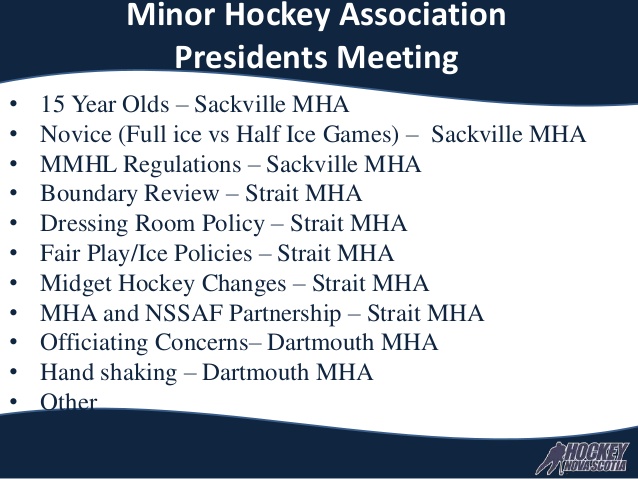
When I first began researching fair ice policies a few years back, there were only a couple that came up when I used my good friend Google. One I found was Hockey Nova Scotia which had fair play in addition to their policies for all levels including house, female and even competitive rep.


Nova Scotia Hockey AGM Agenda


Above is an image from last year’s Hockey Nova Scotia AGM. If you happen to follow the NHL at all, there are a couple of pretty good players that came from there. One happens to be the captain of the defending Stanley Cup Champions, Sidney Crosby; the other is Nathan McKinnon who many feel is the fastest player in the NHL with the puck.

I just did the same search I did four years ago in 2013 and the good news is, there is change coming. Currently the entire first page of Google outlines the fair ice policies that various hockey and ringette associations have adapted. As far as I am concerned as a coach and educator, the sooner that all major Hockey and Ringette associations implement these policies the better.

One of the top 5 reasons why players quit any sport is due to the fact that coaches play their favorites more than they do other players. In doing so, they are sending the message to those that sit that they are not good enough. As my son so eloquently shared with me after he sat on the bench for the better part of a game for non-disciplined reasons as a result of coaches’ strategy backfiring on him, he was “deprived of the opportunity to contribute to the outcome of the game.”

90% of kids would rather play on a losing team – emphasis on the word “play” in all situations – than sit on a bench for a winning team.

The only reason why players should be sitting on the bench when it comes to their turn to get out on the court, field or ice is for discipline. This could be anything from not being penalized when they should’ve been, to using bad language, to demonstrating poor sportsmanship and more. Aside from behaviour correcting actions, coaches need to take on their inherent responsibility of developing ALL of the players they’ve chosen to be part of their club, and not to rely on who they feel are their top players.

When I reached out to Cory McNabb (senior manager of player development for Hockey Canada) if he agreed with the short bench tactics that coaches in minor hockey are using, his reply was simply “Nope, if you pick ’em, you play them.”

Translation – regardless if the team in question is a house (rec) or competitive (rep) level, coaches choose the players for their team whether through tryouts, evaluations or drafts. To rely on a few players who in their subjective view are the cream of the crop,  coaches are not investing in developing all their players; something that should unquestionably be a priority above a win in the short term.

Just for a second, think back to the last 5 or more Stanley Cup Championships where commentators and coaches alike are saying they need to have all 4 lines contributing in order to win the Cup. This principle is not one that remains at the elite of the elite level. It is relevant all the way back to when kids are just beginning to develop their athletic careers at six or seven years old.

This year during my experience coaching high school rugby, the athletic director shared with me that there is no fair play code in high school sports other than grade 8 (13 year olds). The remainder of coaches for teams grade 9 and up are both allowed and encouraged to only play their top players in every game.

I had to deal with this experience first hand with my developing Rugby team this past year, which struggled to get a full field (15 players) out to any game on a good day. One match that’s been unfortunately etched into mine and my players brains was against a highly competitive school who brought out almost 30 players. Before the first half was over the ref came to me and asked what I wanted to do as we were already down 48-0.  We spoke to the athletic director of the other team and asked if they could sub in their second line players and, unfortunately, it went on deaf ears… the head coach continued to run the score up as he was focused on winning the provincials.

This I know now is the reason my son was deeply discouraged about playing different sports. A couple years ago he quit playing hockey, in large part to experience other sports and teams. When he signed up for grade 10 high school volleyball, just a few practices in, he was told point blank by the parent coach that he was only going to play his top players in games (one of whom was, of course, the coaches son).

Until the NSO/PSO/RSO and secondary school sporting bodies recognize that one of the top 5 reasons why kids are quitting any sport (just as in the case that ALA found in their survey) is because of a lack of fair play policies, attrition rates in youth sports are going to continue to grow!

Even if they implement fair play policies alone, I truly believe it will lessen that insanity in the stands which every parent knows all too well when it is time for their son or daughter to play. When the kids sit on the bench for non-disciplined reasons they get frustrated and after a season of it, it is no wonder why both player and parent opt to go down a different path (not that it is any greener on the other side of the fence).

It also will bring the love of the game back to the kids vs. the adults competing against each other through their kids.

Just because many kids may not have reached their potential at a young age doesn’t mean that they won’t be able to with future opportunities. If they are deprived of the chance to contribute it’s likely that they will quit.

Imagine if these “pretty good athletes” that went on to have insanely successful careers like Sydney Crosby and Nathan McKinnon were not given the opportunity to “play” early on in their development and were one of the 70% that quit by the age of 13 as a result.

Let’s work together to bring the game back to the Kids … where it belongs.


Glen Mulcahy


PS Tagline - Dont be a kids last coach