The Reality vs. the Dream of NCAA Scholarships and Going to the Show
Posted 21 CommentsPosted in Athlete, Coach, Organization Executive, Parents

Every day I come across another study, article, or blog post about the dangers of early sport specialization and the driver for same is parents aspiring for their son or daughter to receive a NCAA scholarship for their chosen team sport to ultimately be drafted to play professionally.

Translation – Get a full ride to get an education and save Mom and Dad over $200K USD, get drafted and then you can take care of us with your Multi-Million Dollar Salary playing professional sports (ROI = Return on investment)

As I have shared with every coach, parent over the years, if that truly is your goal for your son or daughter, start a RESP (registered education savings plan in Canada) or the whatever the equivalent is in your nation when your son or daughter are born.

By the time they are ready to apply for post-secondary education, you will have their scholarship.

IF, you roll the dice and encourage them to specialize as early as 7 years old, these are the real statistics that you need to be aware of before you do so;

  1. Specialization will lead to burnout, even though they may love the sport you encouraged them to specialize in early, the trend where 70% of kids quitting that sport and all sports in general before they enter high school still continues in many developed nations across the globe.

Translation – the 10’s of thousands of dollars, thousands of hours you and your child invested chasing the scholarship or ultimately playing professionally will be for not

  1. They will potentially suffer one or more major injuries that could end their season, worst case, career ending due to overuse

Translation – Again the 10’s of thousands of dollars, thousands of hours you and your child invested chasing the scholarship and ultimately playing professionally will be for not

  1. Full Ride scholarships also are few and far between, most are partials, approx 8.7K – 10.6K USD. Majority of those are for Div 1 schools only (the most expensive tuition and hardest to get into), some in Div II and none in Div III schools.

Translation – Even IF your child gets thru 1 and 2 and is offered a scholarship, it will only partially offset the  actual out of pocket costs.  Compound that with tuition fees alone for international students to the very same schools that offer scholarships can exceed $40K per year it will still leave the family with huge financial outlays each year.

See below for the NCAA facts from March 2018
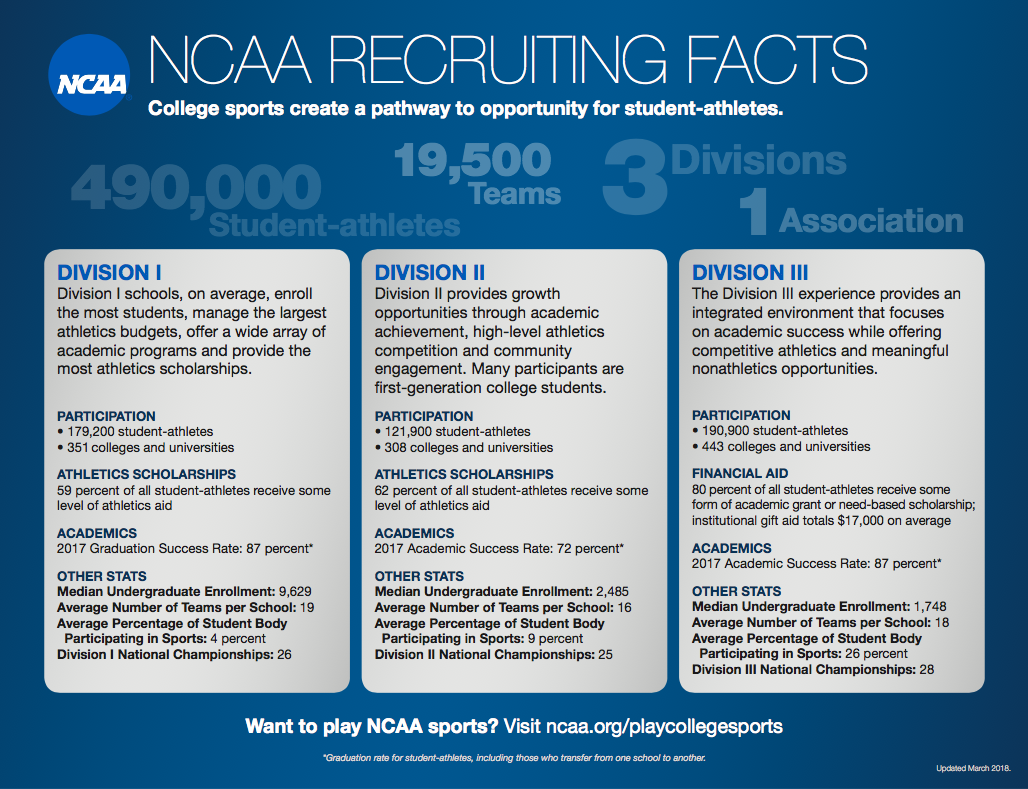
 

FACT – Only 2% of the NCAA athletes will be drafted to their major professional team sports but there is no guarantee they will actually PLAY even one game.

The two main NCAA team sports that are driving specialization are Baseball and Men’s Ice Hockey that have much higher % of players being drafted to their major professional levels (9.1%) and (5.6%) respectively vs. other team sports.  Being drafted is one thing, but being drafted, signing a contract, playing a game or a having a long career is another thing altogether.  One of the downsides of specialization is even those that do get to play if specialized starting in high school they will have shorter playing careers than those that continued to play multiple sports until or even in college/university as we shared in our January post

Early Sport Specialization does more harm than good

In the early 90’s, the OHL did a study based on the 1975 birth year of players, approx. 30,000 registered at the time in Ontario,  when they were eligible for the NHL draft and this is what they found;

  • 262 were drafted to the OHL (0.87%)
  • 113 drafted to the NHL (0.37%)
  • 38 Signed an actual contract (0.13%)
  • 22 Played only one game (0.07%)
  • Only 11 were active at 24 years old (0.04%)

I have yet to come across a similar study for MLB players drafted vs. those that will play for the major-league clubs they signed with, but like NHL, the majority come from the first round and after that will potentially have long careers for their minor-league affiliates.

Here is the math based on current trends of kids specializing at 7 years old and entering clubs/academies for 10 years before they even reach the collegiate level.
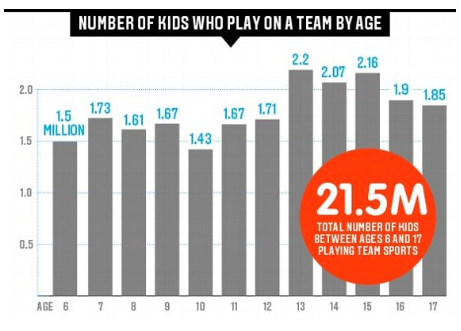
Most Current Data Set Available from 2013 for team sport participation

21.5M kids playing youth team sports in the USA;

  • Of those 7.3M will play team sports in high school (football being number one with over 1M) = 34%

Per March 2018 NCAA Facts (of those that played team sports in high school that went on to play in the NCAA)
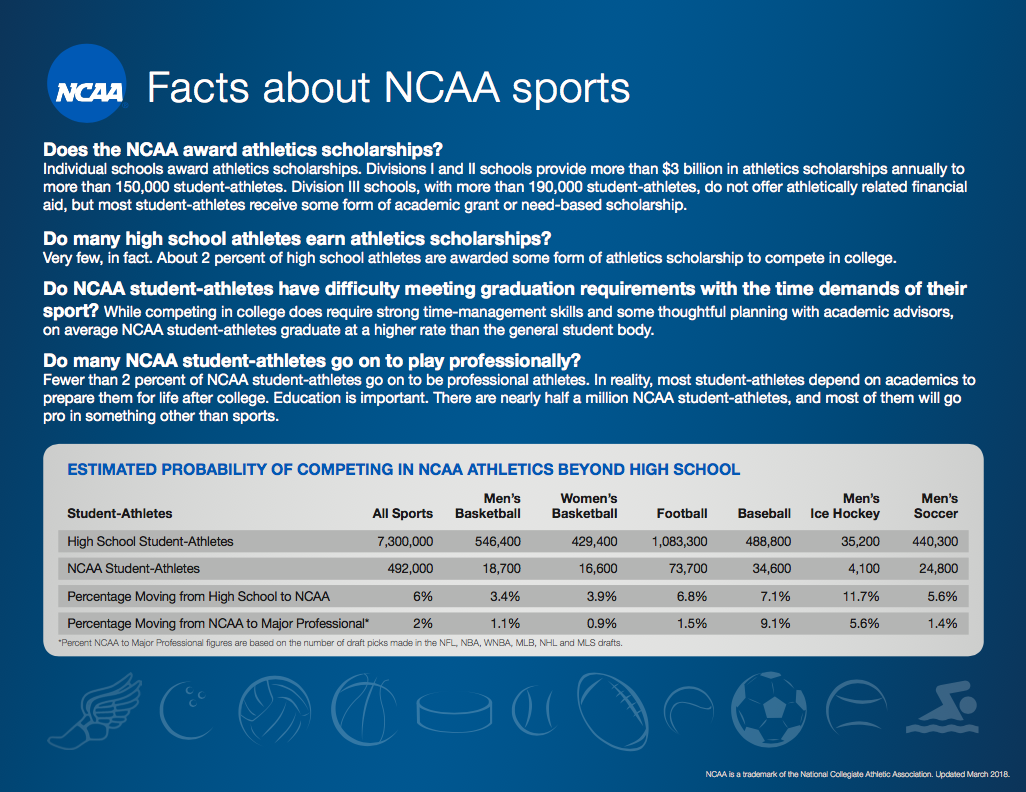
  • 492K went on to play at the NCAA level = Only 2.3%
  • 59% of athletes at Div I schools offer a handful of full ride scholarships, majority are partials
  • 62% of athletes at Div II schools receive some level of financial aid/smaller scholarships
  • 80% of athletes of Div III school athletes receive some form of financial aid only, no scholarships

Student-athletes in Div II and III schools aid is more in student loans than actual bursaries or scholarships, subject to being repaid back (which puts further stress on the family to do so) vs. scholarships for Div I schools do not require repayment.

  • According to Mark Emmet, President of the NCAA, when players on NCAA men’s basketball teams were surveyed, 75% of Div I, 50% of Div II and 25% of Div III athletes believed they would play professionally when just over 1% were drafted to the NBA in 2017
  • Assuming 2% of NCAA Athletes go on to major professional levels, that is 9840 of the 492K student-athletes
  • Going back to the total 21.5M that played team sports from 6-17 years of age as the feeder group to those that went on to play at the NCAA level, those that were drafted to major professional sports (9840) only equates to  0.04% 

This is the same % that I have shared from numbers shared at the Hockey World Cup Summit in Toronto in 2016;

  • Approximately 2M kids playing hockey globally, Canada and USA accounting for 1.2M, the rest for other nations in Europe and did not even include the sleeping monster China
  • 700’sh roster spots in the NHL = 0.04%
  • The number of NCAA scholarships offered to Ontario born players has dropped 63% the last 10 years. Why? Because the USA has developed their ADM (American Development Model) over the same time period and is developing their own vs. those born elsewhere

Similar Stats in terms of soccer (MLS) based on registration numbers in the US in 2014;

  • Approx 5.7% of the 414K boys played soccer in high school
  • 7% (23,602) will go on to play soccer in college
  • About ½ of those (2.8% or 11.6K) will play Div 1 level (where athletic scholarships are available)
  • Average scholarship = $8.7 – 10.6K USD (gone are the days of full rides, now the average is approx 8.7K for all sports other than football and basketball that the average is 10.6K USD falling well short of that the actual annual costs will be)
  • Only 72 of those playing in college will go on to PLAY professionally = 0.02%
  • BUT 26% of parents think their kids will play professional soccer

I suspect the same % would hold true for English Premier League (European Football), NFL or other professional sports programs where players salaries have increased to the millions of dollars (not including the lucrative endorsement deals)

TD Ameritrade did a study with their clients in 2015 as they were concerned they were not investing enough for their retirement.

  • Many of those that replied stated a large portion of their disposable* income was being spent on youth sports.


  • 43% of those stated that youth sports were too expensive.


  • 67% aspired for their child to get an NCAA scholarship (only 2% potentially will)


  • 47% think their kids will play professionally ( reality = less than 0.5%)


  • 34% think their kids will become an Olympian (reality = less than 0.1% will)

* How many of us actually have disposable income anymore, with rising costs of housing, gas alone, more and more families are living paycheque to paycheque

Two Years Later – Time Magazine shared that youth sports in the USA had evolved to a $15 Billion Industry due largely to specialization and the growth of private for-profit clubs and academies.  The industry has literally doubled in revenue in less than a decade!
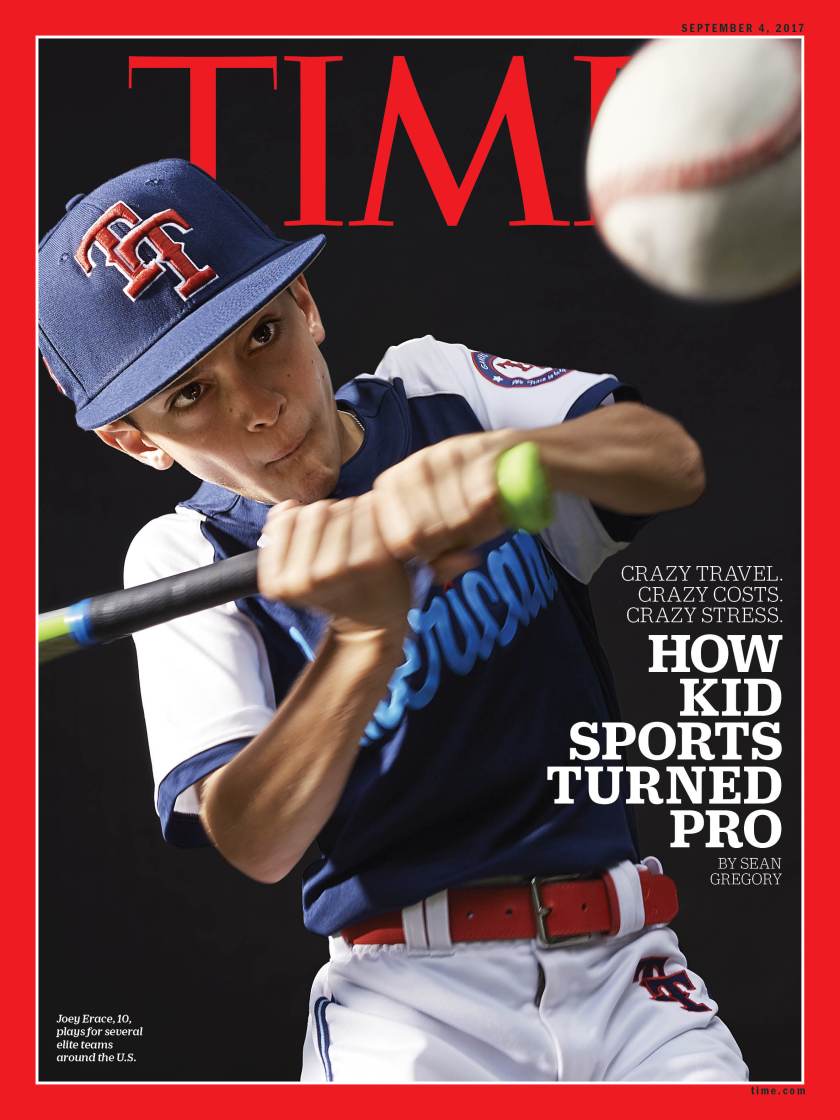
 

These private programs are now costing anywhere from $15 to 50K per year (some include travel costs, some do not) so using an average of $25K per year (for travel, programs, gear, specialty trainers etc), and you signed up your “talented” child to year-round program starting at 7 will exceed $250K even before they get to college (AKA – NCAA PREP)

This does not include the opportunity loss of taking personal days, weeks off from your job to chauffeur or fly your child to all the prospect tournaments, games so a scout may “potentially” see them play (if they are good enough, they will be seen TRUST ME, you don’t need to spend all that extra money and time and if you truly aspire for that level, majority of college and professional coaches are recruiting multi-sport ATHLETES)

This is roughly the equivalent what it would work out to for a Div I school tuition for an international student which “may” only be offset by partial scholarships (literally covering meals) of 8K per year (full rides are about as rare as the Giant Panda).

This also does not include the equipment, apparel or other costs that I call “the fluff”

Drum roll …….

NET out of pocket for NCAA PREP (academies) and NCAA education WITH partial scholarship support can still cost …

ALMOST HALF A MILLION DOLLARS invested chasing the dream of playing professionally when the average is only 2% of NCAA athletes will get drafted and even if they do the majority will never play other than for their minor club affiliates and the actual number that may play in the Show works out to 0.02-0.04% in all the data referenced above).

Sadly, many parents are chasing THEIR dream, not their child’s dream, and when I have talked to parent’s almost all share they have not kept track of the math as either too scared to do so or they merely were trying to provide their child the same opportunity as others (AKA keeping up with the Jones).  Thanks to the traditional less costly community and high school sports programs competing with private clubs and academies they all get caught up in the same race only to find out at the end, the costs far outweigh the rewards.

One of the hardest things that I had to tell my son in his last year of minor hockey (when he was 17 years old) was I could not justify paying for AAA hockey thanks in part to mandatory travel tournaments that would push our out of pocket costs over $10,000 for the winter season.  This was MINOR HOCKEY, not an academy where the costs can push 20-50K.

Ironically it was the same conversation I had with my mother she shared that she could no longer support me playing hockey as my father’s life insurance ran out (well before specialization, spring, summer camps, $300 sticks, $1000 skates, Mandatory Travel tournaments)

What did I say to her?

It’s Ok Mom, I love hockey, but I would like to keep trying other sports, so I signed up for football in the fall ($125 reg fees that included all the equipment but cleats), rugby in the Spring (No reg fees, just $200 for jersey and cleats) and taught myself to play golf in the summer (junior fees were free or very low and I bought a used golf set for $100.00).  I had already won provincials (equivalent to a state title) in Hockey, and then went on to play for teams that won provincials in Football and Rugby.

What did my son say?

He understood and said he would rather play High School Volleyball ($125 athletic fees plus a pair court shoes) and Rugby  ($125 athletic fees plus a pair of cleats) and golf in the summertime so he could just go out there, work up a sweat, have fun and be with his friends.

At the end of the day, that truly is the reason why kids PLAY sports.

Sometimes we have to hear from the mouth of babes to bring us back to reality.

Let’s all work together to bring the game back to the kids … where it belongs
 

PS Tagline - Dont be a kids last coach


The Top 5 Forms of Harassment Facing Youth Sports

Posted 2 CommentsPosted in Uncategorized

BONUS – Download a Free Copy of this Blog in PDF Format HERE 

Make it Safe from all forms of harassment

In many of my talks with coaches and parents I share 5 key takeaways, one being we must make it safe to fail and from all forms of harassment.

The latter is the focus of this post, an expanded version of prior post Make it Safe where I shared some of the great work being done by various groups to reduce harassment in youth sports.

In that post I shared the study that was posted by True Sport in their 2008 report, the most serious issue facing youth sports 10 years was harassment, identified by 38% of the respondents in a survey.

Fast forward 10 years later, harassment in various forms is not only prevalent, but I would argue has not improved, but has gotten worse as a result of cyberbullying now coming to the forefront as another means of harassment.

Having been a victim of bullying myself, I have never condoned harassment in any shape or form on my teams and encourage all coaches and parents in my talks to have zero tolerance but  one thing comes to light over and over again, ignorance what the various forms of harassment are and how to deal with.

Today’s post will focus on the top 5 forms of harassment facing youth sports today, and suspect as it continues to be a hot topic, more to follow in future.

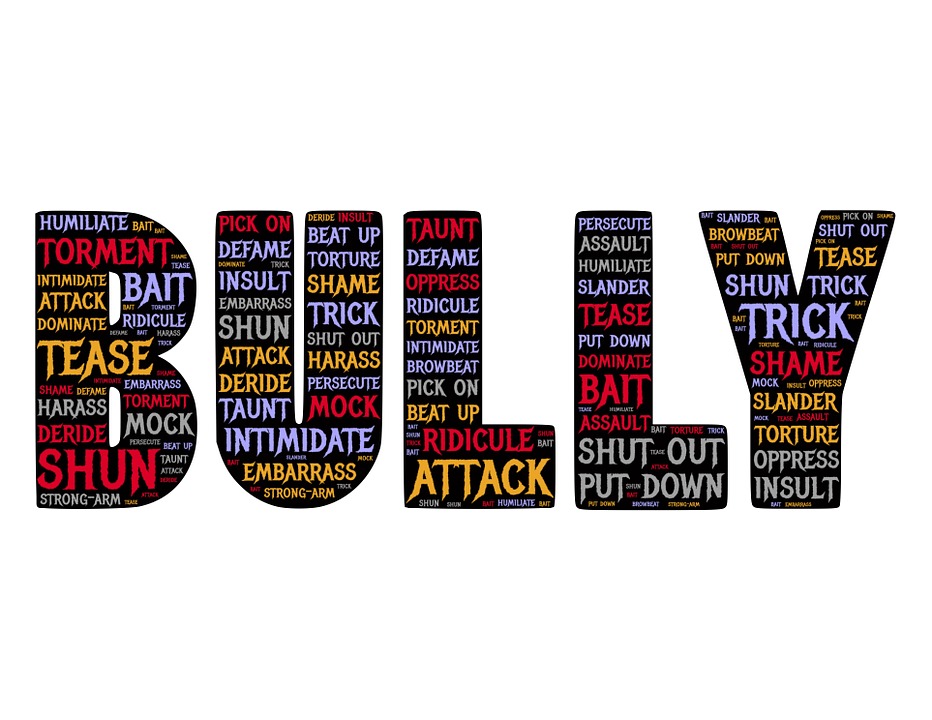
#1 Bullying

Definition: “Bullying is unwanted, aggressive behaviour amongst individuals that involves a real or perceived power imbalance, the behaviour is repeated or has the potential to be repeated over time”

Common for bullying is kids calling other kids names (something I can relate all too well), but also physical abuse (being punched, kicked, hit) by both fellow team or class mates but also the very people that are supposed to have zero tolerance towards can be the bullies (Coaches, parents or teachers).

Verbal – teasing, name-calling, taunting, threatening or causing harm

Physical – hitting, kicking, punching, spitting, tripping, pushing, taking or breaking someones things, making rude hand gestures

Social (relational) – someone is left out on purpose, spreading rumour about another kid or embarrassing a child in public

Ironically the focus of bullying is kids towards kids, but coaches, teachers and instructors also can be the bullies as highlighted in recent article about Will Martin bullying a player on his team in California among other coaches identified.

Per the National Centre for Education Statistics 28% of Us students in grades 6-12 have experienced bullying

In a Study done by Bradshaw, Sawyer and O’Brennan Over 70% in the same age groups have seen bullying happen in their schools

As I was a victim of all forms of bullying as was my brother and others I know so I take harassment very personally, but even more so as two class mates of my son and daughter at their high school committed suicide, one was a girl who played on the girls rugby team that allegations of bullying were hinted was one of the reasons why she did so.

The other, was a 15 year old boy who committed suicide on the same day that my son and all his buds were celebrating their high school graduation.  When I found out the news I literally fell out my chair sobbing as I had coached him 2 years prior on the high school junior rugby team, and had also coached his older brother, and two of his cousins in hockey.

Both cousins quit hockey before they were 13 one who happened to be a very strong player but as a result of the verbal abuse he and his team mates received on a spring team he quit hockey as well as other sports to become one of the 70% of kids that quit by the age of 13.

Why the young boy M took his life, no one knows, he was always one with a huge smile on his face but as more and more comes out about the damaging effects of depression the more we are becoming aware that mental illness impacts those in sport as well.  As my brother shared when I texted him about it as he also lost a close friend who committed suicide, he replied “Mental illness is EVIL.”

Ensure you join the conversation about mental illness on Jan. 31st, 2018 when Bell sponsors the 7th annual Let’s Talk Day


#2 Cyberbullying (origins approximately 2008 after the world’s first smartphone, the device of choice for Gen Z)

Definition: The use of electronic communication to bully a person, typically by sending a message of an intimidating or threatening nature

During this year’s world junior tournament, one of the top commercials being played is former Canadian World Junior Player Jordan Eberle sharing insight on cyberbullying sponsored by Telus below, almost ½ of kids have experienced cyberbullying in the past month!

Cyberbullying is a relatively new form of harassment that all adults in the youth sports space must be aware of.

Kudo’s to Telus and Jordan Eberle for bringing this serious issue to the forefront, “no kid should have to go thru getting bullied.”

Some other cyberbullying statistics;

  • About the same number (approx 50%) that have been victims of cyberbullying have been instigators themselves!
  • Over 25% have been bullied repeatedly thru their cell phones or social media
  • Over 50% do not tell their parents, less than 20% report to authorities
  • 10% have had embarrassing pictures of themselves posted without permission
  • 20% have sent sexually suggestive of nude pics of themselves to others
  • Girls are more likely than boys to be involved in cyberbullying

Source: www.bullyingstatistics.org

#3 Sexual Harassment

Definition: harassment (typically of a woman but roles can be reversed) that involves the making of unwanted sexual advances or obscene remarks.

Although not commonplace YET in youth sports, professional sports commentators Sportsnet Greg Zaun and NFL Network Analysts Marshall Faulk, Donovon McNabb, Ike Taylor, Heath Evans, Eric Weinberger have been suspended or fired for allegations of sexual harassment in latter part of 2017.

Hall of Fame NFL and CFL quarterback Warren Moon has received another allegation of sexual harassment, previously from a former cheerleader of the Minnesota Vikings and the most recent from an aid of his sports marketing company.

Where sexual harassment is starting to evolve and coaches must be aware of is in mixed teams, many girls like my niece played on boy’s hockey teams as their association was not large enough to have girls only AAA teams.   Having coached girls softball teams for many years coaches you must be very cautious of any comments you make that may be taken out of context also.

As the professional sports broadcasters found out more and more girls and women are speaking out via #metoo initiatives and rightfully so, no one regardless of gender should be harassed in youth sports, schools or the workforce.

#4 Sexual Abuse

Definition: also referred to as molestation, is undesired sexual behaviour by one person over another, the offender is referred to as a the sexual abuser or molester.

In a Study done by Parent and El Mimi at the University of Laval, 2-8% of minor-age athletes are victims of sexual abuse within the context of sport and of the 159 case of sexual abuse reported, the perpetrators were coaches, teachers or instructors in 98% of the cases

Recent examples of Sexual Abuse in Sports

2017 – USA Gymnastics – 125  former and current members of the USA Gymnastics team, including Olympic Medal winners, came forward with sexual abuse allegations towards former team doctor Larry Nazar which he pleaded guilty and sentenced to life in prison soon after. There is still fall-out how USA Gymnastics could have had the culture that lead to this and how some early allegations were not followed up on similar to the fall-out from USA Swimming 7 years prior.

2017 – Canadian Alpine Ski Team – former ski coach Betrand Charest from 1996 to 1998 gets a 12 year prison sentence for sexually assaulting 12 teen girls between the ages of 12-19 at the time.  Two subsequent charges were brought forth but put aside as they occurred while Charest was coaching in New Zealand, out of the courts jurisdiction.  Alpine Canada applauded all those that came forward and says it will continue to work with its partners on “all relevant initiatives that strengthen the prevention of any form of abuse, harassment or discrimination locally, provincially and across all sports.”

2016 – United Kingdom, particularly Football – Initial allegations came forward by many English professional footballers reported in Nov. 2016 they had been victims of sexual assault by coaches, then a month later allegations about former coaches and scouts started to emerge. from Scotland and Ireland.  By Sept 2017 the number of affected UK football clubs had grown to 331 with 285 identified suspects and 784 victims.  Although Football was the main focus in Britain, allegations came forward from individuals in others sports including basketball, rugby, gymnastics, martial arts, tennis, wrestling, golf, sailing, athletics, cricket and swimming.

2011 – Jerry Sandusky @ Penn State University – sex abuse scandal came to light, former football assistant coach was charged of 48 counts of sexually abusing minors and was found guilty of 45 receiving a sentence of 30 to 60 years in prison. Jerry not only destroyed the lives all those he abused, but the tenured coaching career of Joe Paterno, many argued was one of the greatest coaches ever who coached Penn State football team for 46 seasons !  Soon after the allegations came forward, Joe resigned and shortly after passed away from cancer that many argue was the dark cloud from not acting on initial allegations that came forward in 2002.

2010 – USA Swimming – A Television News Investigation reported sexual misconduct by a number of different coaches, one being Andy King who coached at various clubs on the west coast for three decades and was found guilty of abusing over a dozen teenaged female victims, one who had an abortion at 14 years of age.  More than 100 coaches were banned for life as a result of the investigation and the NGB was blasted for not acting on allegations sooner, even allowing coaches that faced initial allegations transfer to new clubs in other cities that lead to further teenage victims.  One of the coaches that has been suspended originated from Ireland, George Gibney who left Ireland who had been charged with indecent assault in 1993 but was successful in obtaining his green card to coach in the USA.

1996 – Graham James – Former WHL coach – identified by Sheldon Kennedy (co-founder of the Respect Group in 2004) and another unnamed player initially with others to follow that they were sexually abused by James.  He subsequently pleaded guilty to 350 sexual assaults over his coaching tenure in the WHL from the mid 80’s to mid 90’s and served several prison terms as more allegations were brought to light including Theo Fleury’s.  He is now out on parole, but many feel (yours truly included) that his prison term(s) should have been much, much longer.

I would have thought the awareness that started when Sheldon Kennedy then all others since who have come forward would have been enough to nip sexual abuse of minors in sport in the bud right then and there but it appears that all sporting organizations still have work to do both in the recruiting of their coaches and reporting procedures for their athletes.

The question I have now is what program is next?  Are there any other sexual predators out there that we don’t know about YET?

I hope not… I truly hope that the awareness created now will ensure that all sports programs implement the check and balances needed to ensure these tragic events don’t happen again EVER.

Coaches, as a result of the sexual abuse issues above, many sports groups are asking for police checks of their coaches annually or bi-annually. I feel your pain, particularly if you have to get multiple police checks done each year, as I am involved with various children’s programs and charities I have to get 2-4 police checks done each year and thanks to the fact I share the same birthday as a pedophile, each time I have get fingerprints as well.  I do so without hesitation, it is all about protecting the kids.



#5 Hazing

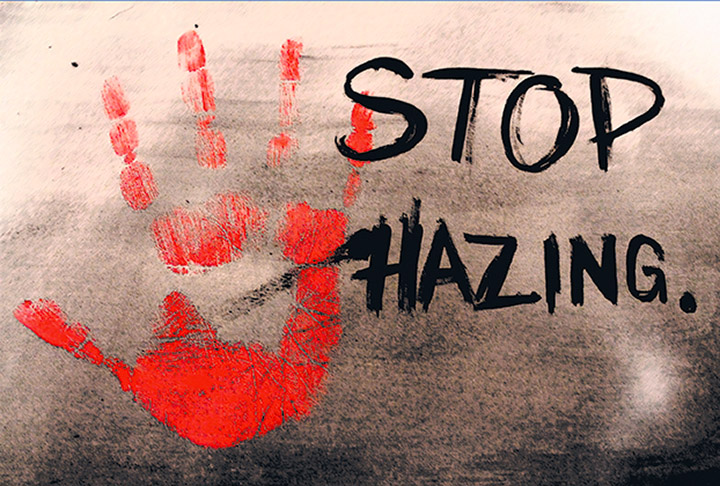
Definition: any initiation process involving harassment, regardless if the victim provides consent or not due to peer pressure to do so.

 Contrary to Bullying that is more about exclusion, hazing involves the very same forms of harassment, abuse or humiliation but is all about inclusion, initiating a new member to the team.

It has long been touted as “boys being boys”,”the Badge of Honour” or “part of our tradition.”

Below is the most recent example of the extremes of hazing, yet another scandal at Penn State University where a student pledge to a fraternity died as a result of excessive drinking of alcohol.

There are three distinct forms of hazing

  • Subtle – picking up pucks, balls after practice, calling senior players sir
  • Harassment – yelling or screaming, personal chores or servitude, wearing humiliating attire
  • Hazardous – forcing others to drink, eat vile substances, sexual acts, coerced alcohol, drugs, burning, branding, illegal activities, bondage, forced exposure to extreme weather, exercise

The reason why Hazing is so serious is since it merely escalates year over year, particularly in sports programs as we all want to do “better” that prior teams did.

According to a study shared by stop hazing, 47% of students experience some form of hazing before they graduate from high school and 74% of players on varsity teams go thru hazing.

Joe Sakic, Hall of Fame former NHL player had his head shaved like the Whitecaps players in prior post Make it Safe in his rookie season and he vowed he would never do the same to another human being.

Don Cherry, the OHL and numerous other sports leaders and organizations have zero tolerance for hazing rituals but merely putting “Hazing of any kind will not be permitted” in an associations policy is not enough, coaches, players, and all adults involved with the teams must be educated on the various forms of hazing so even the subtlest forms do not start.

One of top Universities in Canada, McGill, had their entire 2008 Varsity Football program shut down due to hazing (less than 10 years ago!)

A couple of years back when I was doing research on hazing, one of the experts I reached out to referred parents to contact me. They thanked me for taking the initiative to do so as their 18 old son died as a result of hazardous hazing during pledging for a fraternity. They shared there is not enough education being done and if there had been, perhaps their son would still be alive today.

Needless to say, I was very sombre when I read their note as I dug into researching hazing further, he was not the only one, there have been over 200 hazing deaths since they were first tracked in 1838 (average 1.11/yr) but 40 from 2007-2017 (4 per annum)!

During Feb. 5th – 9th I will be one of the guests of the free end bullying summit hosted by Dr. Jen Fraser, author of Teaching Bullies, and encourage you all to register for to hear from some of the world’s top experts what we can do to eliminate the various forms of harassment that continues to impact youth sports today.

Here is the link to sign up FREE for:  GoTime Learning End Bullying Summit

I am not sure we will ever eliminate harassment completely, but we can no longer condone it, sweep it under the rug, turn a blind eye and we must deal with it head on providing safe reporting procedures for the victims and timely investigation procedures, too many kids are getting hurt by the various forms of harassment that exist today.

If you can eliminate harassment on your team as one coach, or in your classroom as one teacher we all will take a HUGE leap forward.

Let’s work together to bring the game back to the kids … where it belongs.

Don`t be a kids last coach


Lack of Fair Play – The Other Reasons Why Kids Quit Sports

Posted 2 CommentsPosted in Coach

Lack of Fair Play –  The Other Reasons Why Kids Quit Sports


Playing just your starting lineup isn’t only hurting your kids, but your team as a whole!

Part II


Glen Mulcahy

May 18, 2017

BONUS – Download a Free Copy of this Blog in PDF Format HERE  

This blog post is a continuation of last week’s Part I post Poor Sportsmanship – The Other Reasons Why Kids Are Quitting Sports


When I first began researching fair ice policies a few years back, there were only a couple that came up when I used my good friend Google. One I found was Hockey Nova Scotia which had fair play in addition to their policies for all levels including house, female and even competitive rep.


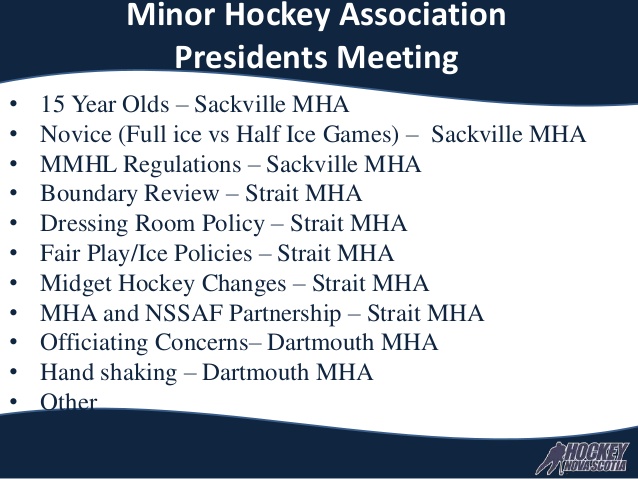
Nova Scotia Hockey AGM Agenda


Above is an image from last year’s Hockey Nova Scotia AGM. If you happen to follow the NHL at all, there are a couple of pretty good players that came from there. One happens to be the captain of the defending Stanley Cup Champions, Sidney Crosby; the other is Nathan McKinnon who many feel is the fastest player in the NHL with the puck.

I just did the same search I did four years ago in 2013 and the good news is, there is change coming. Currently the entire first page of Google outlines the fair ice policies that various hockey and ringette associations have adapted. As far as I am concerned as a coach and educator, the sooner that all major Hockey and Ringette associations implement these policies the better.

One of the top 5 reasons why players quit any sport is due to the fact that coaches play their favorites more than they do other players. In doing so, they are sending the message to those that sit that they are not good enough. As my son so eloquently shared with me after he sat on the bench for the better part of a game for non-disciplined reasons as a result of coaches’ strategy backfiring on him, he was “deprived of the opportunity to contribute to the outcome of the game.”

90% of kids would rather play on a losing team – emphasis on the word “play” in all situations – than sit on a bench for a winning team.

The only reason why players should be sitting on the bench when it comes to their turn to get out on the court, field or ice is for discipline. This could be anything from not being penalized when they should’ve been, to using bad language, to demonstrating poor sportsmanship and more. Aside from behaviour correcting actions, coaches need to take on their inherent responsibility of developing ALL of the players they’ve chosen to be part of their club, and not to rely on who they feel are their top players.

When I reached out to Cory McNabb (senior manager of player development for Hockey Canada) if he agreed with the short bench tactics that coaches in minor hockey are using, his reply was simply “Nope, if you pick ’em, you play them.”

Translation – regardless if the team in question is a house (rec) or competitive (rep) level, coaches choose the players for their team whether through tryouts, evaluations or drafts. To rely on a few players who in their subjective view are the cream of the crop,  coaches are not investing in developing all their players; something that should unquestionably be a priority above a win in the short term.

Just for a second, think back to the last 5 or more Stanley Cup Championships where commentators and coaches alike are saying they need to have all 4 lines contributing in order to win the Cup. This principle is not one that remains at the elite of the elite level. It is relevant all the way back to when kids are just beginning to develop their athletic careers at six or seven years old.

This year during my experience coaching high school rugby, the athletic director shared with me that there is no fair play code in high school sports other than grade 8 (13 year olds). The remainder of coaches for teams grade 9 and up are both allowed and encouraged to only play their top players in every game.

I had to deal with this experience first hand with my developing Rugby team this past year, which struggled to get a full field (15 players) out to any game on a good day. One match that’s been unfortunately etched into mine and my players brains was against a highly competitive school who brought out almost 30 players. Before the first half was over the ref came to me and asked what I wanted to do as we were already down 48-0.  We spoke to the athletic director of the other team and asked if they could sub in their second line players and, unfortunately, it went on deaf ears… the head coach continued to run the score up as he was focused on winning the provincials.

This I know now is the reason my son was deeply discouraged about playing different sports. A couple years ago he quit playing hockey, in large part to experience other sports and teams. When he signed up for grade 10 high school volleyball, just a few practices in, he was told point blank by the parent coach that he was only going to play his top players in games (one of whom was, of course, the coaches son).

Until the NSO/PSO/RSO and secondary school sporting bodies recognize that one of the top 5 reasons why kids are quitting any sport (just as in the case that ALA found in their survey) is because of a lack of fair play policies, attrition rates in youth sports are going to continue to grow!

Even if they implement fair play policies alone, I truly believe it will lessen that insanity in the stands which every parent knows all too well when it is time for their son or daughter to play. When the kids sit on the bench for non-disciplined reasons they get frustrated and after a season of it, it is no wonder why both player and parent opt to go down a different path (not that it is any greener on the other side of the fence).

It also will bring the love of the game back to the kids vs. the adults competing against each other through their kids.

Just because many kids may not have reached their potential at a young age doesn’t mean that they won’t be able to with future opportunities. If they are deprived of the chance to contribute it’s likely that they will quit.

Imagine if these “pretty good athletes” that went on to have insanely successful careers like Sydney Crosby and Nathan McKinnon were not given the opportunity to “play” early on in their development and were one of the 70% that quit by the age of 13 as a result.

Let’s work together to bring the game back to the Kids … where it belongs.


Glen Mulcahy


PS Tagline - Dont be a kids last coach

Poor Sportsmanship – The Other Reasons Why Kids Are Quitting Sports

Posted 2 CommentsPosted in Athlete, Coach

Poor Sportsmanship – The Other Reasons Why Kids Quit Sports

Lack of respect in youth sports today is killing our athlete’s motivation!
Part I

Glen Mulcahy

May 10, 2017


other reasons kids quit part 1


BONUS – Download a Free Copy of this Blog in PDF Format HERE  

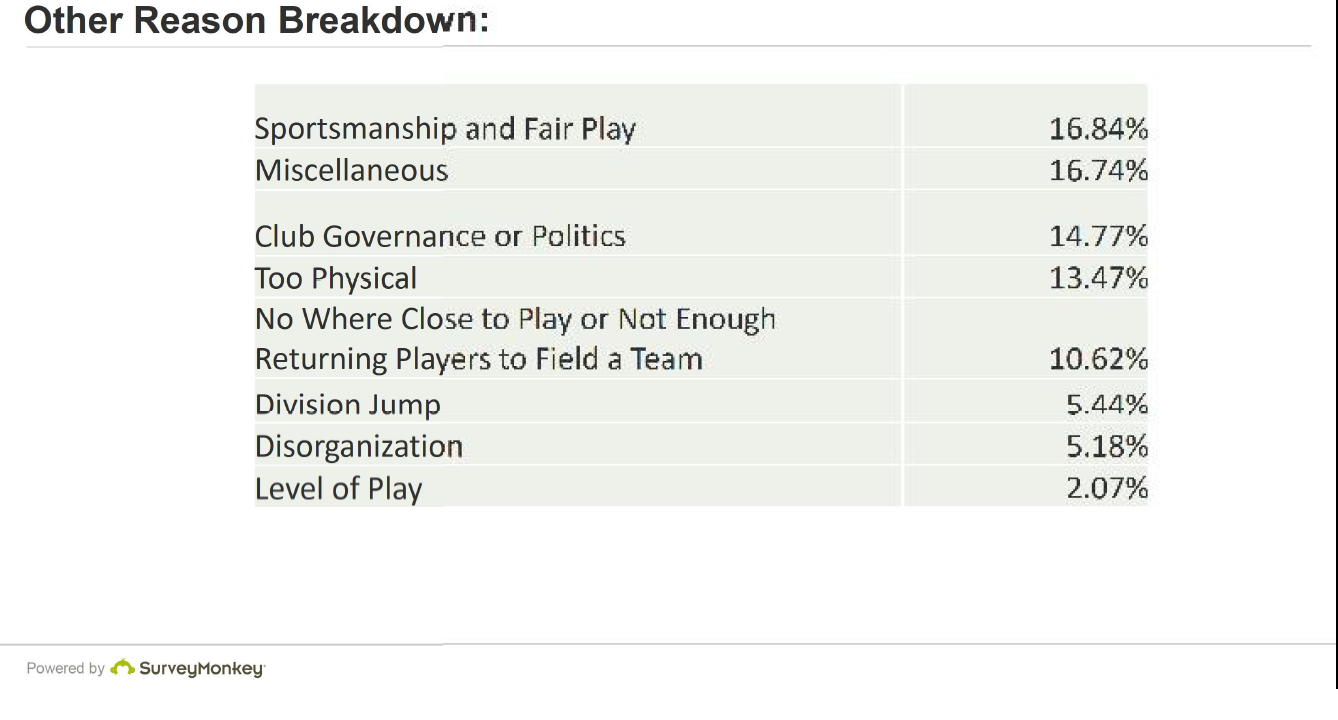
Lack of sportsmanship is a large part of the reasons our young athlete’s are becoming discouraged so early in their athletic careers. Although the second reason kids are leaving lacrosse is to specialize in other sports as I outlined in prior article Why Kids Quit Lacrosse, the primary reason why kids are leaving lacrosse are a myriad of combined problems within the sport (20.6% of the responses of the 1100 families surveyed by Alberta Lacrosse Association) that are outlined in the table below:


poor sportsmanship reason breakdown

Source: 2014-16 Retention Report – Alberta Lacrosse Association


Of these, the most significant reason was (poor) Sportsmanship and (lack of) Fair Play, the later of which we will talk about in Part II later this week.

Although the retention report was specific to lacrosse, I would argue based on my involvement in various other youth teams with coaches, parents, officials and athletes that the same would hold true in almost all other youth sports today.


Poor Sportsmanship

Have you come across a sign like this at your local arena, soccer field, lacrosse box etc? 


poor sportsmanship signboard


How many times have you been to a youth sports game in recent years and seen either players or coaches demonstrating poor sportsmanship? This could include any of the following, all of which that I’ve experienced firsthand;

  • Throwing or breaking their sticks because they missed a shot on goal
  • Screaming at a young official as they missed a call
  • Playing with the intent to injure – knee on knees, elbows to the head, helmet to helmet contact, cross checks or hitting players in the numbers (in the back)
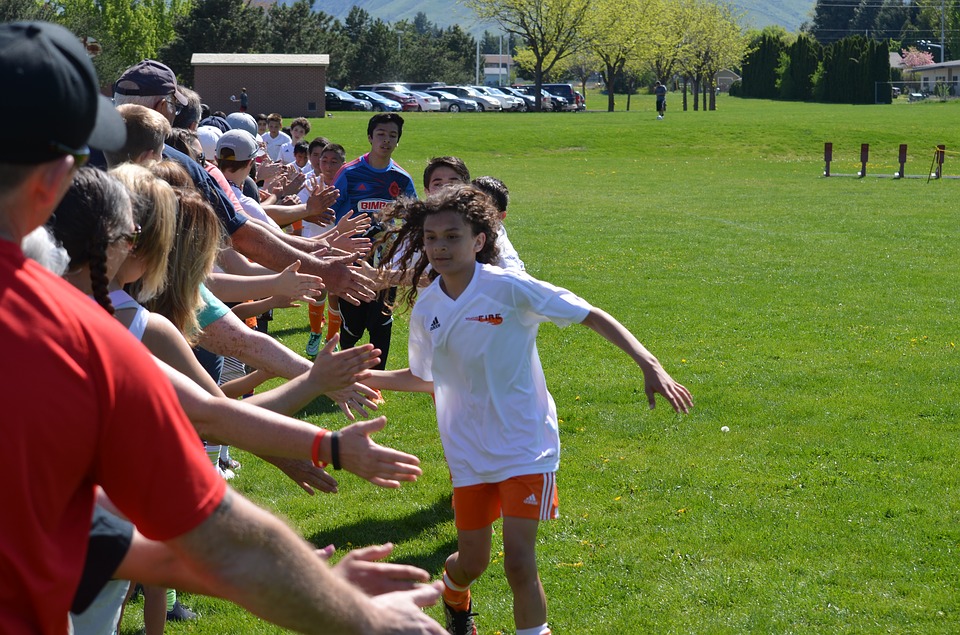
  • Disrespectful when shaking hands after a game, or worst case coaches slew footing (tripping) a player or vice versa. (At one of the games I coached a player on opposing team tried to trip me as a prank while shaking hands and was suspended for 5 games as a result!)
  • Entering the penalty box throwing helmets, gloves, sticks and using language that is not appropriate even for adults in ANY environment
  • Players excessively celebrating goals even when their team is up on the other team by a significant margin (AKA rubbing salt into the wound)

The list goes on and on for the escalating lack of sportsmanship I have seen over the years. I strongly believe this is due largely in part to the fact that many coaches and parents have not been reinforcing the importance of respect; whether for themselves, team mates, coaches, other teams, officials, parents, or others in their community. This includes the apparent lack of understanding that you should win with humility and lose with dignity.

I am coaching High School Rugby this year and our number one agreed upon core value is respect. Even when the going gets tough (which believe me, it has) I’ve taught my athletes to still call the ref sir, and that even though some feel it is a Hooligan’s game … it is played by gentlemen.

Our rugby team’s first game of the season we got, for lack of a better word, thumped. But as I knew going into this season we would be in for some tough games I did two things to kick off the season;

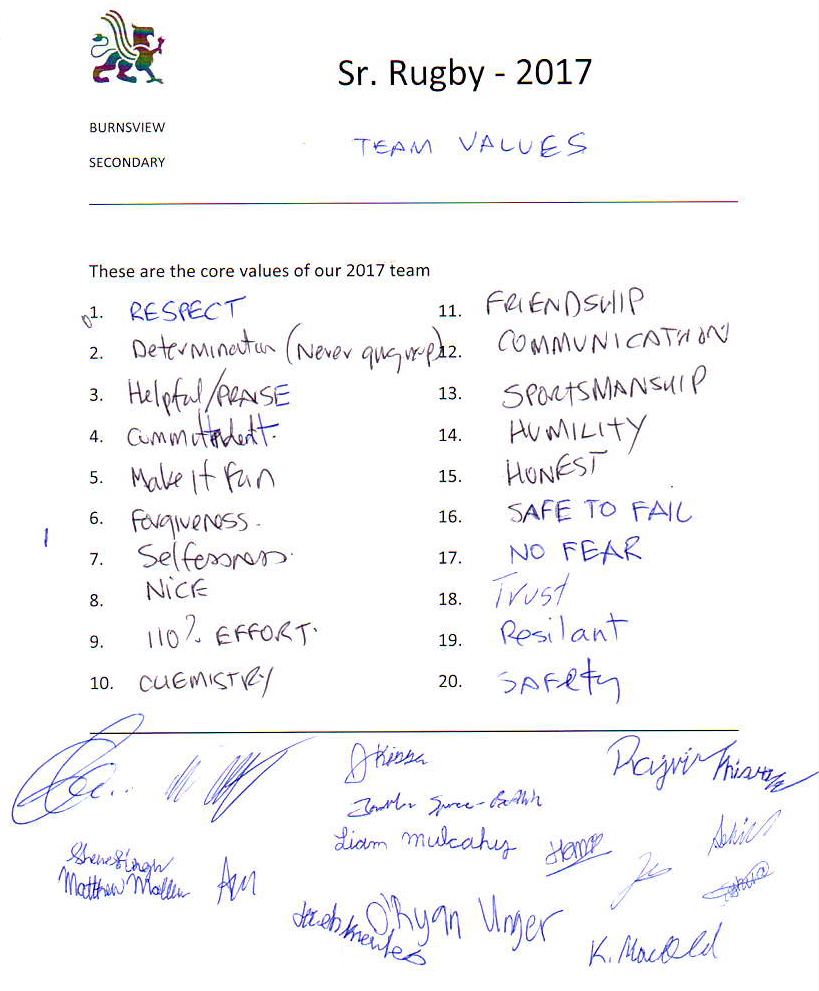
First – I asked every player to write down the top 3 characteristics they wanted to see from their team mates.

Below is the team values summary in no particular order where every player contributed. As you can see, one of our team values is sportsmanship, along with other core values like effort, chemistry, resilience and so on.


Team Values


Second – We have a circle of trust where the players form a circle, lock arms, and at each practice or game a different player leads the circle strongly stating the following:

“I have your back”

“I will respect you”

“I will be fearless”

“I will not criticize you”

“We will win with humility and lose with dignity”


The sayings for our circle of trust came from the subsequent question in which I asked all of my players what they did not like about youth sports. The top three answers were:

  1. When their team mates were not committed
  2. When the coach or team mates do not respect me
  3. When coaches played their favourites


The repetition of “We will win with humility and lose with dignity” is to reinforce the importance of good sportsmanship, regardless of the outcome of a game. When players leave the dressing room or field those that see them should not know whether they won or lost and as the old cliché goes, how you played the game is what matters. Having a focus on this is what breeds a healthy and positive relationship with the sport they love and is what will encourage young athletes to continue to love it long after they’ve stopped playing youth sports.

Probably the one of the greatest examples of sportsmanship I have ever come across was W. Oregon’s Sara Tucholsky who hit her first ever home run and the other team showed what playing for the love of the game truly means.


Let’s work together to bring the game back to the Kids … where it belongs.


Glen Mulcahy


Don`t be a kids last coach

My Story – Part II – My Greatest Fan

Posted Posted in Parents, Uncategorized

My Story – Part II

My Greatest Fan
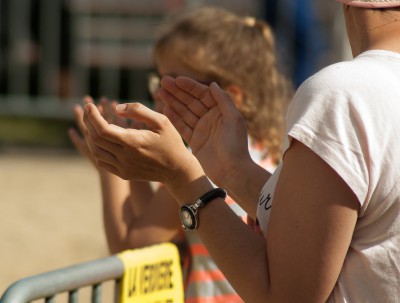
Glen Mulcahy February 29, 2017 – Revised May 9th, 2020 woman spectator clapping from sidelines

BONUS – Download a Free Copy of this Blog in PDF Format HERE  

  On Oct. 8th 2013 I lost my biggest fan, my mother, who lost her 2 year battle with Cancer, the last of many hurdles she had to overcome during the course of her life. I am the oldest of two boys, my brother is 4 years younger than I and we have many memories of my mother and how she dealt with adversity starting when I was 5 years old in Montreal.  She and my father had gone to a dinner party and upon their return, they had to swerve to avoid a car that crossed the centre lane on the way home.  Our babysitter took a call from the hospital saying they would not be coming home and she would have to stay with us overnight. The next day my father came home with my mother and explained that mom had been thrown from the car through the front windshield (seat belts were optional) and suffered a broken leg and whiplash. My father had a couple of broken ribs as a result of having to avoid the car and lost control colliding straight into a telephone pole.  Later that day when I was with my mom she asked me to get dad, and I recall it like it was yesterday.  She said, “Bobby … I can’t feel my legs.”  He immediately called an ambulance and they whisked her off to Montreal Neuro, where some of Canada’s elite neural specialists practiced.  It turned out that she did not have whiplash, but a broken neck and broke two of her spinal vertebrae. My mother was put in what I refer to as the Frankenstein machine, a full-body apparatus with screws into her skull and back to stabilize her neck and spinal column.  Multiple surgeries were to follow in order to repair and fuse the broken vertebrae in her neck and spine. My father was unable to take care of me and my brother due to work commitments so he arranged for me to go to my Nanny’s and my brother to go to his parents (Grandma and Grandpa). They would take us to see mom every couple of weeks but I was separated from my dad and brother for almost a year. While living with my Nanny, I signed up for hockey in Ottawa. When I did visit Mom she would always ask how hockey is and I would say I was having fun but missed her watching in the stands. She eventually was released from the hospital a year later and WALKED out refusing to sit in a wheelchair. My family was back together and my dad got a promotion to go to Baffin Island to run the power grid for the North West Territories. My father was known for a practical joke that he was infamous for was turning off the power on New Year’s Eve for the entire NWT. I played hockey there as well and my mom was back to her seat in the stands, cheering me and both teams on.  She was there for my Gordie Howe Hat Trick (goal, assist and a fight).  At 7 years old I got a penalty for fighting (more so wrestling) with one of the Eskimo players that were jawing me on the ice. Just as I had to defend myself in areas of French Quebec, a boy with carrot red hair was always a target amongst the Eskimo kids, After my hockey season, my family moved to Vancouver, where I continued to play hockey and baseball (another game my mom was always present for and cheered me on) and my father passed away tragically. My Nanny and Papa, came out to help and suggested we move back to Montreal, where our big family (I had 13 uncles and aunts between my mom and dad) could support us.  We moved back and I played hockey and baseball once again in Montreal.  My mom got a job in Toronto the following year so we transferred there and I made my first rep team in Peewee at 11 years old.  We had GREAT coaches and a great team. We won the Ontario provincials and qualified for the Quebec Peewee Tournament (not what it is now but was a great experience).  Once the season was over My mother then sat down with me and my brother as said it was time to go back to the house that Dad built. We moved back to Vancouver and I continued to play hockey, baseball, and also football. My brother was also very athletic and was playing hockey, football, and lacrosse.  When I was going into my second year of Bantam and my brother was second-year Atom, my mom sat down with us and confessed that the only way she was able to afford to pay for all the sports was the life insurance she received when our dad passed away and it had now run dry. Due to the accident that lead to her broken neck and also a bad accident she had when she first started driving, my mom was too nervous to drive and we relied on taxis to drive us to all our away games as my mother was very proud and did not want to ask parents or coaches to do so. We became friends with one driver in particular and he gave us all kinds of concessions, but it was still getting too costly (I always wondered how my mom was able to afford all the taxi rides). The end result, both my brother and I had to stop playing hockey as it was the most costly of the sports we played and had many more travel games than the other sports. I decided to focus on football and baseball that I could not only use the same cleats for (I improvised) but had significantly lower registration fees that covered everything else including equipment. I could also walk, run or bike to the field for practices and home games. Away Games our mother conceded to let parents or the great coaches drive until I was able to drive on my own. As a result, I never did suffer the level of criticism that many kids have in the ride home like this 9-year-old boy highlighted in the video produced by our good friends at True Sport Canada. My mother was there for me and my brother through thick and thin, she was there for as many games as she could regardless of what sports we played.  She cheered, clapped and gave us kudos after every game.  Neither of us experienced what has now become the “infamous ride home” or have any recollection of other parents or coaches screaming at my teammates or officials like happens in every youth sport today.  I had fun playing all of my youth sports, had great coaches, the experience was positive and they taught me numerous of life lessons that I carried into my work, school and businesses as well as the 20+ years I have spent as a coach. My mom then supported both of my kids on their journey playing various youth sports and activities. She was able to make it to my daughter’s High School Graduation in May of 2013 but regretfully will not be there for my son’s or any other of their other big milestones like university graduation, marriage or becoming parents themselves. Sadly, my greatest fan is not there to see me go down the path to further mentor coaches, educate parents and executive members to address the issues that I have seen come to fruition in youth sports. I do know though, she is clapping and cheering me on as I go down the tough road before me to implement the changes we need to bring the game back to the kids. As each Mother’s Day comes each year after she passed away (hard to believe it now has been over 6 years) not do I miss my mother dearly, but I also miss what she shared with me, my brother, then my kids, my niece, and nephews every time she came to see us “Play”, whether it be a myriad of different sports, or being involved in a school play, musical theatre, band or what have is what she shared with all of us afterwards with a huge smile on her face, sometimes with tears if pride ……

” I Love Watching You Play”

Hopefully during this time of hiatus during physical distancing period to flatten the curve of COVID-19 as a parent you have reflected on just that, when larger gatherings are permitted again and kids return to the sports they love (hopefully more than one per year) that you look it the same way. I know how much it meant to me when I heard those words every time my Mother was able to come to see me play, and I look forward to the time where I can share those same words and positive praise for my Grand Kids down the road.  

PS Tagline - Dont be a kids last coach